Salmon Rice Balls for Between Surf Sessions
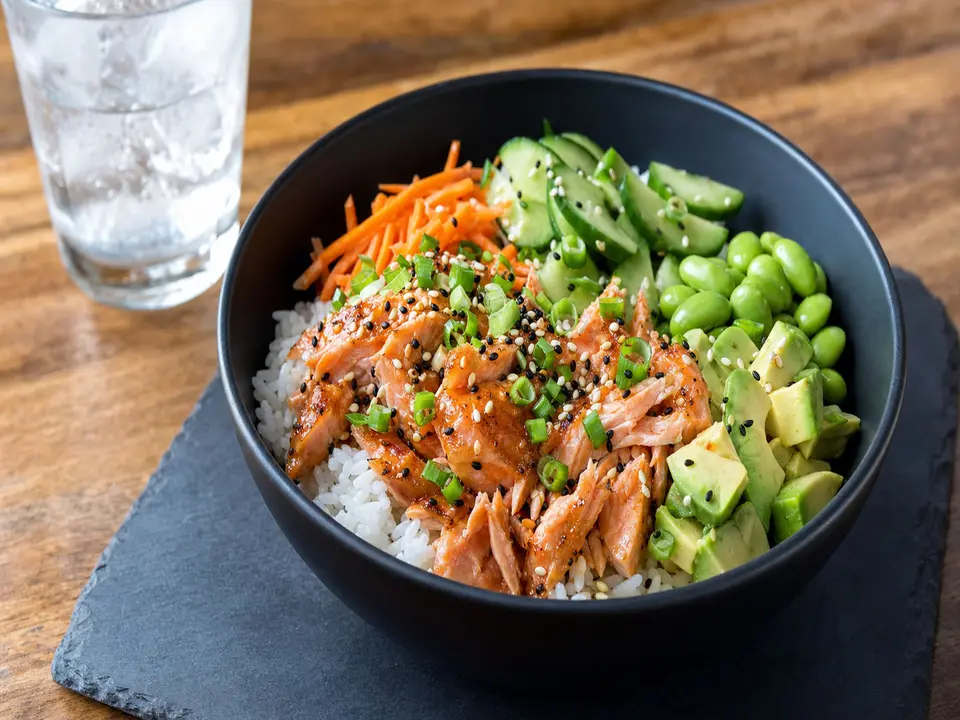
What should you eat between two surf sessions on the same day? Fast carbohydrate, some protein, and a little salt, in a form you can eat cold in the car. Two of these salmon rice balls give you about 55g of carbohydrate, 18g of protein, and 370 calories. Shape six on the morning of your surf, keep them in the cooler, and eat two as soon as you are out of the water from the first session.
Key Takeaways
- Two rice balls have about 55g carbohydrate, 18g protein, 7g fat, and 370 calories, estimated from USDA FoodData Central values for cooked short-grain rice and canned pink salmon.
- The International Society of Sports Nutrition's 2017 nutrient timing position stand lists aggressive carbohydrate refeeding at 1.2 g/kg/h when you have less than 4 hours to recover.
- The same stand lists a second option: 0.8 g/kg/h of carbohydrate with 0.2 to 0.4 g/kg/h of protein. For a 70kg surfer that is about 56g carbohydrate and 14 to 28g protein, close to one serving here.
- The CDC's food poisoning prevention guidance says never to leave perishable food out for more than 2 hours, or 1 hour above 90°F, so these ride in a cooler.
Why do rice balls work between surf sessions?
Rice balls pack a lot of carbohydrate into a small, cold package you can hold in one hand. USDA FoodData Central lists cooked short-grain white rice at 28.7g of carbohydrate and 0.19g of fat per 100g, with one cup weighing 186g. That puts one cup at about 53g of carbohydrate with almost no fat. Two rice balls hold that cup between them.
The salmon adds protein without any cooking. USDA data puts drained, boneless, skinless canned pink salmon at 24.6g of protein per 100g, so 50g per serving adds about 12g. A spoon of mayonnaise binds the filling, and the nori strip gives you something to grip with sandy fingers. Every part of this tastes fine cold, which matters when your kitchen is a tailgate.
How fast should you refuel before a second session?
Refuel right away if you plan to paddle back out within 4 hours. The ISSN nutrient timing stand says that "if rapid restoration of glycogen is required (< 4 h of recovery time)," strategies to consider include carbohydrate at 1.2 g/kg/h, or 0.8 g/kg/h of carbohydrate combined with 0.2 to 0.4 g/kg/h of protein. A 70kg surfer on the combined option needs about 56g of carbohydrate and 14 to 28g of protein in that first hour. Two salmon rice balls land right there.
Surfing only once today? Then you do not need this pace. The same stand says that outside of situations where rapid recovery is truly needed, and when daily carbohydrate matches energy demands, the importance of timed carbohydrate "is notably decreased." For a single session, our post-surf recovery nutrition guide covers the meal after you get home.
Long day
Key Ingredient: Canned pink salmon
Drained, boneless, skinless canned pink salmon has 136 calories, 24.6g of protein, and 4.21g of fat per 100g, according to USDA FoodData Central (SR Legacy, FDC ID 173724). It needs no cooking, keeps in the pantry, and travels well. It also carries 378mg of sodium per 100g in that USDA entry, which is why this recipe uses only 1 teaspoon of low-sodium soy sauce for the whole batch.
How do you keep rice balls safe on a beach day?
Keep them cold until you eat them. The CDC's guidance is direct: "Never leave perishable food out for more than 2 hours (or 1 hour if exposed to temperatures above 90°F)." Cooked rice and fish both count as perishable. Pack the rice balls in an insulated cooler with an ice pack, and keep the cooler in the shade, not on the dashboard.
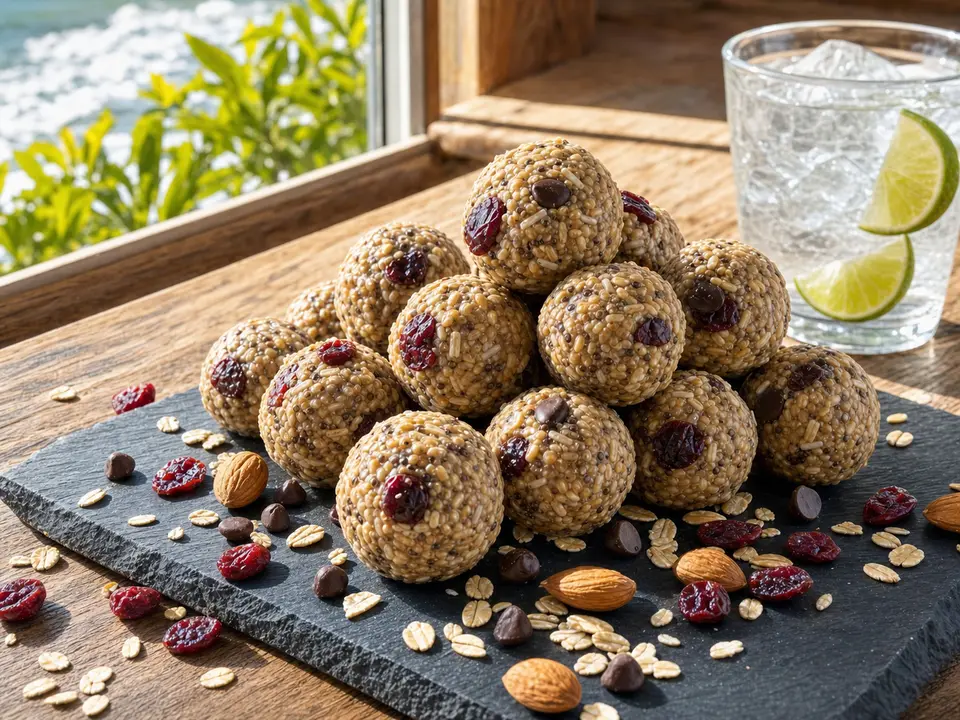
Planning a full day on the water? The Big-Day Beach Fuel Plate covers a long lunch, and no-bake surfer energy bites fill the gaps between meals. Put all of it in the same cooler and you have a two-session day planned before you leave the house.
Recipe
Ingredients (6 rice balls, 3 servings)
- 1 cup uncooked short-grain (sushi) rice plus 1 1/4 cups water, or 3 cups freshly cooked short-grain rice
- 1 tablespoon toasted sesame seeds
- 1/4 teaspoon fine salt
- 3 sheets roasted nori, cut in half
- A small bowl of water for your hands
Salmon Filling
- 150g (about 5 oz) drained boneless, skinless canned pink salmon
- 1 tablespoon mayonnaise
- 1 teaspoon low-sodium soy sauce
Instructions
- Rinse the rice in a sieve until the water runs mostly clear. Cook it with 1 1/4 cups water in a rice cooker or covered pot, or follow the package directions. Let it rest, covered, for 10 minutes.
- While the rice cooks, mash the drained salmon with the mayonnaise and soy sauce in a small bowl until it holds together.
- Spread the hot rice on a large plate for about 5 minutes, until you can handle it. Sprinkle the salt and sesame seeds over it and fold them in gently.
- Wet your hands so the rice does not stick. Flatten about 1/2 cup of rice in one palm, put about 1 1/2 tablespoons of the salmon filling in the center, and fold the rice up and over it.
- Press firmly into a triangle or ball, turning it 3 or 4 times so it holds. Repeat to make 6 rice balls.
- Wrap a nori half around the base of each rice ball, or pack the nori separately to keep it crisp. Wrap each one tightly and keep them in a cooler with an ice pack. Eat 2 as soon as you are out of the water from your first session.
Nutrition (per 2 rice balls, estimate)
| Calories | 370 |
| Protein | 18g |
| Carbohydrates | 55g |
| Fat | 7g |
| Fiber | 2g |
| Sodium | 480mg |
Ingredients to macros
Values are estimates. Typical-value rows use common food-composition figures for the listed amounts. The listed total is the number published with this recipe. They will not always match.
| Ingredient | Amount | Pro g | Carb g | Fat g | kcal |
|---|---|---|---|---|---|
| Cooked short-grain white rice | 1 cup (186g) | 4 | 53 | 0 | 242 |
| Canned pink salmon, drained | 50g | 12 | 0 | 2 | 68 |
| Mayonnaise | 1 tsp | 0 | 0 | 3 | 31 |
| Toasted sesame seeds | 1 tsp | 1 | 1 | 1 | 17 |
| Nori, low-sodium soy sauce, salt | 1 sheet plus share | 1 | 1 | 0 | 10 |
| Typical-value estimate | 18 | 55 | 6 | 368 | |
| Listed on this recipe | 18 | 55 | 7 | 370 | |
How these numbers are calculated
Rounding note: the rows round each fat value down, and the unrounded sum is about 7g, which is the listed figure. A third rice ball adds about 27g carbohydrate and 9g protein. Swapping the mayonnaise for plain Greek yogurt cuts about 3g of fat per serving.
FAQ
What should I eat between two surf sessions?
Eat carbohydrate first, with some protein, soon after you leave the water. When recovery time is under 4 hours, the ISSN's 2017 nutrient timing stand lists 1.2g of carbohydrate per kilogram per hour, or 0.8g/kg/h paired with 0.2 to 0.4g/kg/h of protein. Two salmon rice balls cover one hour of the paired option for a 70kg surfer.
How long can rice balls sit in the car?
Not long without a cooler. The CDC says never to leave perishable food out for more than 2 hours, or 1 hour above 90°F. Rice and fish both count. Keep the rice balls in an insulated cooler with an ice pack, park the cooler in the shade, and eat them the same day.
How many rice balls should I eat between sessions?
Start with two, which gives about 55g of carbohydrate. A 70kg surfer refueling at the ISSN's faster rate of 1.2g/kg/h needs about 84g of carbohydrate per hour. If the break is short and the next session is long, eat a third rice ball. If your stomach feels heavy, stop at two.
Can I make rice balls the night before a surf day?
You can, but the rice firms up in the fridge and loses its soft texture. For the softest rice balls, shape them the morning of your surf with freshly cooked rice and chill them in the cooler. If you make them the night before, keep them sealed and refrigerated until you leave.
Can I use tuna instead of salmon in rice balls?
Yes. Drained canned tuna works the same way and keeps this a no-cook filling. Protein and sodium vary by brand, so check your can's label and adjust the numbers. Keep the mayonnaise at 1 tablespoon for the whole batch so the fat stays low before your second session.
Do I need sushi rice to make rice balls?
Short-grain or sushi rice works best because it is sticky enough to hold a shape. Long-grain rice tends to crumble when you press it. If long-grain is all you have, squeeze each ball tight inside plastic wrap, or pack the rice and salmon as a bowl and eat it with a fork.
Want a sit-down version after you are done for the day? The miso-ginger salmon recovery rice bowl uses the same rice and salmon pairing, served warm.
Sources
- USDA FoodData Central. Rice, white, short-grain, enriched, cooked (SR Legacy, FDC ID 168882); Fish, salmon, pink, canned, drained solids, without skin and bones (SR Legacy, FDC ID 173724); Salad dressing, mayonnaise, regular (SR Legacy, FDC ID 171009); Seeds, sesame seeds, whole, roasted and toasted (SR Legacy, FDC ID 170151). Published 2019. https://fdc.nal.usda.gov/
- Kerksick CM, Arent S, Schoenfeld BJ, et al. International Society of Sports Nutrition Position Stand: Nutrient Timing. Journal of the International Society of Sports Nutrition (2017). https://pmc.ncbi.nlm.nih.gov/articles/PMC5596471/
- Centers for Disease Control and Prevention. Preventing Food Poisoning. https://www.cdc.gov/food-safety/prevention/index.html