About SurferFood
Built by a Surfer Who Got Serious About the Plate
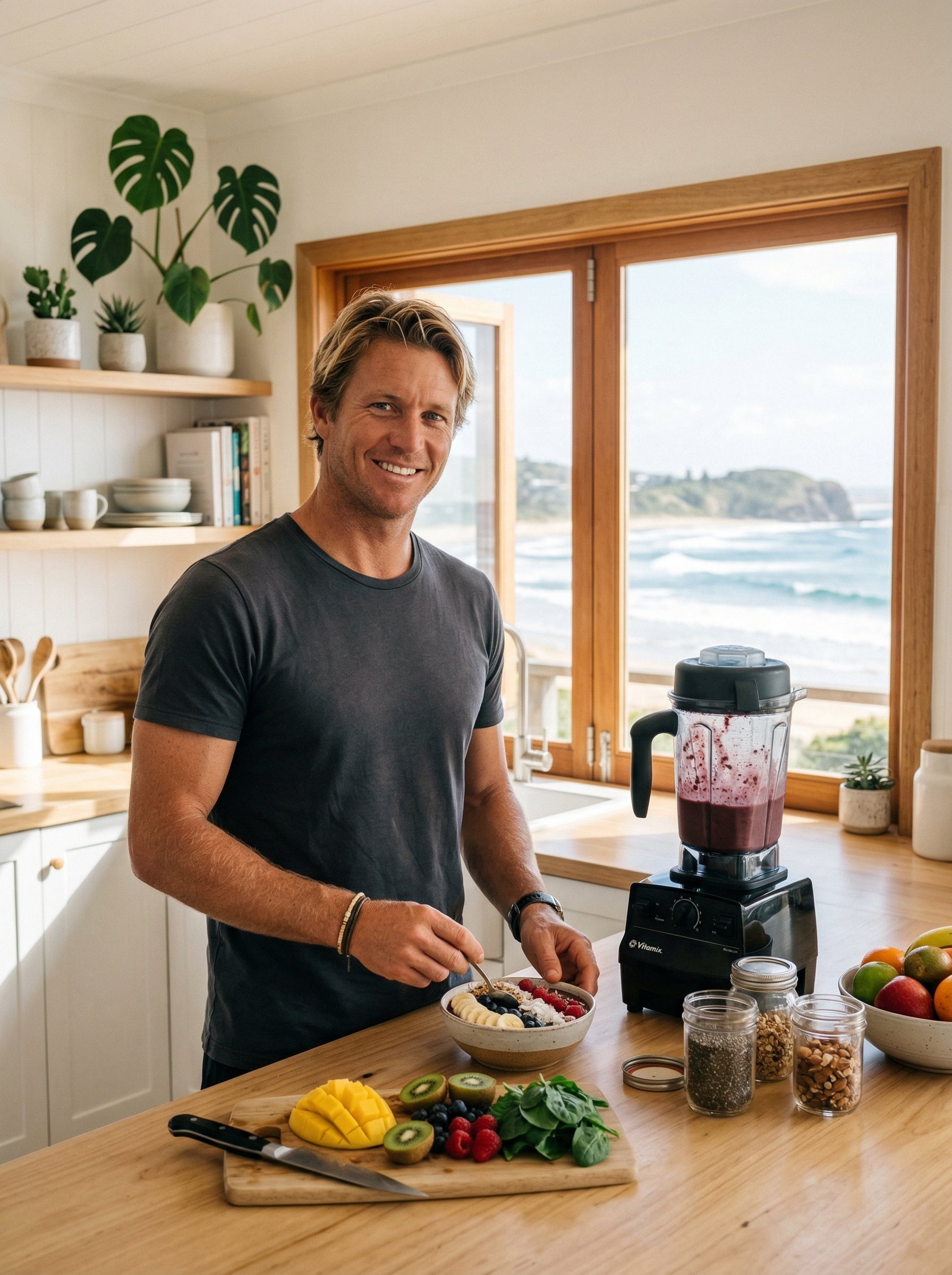
SurferFood started in a kitchen that had to be ready before the water. Fresh fish, rice after a session, fruit on the counter, a smoothie while the coffee finished. That way of eating is seasonal, high-energy, and built from ingredients you can name. This site writes it down so you can cook it on an ordinary morning.
Every recipe carries a macro breakdown and a table that shows how those numbers were estimated. The guides cover the hour before a session and the plate after you walk up the sand. The same sequence fits a dawn patrol and any other day you want that kind of fuel.
The Mission
SurferFood is a working kitchen notebook for people who want to eat with intention. It started in the surf community, and that is still the home base. Fresh ingredients, listed macros, and meals that hold through an active day are the whole point, and they travel past the beach.
Three principles run through every page:
- Food is the plate. Whole ingredients come first. When a supplement appears, the supplement guide treats it as a gap-filler beside a real meal.
- The numbers stay visible. Every recipe shows protein, carbohydrate, fat, and calories, then shows the ingredient rows behind them.
- Timing is the method. Before the session, in the car, after you get out, on a long day, on a rest day. The framework was built around surfing, and the same windows fit other active days.
Why the notebook exists
Sessions were already on the calendar. Breakfast had to fit the time it takes to wax a board, and the meal after the beach had to be food you could shop for and count. SurferFood is that notebook in public: named recipes, a timing for each one, and the arithmetic left on the table.
Who This Site Is For
The Surfer
You are in the water 3 to 6 days a week. Dawn patrol, afternoon glass-offs, weekend trips chasing swell. You have always eaten pretty well, but you want a structured approach. Specific macros, meal timing that works around sessions, and recipes that actually taste good after a few hours in salt water.
The Active Eater
You surf sometimes, or you live an active week on land. You want meals with ingredients you can name and macros you can read, written the way a session is written: a time, a plate, a number.
The Curious Cook
You want poke, fish tacos, grain bowls, and a smoothie that tastes like the coast, cooked from a grocery store you already use. The macros are on the card whenever you want to read them.
Start Here
If you are new to SurferFood, these three resources will give you the foundation:
- What to Eat Before Surfing: The Complete Guide: Meal timing, macro ratios, and the science of pre-session fuel.
- Post-Surf Recovery Nutrition: What to eat after your session to recover faster and perform better tomorrow.
- Browse All Recipes: Every recipe includes timing context, full macros, and step-by-step instructions.
Questions, suggestions, or recipe requests? Reach out at hello@surferfood.com.
How we calculate macros
Every recipe on this site publishes protein, carbohydrate, fat, and calories. Those figures are estimates, not lab assays and not medical advice.
- Write the ingredient list with amounts.
- Assign protein, carbohydrate, fat, and calories using typical food-composition values for those amounts.
- Divide by the stated serving count when the recipe makes more than one serving.
- Round to whole grams and whole calories.
- Publish that rounded total on the recipe card and in the recipe header.
The ingredients-to-macros table on each recipe shows typical-value rows and the listed total. They will not always match. Optional toppings, brand labels, and rounding are why.
Substitution note: swapping an ingredient changes that row and the total. Recalculate with the same five steps. If a topping is marked optional, it may be omitted from both the typical-value sum and the listed total.
Values are estimates. Use the table to inspect the math. Do not treat a listed number as a guarantee for the bowl you make at home.