Before-session guide
What to Eat Before Surfing: The Complete Guide
In This Guide
Every surfer has experienced the consequences of getting pre-surf nutrition wrong. Paddle out on an empty stomach and you fade after 45 minutes. Eat too much or too close to your session and you spend the first 30 minutes feeling sluggish, bloated, or worse. The solution is not complicated, but it requires understanding a few fundamental principles about how your body processes fuel during high-intensity water activity.
This guide covers everything: meal timing windows, optimal macro ratios for surfing performance, specific food recommendations for different scenarios, and the special case of dawn patrol sessions where you are eating at 5 AM. Whether you are a recreational surfer who wants more energy in the water or a competitive athlete preparing for heats, the science applies the same way.
Why Pre-Surf Meal Timing Matters
Surfing is a unique sport nutritionally. It combines endurance (sustained paddling for 60 to 120 minutes), explosive power (pop-ups, bottom turns, aerials), and thermoregulation (your body burns extra calories maintaining core temperature in cold water). This combination means you need both immediately available energy and sustained fuel reserves.
When you eat, your body diverts blood flow to the digestive system. During intense exercise, your muscles demand that same blood flow. Eating too close to a session creates a competition between digestion and performance. The result is reduced paddle power, nausea, and cramping. Eating too far in advance means your glycogen stores start depleting before you even wax your board.
The research is clear on timing. A study published in the International Journal of Sport Nutrition and Exercise Metabolism found that athletes who ate a carbohydrate-rich meal 2 to 3 hours before exercise performed 7 to 20 percent better in endurance tests compared to those who fasted. For surfers, that performance gap is the difference between making the critical section on a set wave and bogging in the flat spot.
Key Takeaway
Your main pre-surf meal should be consumed 2 to 3 hours before paddling out. If you only have 30 to 60 minutes, switch to a smaller, easily digestible snack. Never paddle out on a completely empty stomach for sessions longer than 45 minutes.
The Right Macro Ratios for Surfing
Not all calories are created equal before a surf session. The three macronutrients (carbohydrates, protein, and fat) digest at different rates and serve different functions during exercise.
Carbohydrates are the primary fuel source for high-intensity exercise. Your muscles store carbohydrates as glycogen, and surfing depletes those stores rapidly. A surfer can burn through 200 to 300 grams of glycogen during a two-hour session. Pre-surf meals should be carbohydrate-dominant, with 55 to 65 percent of total calories coming from carbs.
Protein supports muscle function and provides a small secondary energy source. You want moderate protein in your pre-surf meal, roughly 20 to 30 grams, enough to slow carbohydrate absorption for steadier energy but not so much that it slows digestion. Think of protein as the governor that prevents a blood sugar spike.
Fat should be kept relatively low in the pre-surf meal. Fat digests slowly, which is useful for long-duration, low-intensity activity but counterproductive before surfing. High-fat meals sit in your stomach longer and increase the risk of GI discomfort in the water. Keep fat under 15 grams in the 2-to-3-hour window.
What to Eat 2 to 3 Hours Before Surfing
This is the optimal window for a complete pre-surf meal. Your body has enough time to digest, absorb nutrients, and begin the process of topping off muscle glycogen stores. Aim for 400 to 600 calories with the macro ratios described above.
Best options in this window:
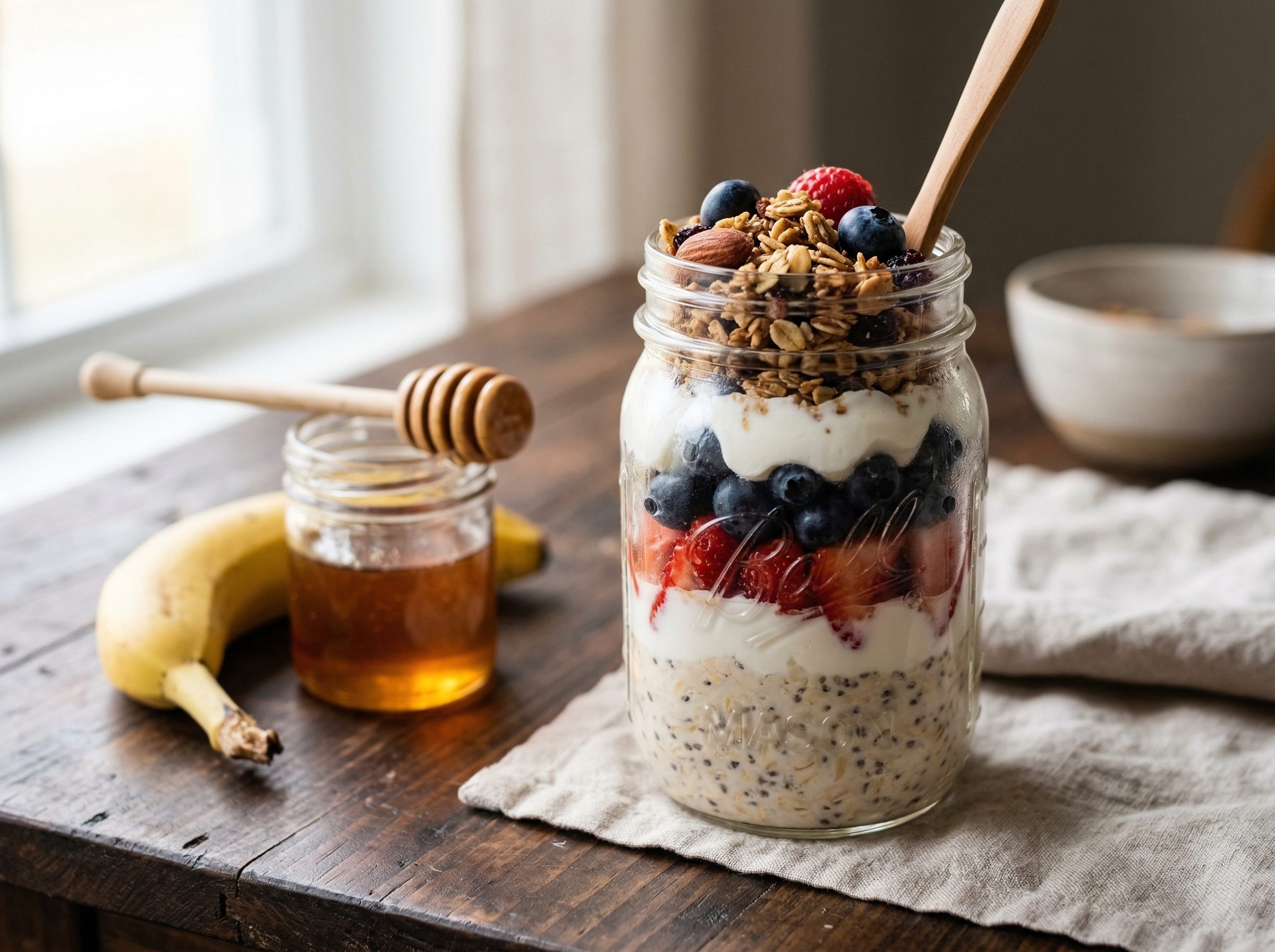
- Oatmeal with banana, a scoop of protein powder, and a drizzle of honey (see our Big Day Overnight Oats recipe)
- Two eggs on whole grain toast with avocado (keep the avocado to a quarter of a fruit to limit fat)
- A rice bowl with grilled chicken and steamed vegetables
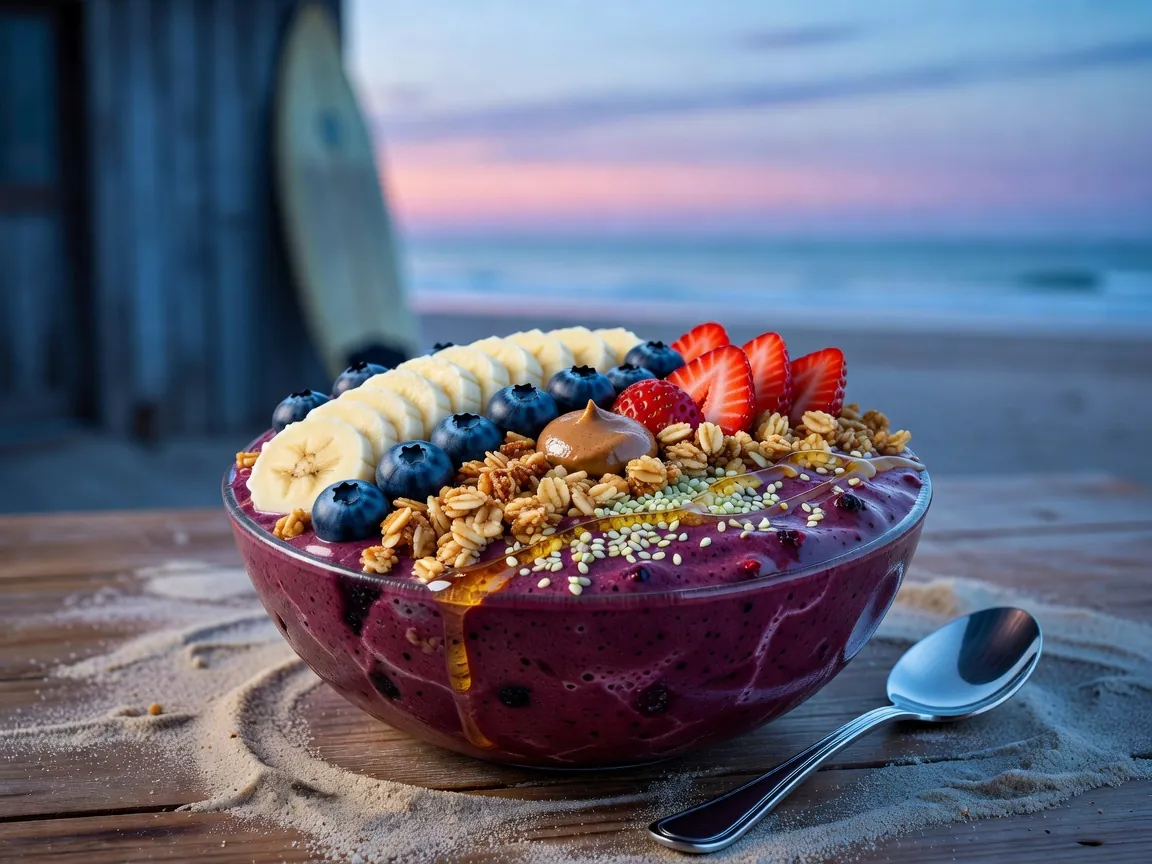
- A thick smoothie bowl with berries, granola, and protein (see our Pre-Dawn Patrol Smoothie Bowl)
- Whole grain pasta with a light tomato sauce and lean ground turkey
The key principle: familiar foods only. Pre-surf is not the time to try a new cuisine or an ingredient your stomach has not encountered before. Stick to meals your body knows how to process efficiently.
What to Eat 30 to 60 Minutes Before Surfing
Sometimes the timing does not work out for a full meal. You slept in, the swell arrived early, or you are between heats at a competition. In the 30-to-60-minute window, you need fast-digesting, easily absorbed food that will not sit heavy.
Best options in this window:
- A banana (the universal pre-sport snack: 27g carbs, almost zero fat, and digests in 20 minutes)
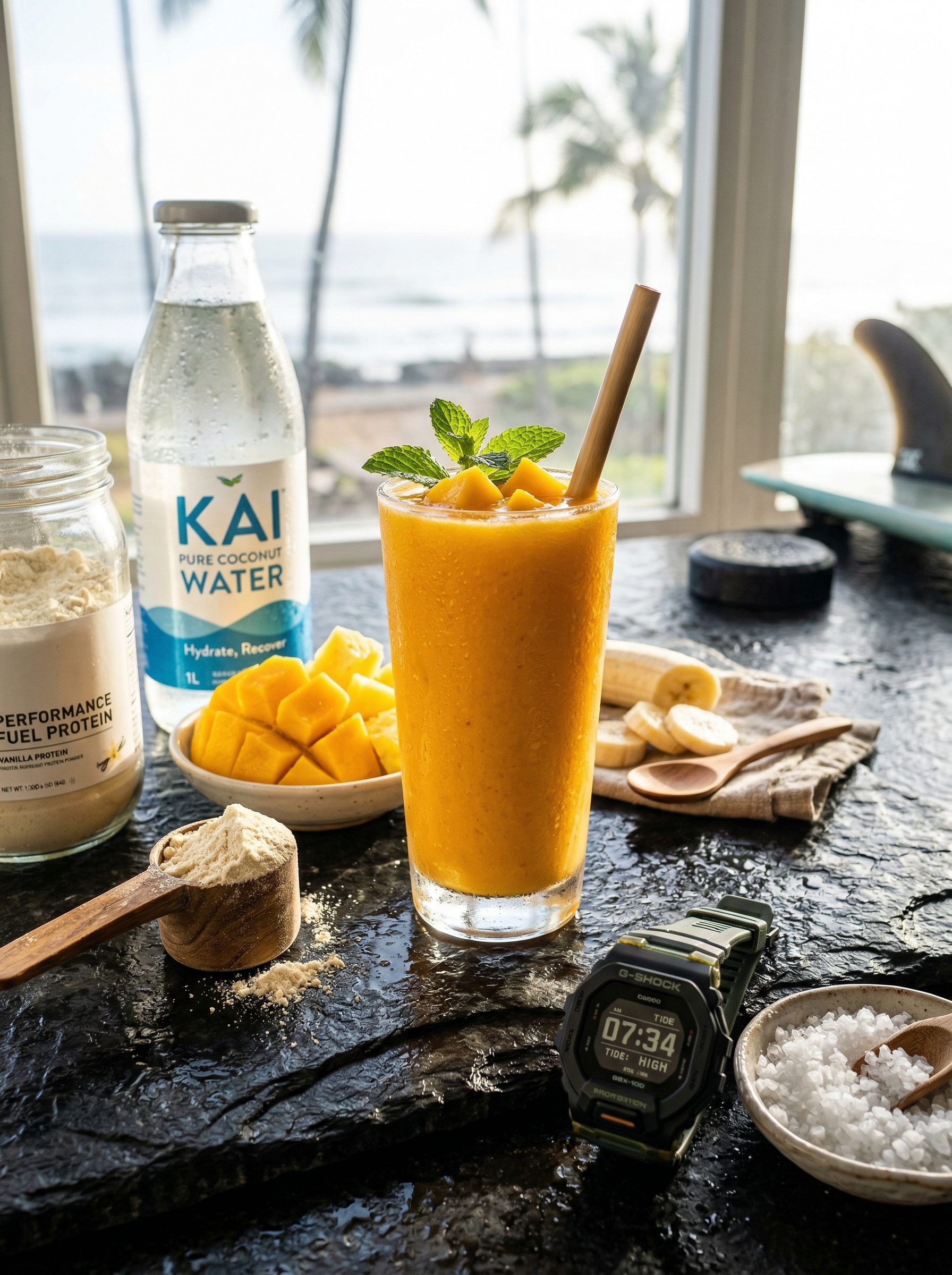
- A small liquid smoothie (not a thick bowl) with fruit and protein (see our Tropical Performance Smoothie)
- A handful of dates (high glycemic, fast energy)
- A rice cake with a thin spread of almond butter
- Half an energy bar (look for 30g+ carbs, under 10g fat)
- An energy gel when you want a measured carbohydrate dose. Make homemade energy gels, or compare carbs, caffeine, sodium, and list price in the best energy gels guide
Avoid fiber-heavy foods in this window. Fiber slows digestion, which is beneficial at the 2-to-3-hour mark but works against you when you need rapid energy delivery.
Dawn Patrol: The 5 AM Challenge
Dawn patrol is the most nutritionally challenging scenario in surfing. You wake up at 5 AM, you need to be in the water by 6, and your appetite is nonexistent. The temptation is to skip food entirely and rely on adrenaline. That works for the first 30 minutes. Then your blood sugar drops, your paddle rate slows, and you start missing waves you would normally catch.
The solution is a two-part strategy. First, eat a carbohydrate-rich snack the night before, which tops off your liver glycogen while you sleep. A bowl of oatmeal, a banana with peanut butter, or a few rice cakes before bed can add 30 to 45 minutes of buffer to your morning energy reserves. Second, eat something small and fast-digesting the moment you wake up: a banana, a few swigs of a smoothie, or a handful of dates. Even 150 to 200 calories is enough to bridge the gap.
Pro Tip
Prepare your dawn patrol fuel the night before. A pre-made smoothie in the fridge, overnight oats ready to grab, or a banana and energy bar on the counter next to your car keys. A counted tube for the beach bag is the homemade energy gel batch, mixed the night before. Remove every friction point between waking up and eating.
Big Day Strategy
Whether it is a competition heat, a critical session on a big swell day, or just a morning you want to perform your best, the strategy shifts for short, intense efforts. Your energy demands are more like a sprinter than a distance athlete. You want maximum glycogen stores at the start, and you do not need to worry about sustained energy for multiple hours.
Eat your main meal 3 hours before your session. Make it carbohydrate-heavy: 60 to 70 percent carbs, moderate protein, low fat. Our Big Day Overnight Oats are designed for exactly this scenario. Then, 30 to 45 minutes before you go out, eat a small top-up snack: half a banana, a few sips of a sports drink, or a gel from the best running gels guide.
Between heats, keep eating small amounts. A rice ball, a piece of fruit, or a protein bar every 60 to 90 minutes prevents the gradual depletion that leaves you flat in the semifinal.
Foods to Avoid Before Surfing
Some foods are performance killers regardless of timing:
- High-fat fried foods: Digest slowly, cause bloating, and redirect blood flow to your gut
- Dairy-heavy meals (for those with any lactose sensitivity): Even mild intolerance can cause cramping in cold water
- High-fiber raw vegetables (within 2 hours): Broccoli, cauliflower, and cabbage can cause gas and bloating during exercise
- Spicy food: Increases the risk of acid reflux when lying prone on your board during paddling
- Protein bars with sugar alcohols: Erythritol and sorbitol cause GI distress in many athletes during exercise
- Large caffeine doses on an empty stomach: Coffee is fine with food, but a double espresso without anything to eat can cause jitters and an energy crash mid-session
Pre-Surf Hydration
Dehydration is the hidden performance killer in surfing. You are surrounded by water, so the sensation of thirst is suppressed. But you are sweating inside your wetsuit, breathing salt air, and losing electrolytes through exertion. Studies on active people in the water show that even 2 percent dehydration reduces endurance performance by 10 to 15 percent.
The pre-surf hydration protocol is simple. Drink 16 to 20 ounces of water in the 2 hours before your session. Add an electrolyte tablet or powder if you are surfing in warm water, wearing a thick wetsuit, or planning a session longer than 90 minutes. Coconut water is a strong natural alternative that provides potassium and magnesium without artificial ingredients. See our electrolyte powder reviews for tested options.
Avoid chugging large volumes of water right before paddling out. This leads to a sloshing feeling in your stomach and frequent urination (which, in a wetsuit, is its own problem). Sip consistently over the two hours before your session rather than drinking a large volume all at once.
Your Pre-Surf Checklist
✓ Eat a carb-dominant meal 2 to 3 hours before
✓ Include 20 to 30g protein for sustained energy
✓ Keep fat under 15g to speed digestion
✓ Drink 16 to 20 oz water in the 2 hours prior
✓ Add electrolytes for sessions over 90 minutes
✓ Prepare a small backup snack for the car
✓ Stick to familiar foods you have tested before
For a clock-only version of the carbohydrate windows, see What to Eat Before Surfing: The Carb-Timing Guide.
For the meal that holds past the first set, see Stop the Sugar Crash: Steady Fuel Before Surf. For bar swaps, see Whole-Food Surf Fueling, No Processed Bars.
Put It Into Practice