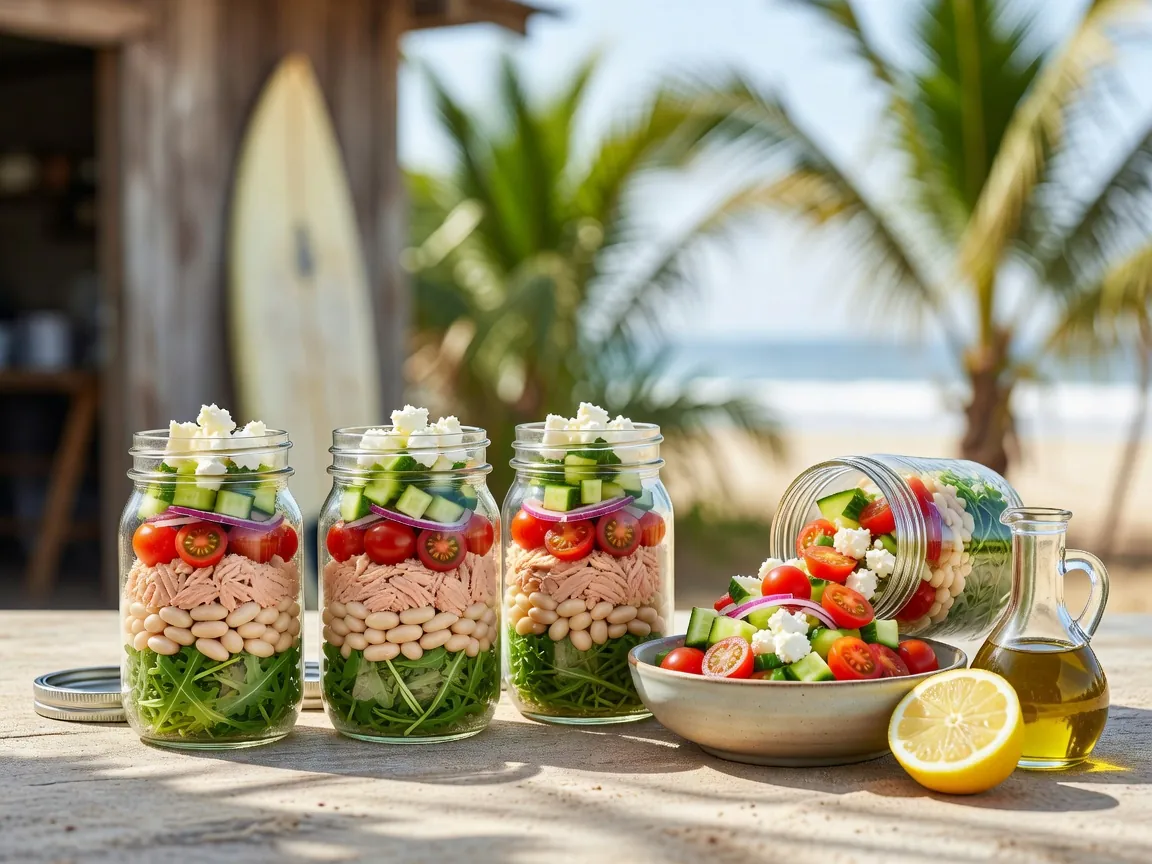
The tuna and white bean meal-prep jar is a no-cook lunch that packs about 40g of protein and 460 calories into ingredients you can keep in the pantry and fridge all week. Drain a couple cans of tuna, toss them with white beans, tomato, cucumber, and a quick lemon dressing, then layer over greens in a jar. It travels straight from the cooler to a beach parking lot and needs nothing more than a fork.
Key Takeaways
- Each jar delivers about 40g of protein and only 460 calories, built from canned tuna, white beans, and feta with no cooking required.
- Canned light tuna in water packs roughly 19g of protein for just 86 calories per 100 grams, according to USDA FoodData Central.
- FDA and EPA fish advice places canned light tuna in the Best Choices category for lower mercury, with room for 2 to 3 servings a week.
- The jars hold up in the fridge for up to 4 days, so one prep session covers two post-surf lunches.
- White beans add roughly 8g of fiber per serving, which slows digestion and helps the protein and carbs land steadier through the afternoon.
A no-cook lunch matters most on a day packed between sessions. There is often no stove, no microwave, and no fridge beyond a cooler in the truck bed. Canned tuna and canned beans solve that problem because they are already cooked, shelf-stable until opened, and ready to eat cold.
The protein number here is not an accident. A 2017 position stand from the International Society of Sports Nutrition points to roughly 20g to 40g of protein per meal as the range that supports muscle repair after exercise, and this jar lands at the top of that window from tuna, beans, and feta alone.
Because everything goes in raw or already cooked, the jars keep their texture for days instead of turning soggy like a dressed green salad. Pack the arugula on the bottom and the tuna and bean mixture on top so nothing wilts before lunch on day three.
Rest day
Key Ingredient: Canned Light Tuna
Canned light tuna in water is one of the most efficient protein sources in the pantry, at about 19g of protein for just 86 calories per 100 grams, according to USDA FoodData Central. FDA and EPA guidance also places it in the Best Choices lower-mercury category, so it fits into a regular lunch rotation without extra prep.
Pair it with our recovery nutrition guide to dial in post-session protein timing, or build out the week with the Mediterranean quinoa power salad for another no-reheat lunch option.
No-Cook Tuna and White Bean Meal-Prep Jars
Ingredients
- 2 (5 oz) cans light tuna in water, drained
- 1 (15 oz) can cannellini white beans, rinsed and drained
- 1 cup cherry tomatoes, halved
- 1/2 English cucumber, diced
- 1/4 red onion, thinly sliced
- 1/3 cup crumbled feta cheese
- 2 tablespoons extra-virgin olive oil
- 2 tablespoons fresh lemon juice
- 1 teaspoon dried oregano
- Salt and black pepper, to taste
- 3 cups baby arugula, divided
Instructions
- Drain the tuna well and rinse the white beans under cold water, then drain again.
- In a large bowl, whisk the olive oil, lemon juice, oregano, a pinch of salt, and a few grinds of pepper into a quick dressing.
- Add the tuna, white beans, cherry tomatoes, cucumber, and red onion to the bowl and toss gently to coat.
- Divide 1.5 cups of arugula between two wide-mouth jars or airtight containers.
- Spoon the tuna and bean mixture on top of the arugula in each jar, then finish with half the feta.
- Seal and refrigerate. Shake or toss just before eating, straight from the jar or over extra greens.
Nutrition Facts (per serving)
| Nutrient | Amount |
|---|---|
| Calories | 460 kcal |
| Protein | 40g |
| Carbohydrates | 30g |
| Fat | 21g |
| Fiber | 8g |
| Sodium | 760mg |
Ingredients to macros
Values are estimates. Typical-value rows use common food-composition figures for the listed amounts. The listed total is the number published with this recipe. They will not always match.
| Ingredient | Amount | Pro g | Carb g | Fat g | kcal |
|---|---|---|---|---|---|
| Light tuna in water | 1 can (5 oz) | 26 | 0 | 1 | 120 |
| Cannellini beans | 1/2 can | 8 | 18 | 0 | 110 |
| Feta | share of 1/3 cup | 3 | 1 | 4 | 50 |
| Olive oil | 1 tbsp | 0 | 0 | 14 | 120 |
| Tomato, cucumber, onion | vegetables | 1 | 6 | 0 | 30 |
| Arugula + lemon + oregano | greens and dressing acid | 1 | 2 | 0 | 15 |
| Typical-value estimate | 39 | 27 | 19 | 445 | |
| Listed on this recipe | 40 | 30 | 21 | 460 | |
How these numbers are calculated
Substitution note: swapping an ingredient changes that row and the total. Recalculate with the same method. Oil is the main fat lever. Draining tuna well keeps the listed fat closer to the typical-value row.
Frequently Asked Questions
What's a good no-cook lunch after surfing?
Canned tuna and white beans over greens is a fast, no-cook option that delivers a full recovery-sized dose of protein. This jar has about 40g of protein and 460 calories per serving, built entirely from pantry and fridge staples with no stove time.
How long do tuna and white bean meal-prep jars last in the fridge?
These jars keep well for up to 4 days when sealed in an airtight container. Layer the greens on the bottom and the tuna mixture on top so nothing gets soggy before you are ready to eat.
Is canned tuna a good protein source for surfers?
Yes. Canned light tuna packed in water provides about 19g of protein for only 86 calories per 100 grams, according to USDA FoodData Central, making it one of the leanest protein options for a packed lunch.
How much canned tuna is safe to eat in a week?
FDA and EPA fish advice places canned light tuna in the lower-mercury Best Choices category, with room for 2 to 3 servings a week for most adults. Albacore tuna carries more mercury, so light tuna is the better everyday pick.
Can I swap the tuna for another protein?
Yes. Canned salmon, grilled chicken, or an extra can of white beans all work in place of the tuna. Adjust the dressing amount slightly if you swap in a drier protein like chicken.
Do I need to reheat these jars before eating?
No. The recipe is designed to be eaten cold or at room temperature, straight from the jar. That is what makes it practical for a cooler in the truck between sessions.