Warm Egg and Rice Pre-Surf Bowl for Cold Mornings
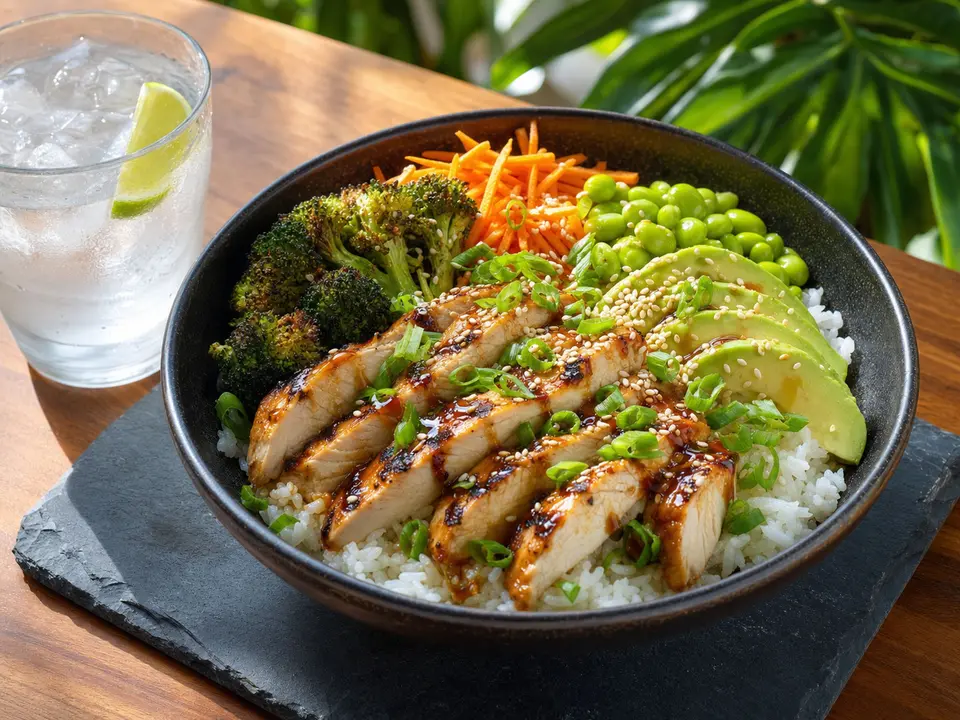
What should you eat before a cold-morning surf when you have an hour or more? A warm bowl of white rice and eggs with a honey-soy drizzle. Each bowl gives you about 54g of carbohydrate to refill what you burned overnight, 18g of protein to help hold off hunger through the session, and very little fiber, so it settles before you paddle out. With leftover rice it takes 10 minutes.
Key Takeaways
- One bowl has about 54g carbohydrate, 18g protein, 12g fat, and 400 calories, estimated from USDA FoodData Central values for cooked white rice and whole eggs.
- The International Society of Sports Nutrition's 2017 nutrient timing position stand notes it is commonly recommended to eat meals high in carbohydrate (1 to 4 g/kg) for several hours before hard sessions longer than 90 minutes.
- For a 70kg surfer, 1g per kilogram is 70g of carbohydrate. This bowl plus a medium banana (27g, per USDA SNAP-Ed) gets you there.
- Cooked white rice has 0.4g of fiber per 100g in USDA FoodData Central, which keeps this bowl easy on the stomach for paddling.
Why does a warm rice bowl work before a surf?
Rice is close to pure starch, and carbohydrate is the fuel your repeated paddle bursts lean on most. USDA FoodData Central lists cooked long-grain white rice at 28.2g of carbohydrate and only 0.28g of fat per 100g, so one cup lands near 45g of carbohydrate. That is most of this bowl's carbohydrate in one ingredient that digests without much fuss.
Eggs add protein and a bit of fat so the bowl holds you through a full session. A warm breakfast is also easier to face when the air and water are cold and a smoothie is the last thing you want at 6 a.m. The honey-soy drizzle adds a few grams of quick carbohydrate and enough salt to make plain rice taste like breakfast.
Timing is the catch. This is a plate for the 1 to 4 hours before you paddle, not the parking lot. If your alarm only gives you 30 minutes, our pre-surf nutrition guide on what to eat before surfing walks through the smaller snacks that fit that window.
Before session
Key Ingredient: Whole eggs
A 100g serving of whole raw egg, about 2 large eggs, has 12.6g of protein, 9.5g of fat, and under 1g of carbohydrate, according to USDA FoodData Central (SR Legacy, FDC ID 171287). That is why 2 eggs per bowl carry most of the protein here. Eggs cook in about 4 minutes, which makes them one of the quickest real-food proteins for a pre-dawn plate.
The Academy of Nutrition and Dietetics, Dietitians of Canada, and the American College of Sports Medicine put it plainly in their 2016 joint position on nutrition and athletic performance: "the performance of, and recovery from, sporting activities are enhanced by well-chosen nutrition strategies." On a cold dawn session, well-chosen means carbohydrate you can digest, eaten early enough to settle before the first duck dive. This bowl is built around that rule.
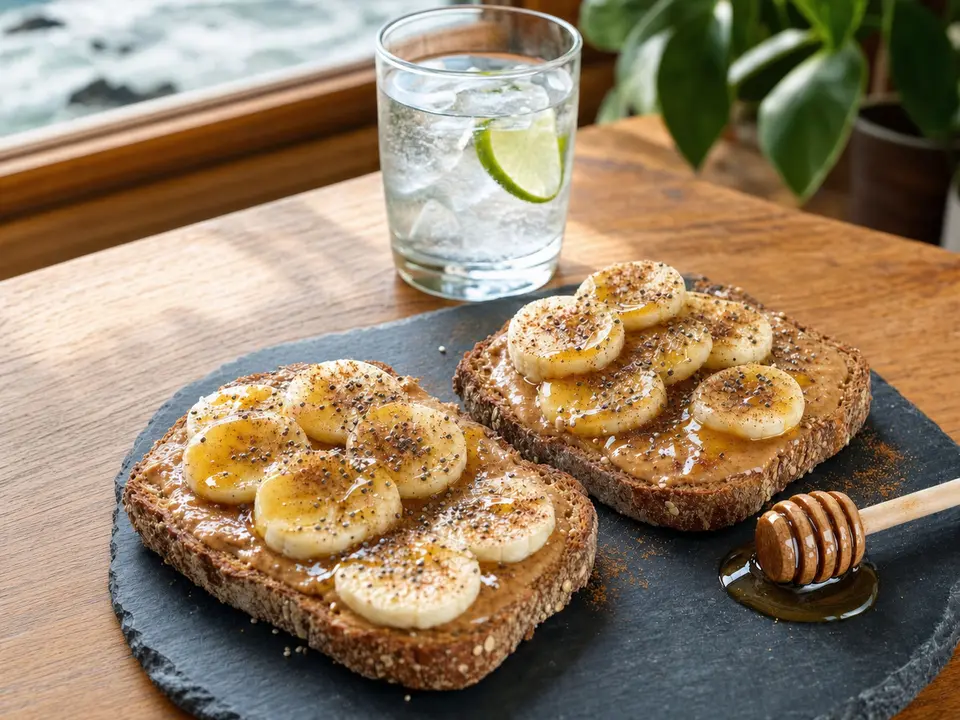
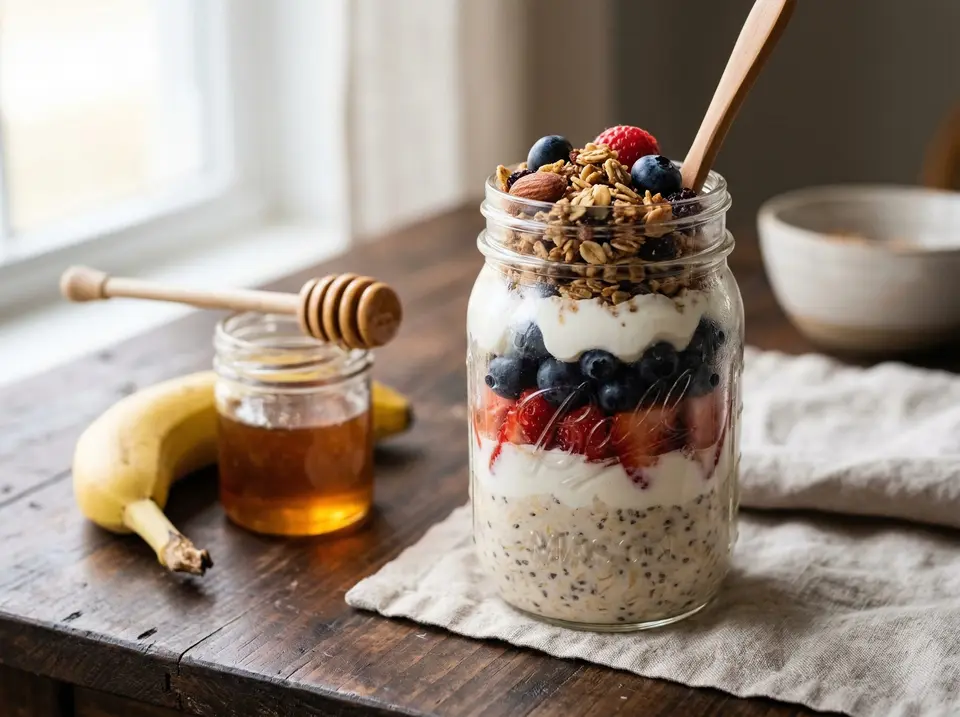
For surfers who want a no-cook option, the Big Day Overnight Oats fill the same pre-session slot, and the Banana Almond Pre-Surf Toast is the lighter choice.
How this bowl fits across the menstrual cycle, including weeks when more carbohydrate may help, is in Female Surfers: Fueling Through the Menstrual Cycle.
The same rice and egg shape is the one-burner breakfast in Van Life Surf Cooking: One-Burner Meals That Fuel. In Costa Rica, gallo pinto fills that breakfast slot. See Costa Rica Surf Trip Food: Gallo Pinto to Casados.
Recipe
Ingredients (2 bowls)
- 2 cups cooked white rice (leftover from the fridge, or one microwave rice pouch of about 2 cups)
- 4 large eggs
- 1 teaspoon toasted sesame oil
- 2 scallions, thinly sliced
- 1 sheet roasted nori, cut into thin strips (optional)
- Black pepper or chili flakes to taste
Honey-Soy Drizzle
- 2 teaspoons low-sodium soy sauce
- 2 teaspoons honey
- 1 teaspoon water
Instructions
- Put the rice in a microwave-safe bowl, sprinkle with a spoonful of water, cover, and heat 1 to 2 minutes until steaming hot all the way through. If using a pouch, heat it as the package directs.
- Stir the soy sauce, honey, and water together in a small cup until the honey dissolves.
- Heat the sesame oil in a nonstick pan over medium-low heat. Add the eggs and cook 3 to 4 minutes, either fried with set whites or gently scrambled, until cooked to your liking.
- Split the hot rice between two bowls and top each with 2 eggs.
- Spoon the honey-soy drizzle over the eggs and rice, then finish with scallions, nori strips, and black pepper or chili flakes. Eat warm, 1 to 4 hours before you paddle out.
Nutrition (per bowl, estimate)
| Calories | 400 |
| Protein | 18g |
| Carbohydrates | 54g |
| Fat | 12g |
| Fiber | 1g |
| Sodium | 350mg |
Ingredients to macros
Values are estimates. Typical-value rows use common food-composition figures for the listed amounts. The listed total is the number published with this recipe. They will not always match.
| Ingredient | Amount | Pro g | Carb g | Fat g | kcal |
|---|---|---|---|---|---|
| Cooked white rice | 1 cup | 4 | 45 | 0 | 205 |
| Large eggs | 2 | 13 | 1 | 10 | 143 |
| Honey | 1 tsp | 0 | 6 | 0 | 21 |
| Toasted sesame oil | 1/2 tsp | 0 | 0 | 2 | 20 |
| Low-sodium soy sauce, scallion, nori | garnish share | 1 | 2 | 0 | 10 |
| Typical-value estimate | 18 | 54 | 12 | 399 | |
| Listed on this recipe | 18 | 54 | 12 | 400 | |
How these numbers are calculated
Substitution note: adding a third egg adds about 6g protein and 5g fat per bowl. A medium banana on the side adds 27g carbohydrate and is a separate addition, not part of this bowl's listed total.
FAQ
How long before surfing should I eat an egg and rice bowl?
Eat it 1 to 4 hours before you paddle out, closer to 2 hours if your stomach is touchy. That window lets the rice top up the liver glycogen you drew down overnight. If you have less than an hour, eat a banana or a few dates instead and save the bowl for after the session.
Why use white rice instead of brown rice before a surf?
White rice is mostly starch with very little fiber. USDA FoodData Central lists 0.4g of fiber per 100g of cooked long-grain white rice. Less fiber generally means a lighter stomach when you are about to lie on a board and paddle. Brown rice is a better pick for a rest-day lunch.
Is 18 grams of protein enough before surfing?
Yes. Before a session the priority is carbohydrate, and a large protein load can sit heavy. The ISSN's 2017 nutrient timing stand links about 20 to 40g of protein per serving to a strong muscle protein response, so add a third egg if you want to land in that range, or get it at your post-surf meal.
Can I make this bowl the night before?
Partly. Cook the rice and mix the honey-soy drizzle the night before, then refrigerate both. In the morning, reheat the rice until steaming and cook the eggs fresh, which takes about 5 minutes. For a fully cold option, use 2 hard-boiled eggs made the night before.
Is this bowl enough carbohydrate for a long session?
On its own it covers a short or medium session for most surfers. A 70kg surfer needs about 70g of carbohydrate to reach 1g per kilogram, so add a medium banana, which USDA SNAP-Ed lists at 27g of carbohydrate. For sessions past about 70 minutes, bring carbohydrate you can eat or drink between sets.
Going out for a long one? Pack a batch of homemade energy gels for long surf sessions to cover the carbohydrate between sets.
Sources
- USDA FoodData Central. Egg, whole, raw, fresh (SR Legacy, FDC ID 171287) and Rice, white, long-grain, regular, enriched, cooked (SR Legacy, FDC ID 168878), published 2019. https://fdc.nal.usda.gov/
- Kerksick CM, Arent S, Schoenfeld BJ, et al. International Society of Sports Nutrition Position Stand: Nutrient Timing. Journal of the International Society of Sports Nutrition (2017). https://pmc.ncbi.nlm.nih.gov/articles/PMC5596471/
- Thomas DT, Erdman KA, Burke LM. American College of Sports Medicine Joint Position Statement: Nutrition and Athletic Performance. Medicine and Science in Sports and Exercise (2016). https://doi.org/10.1249/MSS.0000000000000852
- USDA SNAP-Ed Connection. Seasonal Produce Guide: Bananas. https://snaped.fna.usda.gov/resources/nutrition-education-materials/seasonal-produce-guide/bananas