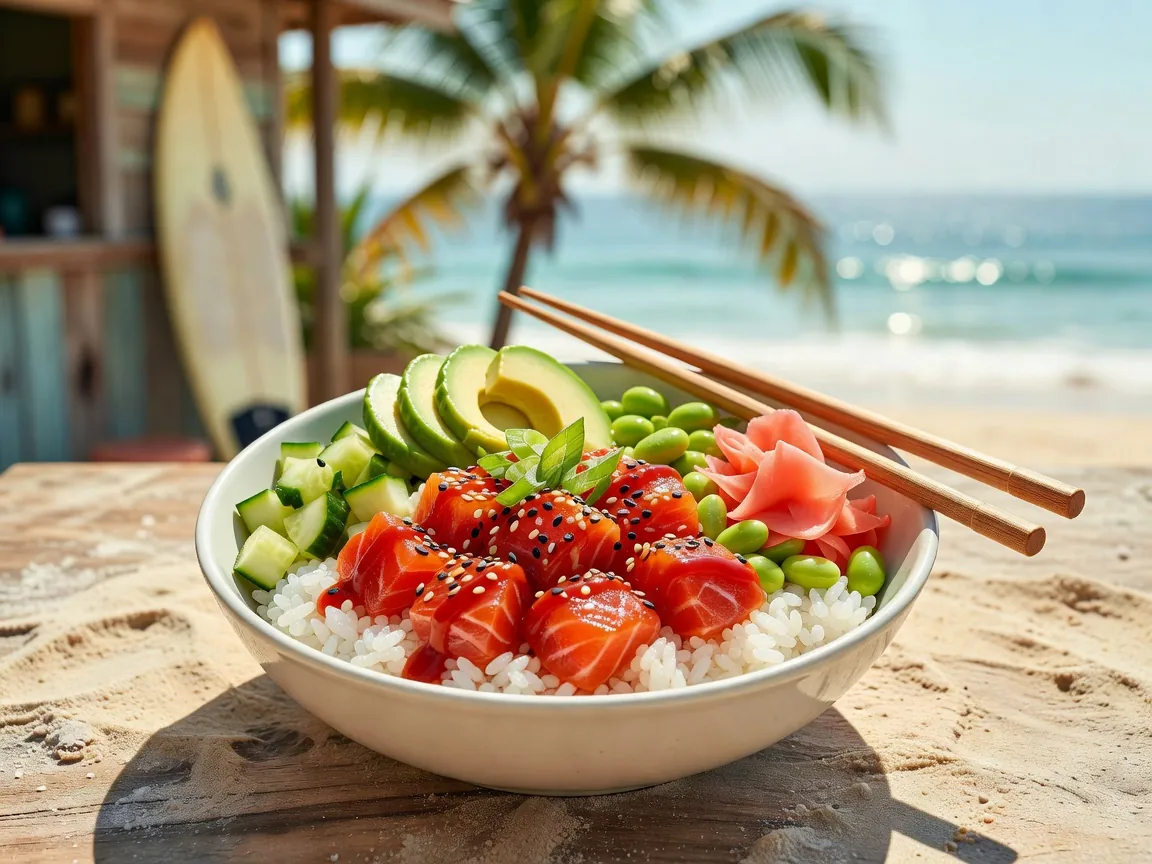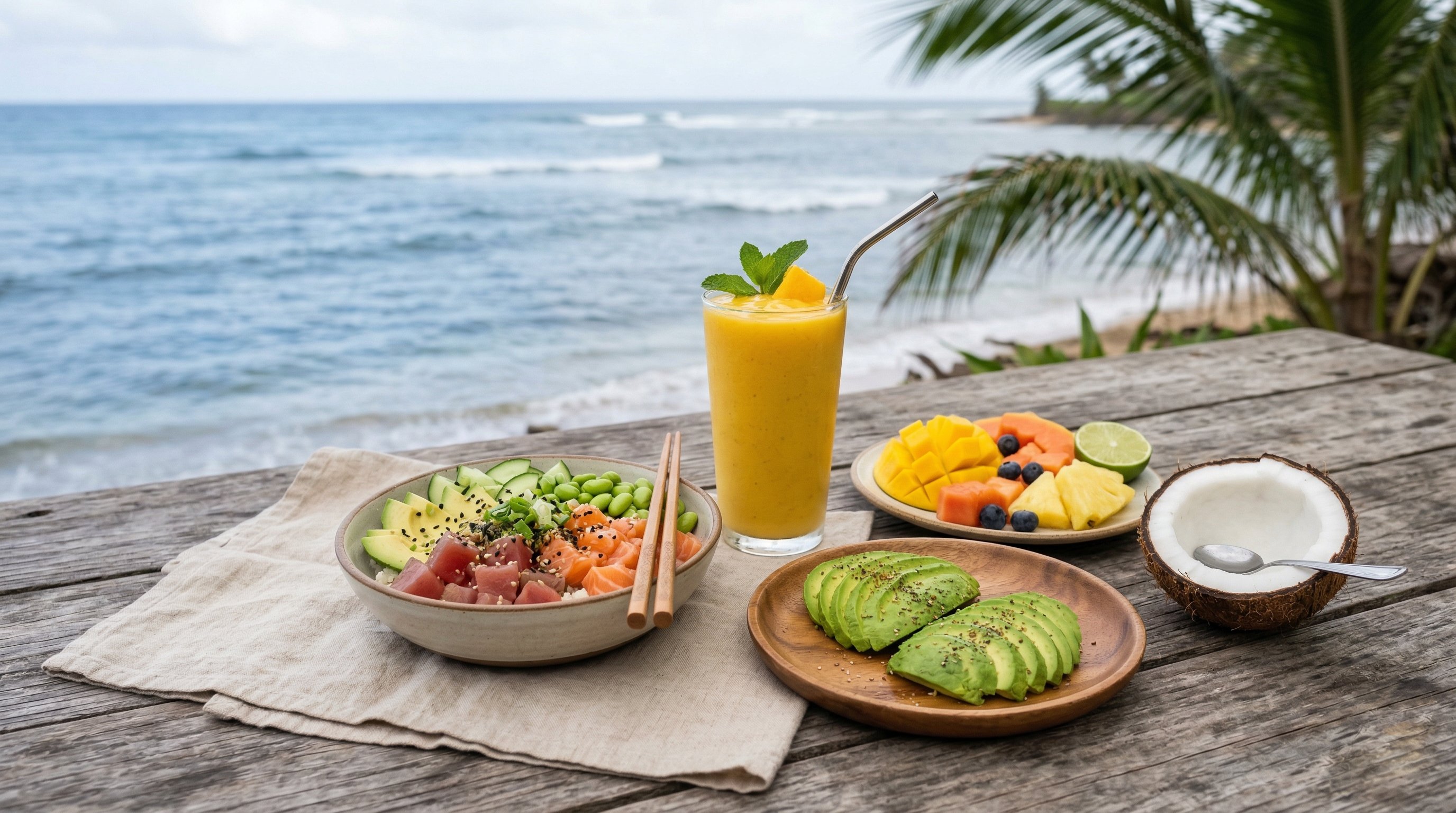
The best food for an all-day surf trip is not one big meal, it is a spread you graze on between sessions. This beach fuel plate pairs a small ahi and salmon poke bowl with tropical fruit, avocado, and a mango-coconut water smoothie, giving you 38g of protein, 77g of carbohydrate, and real electrolytes to pull from all day. No stove needed, just a cooler.
Key Takeaways
- This plate is built for grazing across a big day, not eating in one sitting between sessions.
- The American College of Sports Medicine recommends about 0.4 to 0.8 liters of fluid per hour during activity, with 500 to 700mg of sodium per liter for sessions over an hour (2007 position stand).
- Avocado carries roughly 507mg of potassium per 100g, an electrolyte lost through sweat, per USDA FoodData Central.
- Raw yellowfin tuna delivers about 24.4g of protein per 100g, which keeps the poke portion lean, per USDA FoodData Central.
- Everything packs into separate containers, so it survives a cooler and a walk to the beach.
All-day surf trips and contest days burn through fuel differently than a single session. A heavy sit-down meal between heats leaves you sluggish paddling back out, while grazing on smaller portions keeps energy steadier and your stomach lighter in the water.
Hydration matters just as much as food on a big day. The ACSM position stand on exercise and fluid replacement points to roughly 0.4 to 0.8 liters of fluid per hour of activity, with sodium added once sessions run past an hour. The coconut water in the smoothie and the pinch of salt on the avocado both help cover that sodium side.
The three components split the job. The poke bowl supplies lean protein for muscle repair, the fruit and avocado supply fast carbs plus potassium and healthy fat, and the smoothie supplies fluid you can sip between paddle-outs instead of chugging all at once.
Long day
Key Ingredient: Avocado
Avocado is doing more than adding creaminess here. A 100g serving carries about 507mg of potassium, per USDA FoodData Central, which is one of the electrolytes surfers lose through sweat on a hot beach day. It also supplies healthy fat that slows digestion, so the fast carbs from the fruit and rice do not spike and crash as quickly.
If you want a heartier option for after your last session, try our salmon poke recovery bowl for a full-size version of the same protein base.
Big-Day Beach Fuel Plate
Ingredients
- 6 oz sushi-grade ahi tuna, cubed
- 4 oz sushi-grade salmon, cubed
- 1 tablespoon low-sodium soy sauce
- 1 teaspoon toasted sesame oil
- 1 teaspoon rice vinegar
- 1 teaspoon sesame seeds
- 1 scallion, sliced
- 3/4 cup cooked sushi rice
- 1 avocado, sliced
- 1 cup mixed tropical fruit (mango, pineapple, papaya)
- 1/2 cup blueberries
- 1/4 cup fresh coconut meat
- Pinch of flaky sea salt
- 1 1/2 cups frozen mango chunks
- 3/4 cup coconut water
- 1/2 banana
- Squeeze of fresh lime juice
Instructions
- Cube the tuna and salmon. Toss with the soy sauce, sesame oil, rice vinegar, sesame seeds, and scallion in a bowl. Let it marinate 5 minutes while you prep the rest.
- Divide the sushi rice between two bowls or containers and top each with half the marinated poke.
- Arrange the avocado, tropical fruit, blueberries, and coconut meat on a second plate. Sprinkle the avocado with flaky salt.
- Blend the frozen mango, coconut water, banana, and lime juice until smooth. Pour into two glasses.
- Pack the poke, fruit plate, and smoothie in separate containers in a cooler if you are headed to the beach, or split everything between two plates to eat right away.
- Graze through the plate between sessions instead of eating it all at once. Steady intake keeps fuel and fluid coming in through a long day in the water.
Nutrition Facts (per serving)
| Nutrient | Amount |
|---|---|
| Calories | 680 kcal |
| Protein | 38g |
| Carbohydrates | 77g |
| Fat | 26g |
| Fiber | 9g |
| Sodium | 430mg |
Ingredients to macros
Values are estimates. Typical-value rows use common food-composition figures for the listed amounts. The listed total is the number published with this recipe. They will not always match.
| Ingredient | Amount | Pro g | Carb g | Fat g | kcal |
|---|---|---|---|---|---|
| Ahi tuna | 3 oz of 6 oz | 20 | 0 | 1 | 90 |
| Salmon | 2 oz of 4 oz | 11 | 0 | 4 | 80 |
| Cooked sushi rice | share of 3/4 cup | 2 | 16 | 0 | 75 |
| Avocado | 1/2 fruit | 1 | 6 | 10 | 120 |
| Tropical fruit + blueberries | fruit | 1 | 28 | 0 | 120 |
| Coconut meat | 2 tbsp | 1 | 3 | 6 | 70 |
| Mango smoothie share | mango, coconut water, banana | 1 | 22 | 0 | 95 |
| Soy, sesame, lime | seasoning | 1 | 2 | 2 | 30 |
| Typical-value estimate | 38 | 77 | 23 | 680 | |
| Listed on this recipe | 38 | 77 | 26 | 680 | |
How these numbers are calculated
Substitution note: swapping an ingredient changes that row and the total. Recalculate with the same method. This plate is two people's food split in half. Eating the whole plate doubles every listed number.
Frequently Asked Questions
What should I eat during an all-day surf trip?
Eat in small rounds instead of one big meal. This fuel plate pairs a small poke bowl for protein, tropical fruit and avocado for carbs and electrolytes, and a mango-coconut water smoothie for fluid, so you can graze between sessions rather than surf on a full stomach.
How much fluid and sodium do I need on a long beach day?
The American College of Sports Medicine's 2007 position stand on exercise and fluid replacement recommends roughly 0.4 to 0.8 liters of fluid per hour during activity, with 500 to 700mg of sodium per liter when sessions run past an hour. Coconut water and a pinch of salt help cover the sodium side.
Is raw fish safe to pack for a beach day?
Yes, if you handle it properly. Buy sushi-grade tuna and salmon the same day you plan to eat it, keep the poke in a sealed container over ice in a cooler, and eat it within a few hours. If you cannot keep it cold, swap in cooked shrimp or grilled chicken instead.
Can I make this plate without raw fish?
Yes. Swap the tuna and salmon for cooked shrimp, grilled chicken, or pan-seared tofu cubes tossed in the same soy-sesame marinade. You will lose a little protein per serving, so add an extra half cup of edamame to close the gap.
How many calories should a big surf day include?
This plate covers about 680 calories per serving as one grazing round. A full big-day surf trip with multiple sessions usually needs two to three rounds of food like this spread across the day, plus regular sips of fluid, rather than one large meal.
Can I prep this the night before?
Prep the fruit, rice, and marinade the night before and store them separately in the fridge. Cube and marinate the raw fish the morning you leave so it stays fresh, then assemble everything into containers right before you head out.