Energy Gel: What It Is and a 10-Minute Homemade Recipe
This page is the DIY recipe. Store energy gels, caffeine, and prices are on the comparison guide.
Stir 1/2 cup honey, 3 tablespoons maple syrup, 1 tablespoon lemon juice, 1/2 teaspoon fine sea salt, and 1 tablespoon water, then split the mix into 6 tubes. Each homemade energy gel is about 30 g of carbohydrate and 110 calories, with no caffeine in the ingredient list. Prep takes 10 minutes, and there is no cook time. This page is that kitchen batch.
↓ Jump to the steps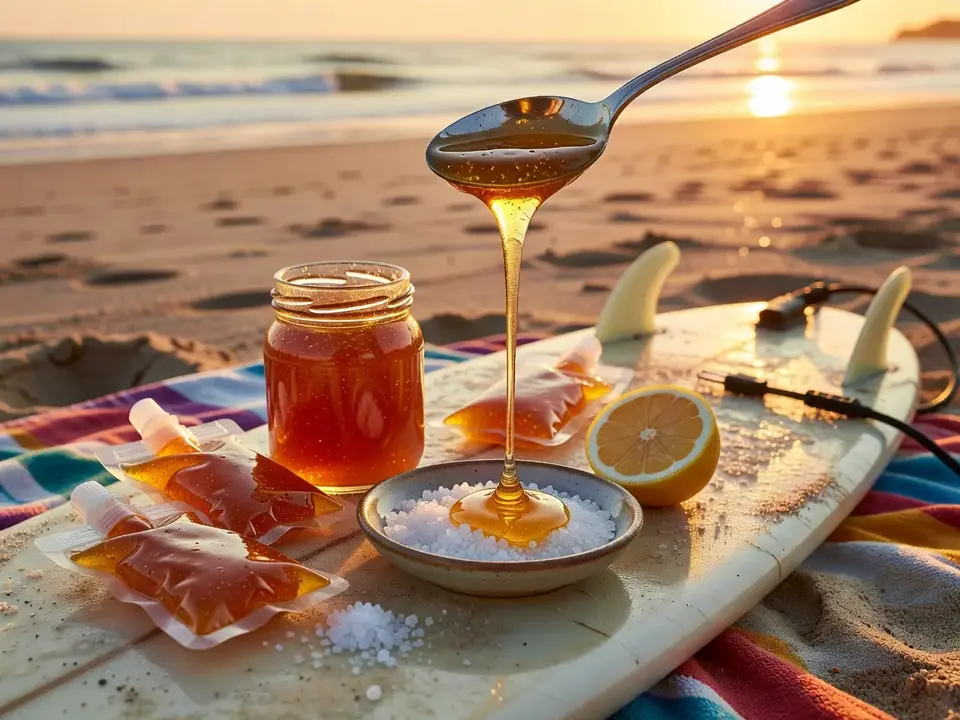
What is a homemade running gel?
A homemade running gel is this recipe. It uses honey, maple syrup, lemon juice, fine sea salt, and water, split into 6 tubes of about 2 tablespoons. Each gel is about 30 g of carbohydrate and 110 calories. You take one tube with water on a run or on the sand before you paddle back out.
About 190 mg of sodium in each gel comes from 1/2 teaspoon of fine sea salt in the whole batch. That sodium supports the drink you take with the gel. The 30 g of carbohydrate is the low end of the ISSN 2017 range of about 30 to 60 g per hour for extended high-intensity work, especially past about 70 minutes [1]. One gel covers the low end of that hour. The ingredient list has no caffeine. The 30 g and 110 calorie figures are for the honey-forward batch. The maple syrup energy gel method is below. Sealed packets, caffeine, and list prices stay on the best energy gels guide.
Key Takeaways
- Five ingredients, no cook, 10 minutes, 6 gels of about 2 tablespoons each.
- Each gel lists about 30 g of carbohydrate and 110 calories, the low end of the ISSN 2017 range of about 30 to 60 g per hour for extended high-intensity work [1].
- USDA FoodData Central lists about 17 g of carbohydrate and 64 calories in one tablespoon of honey [2].
- About 190 mg of sodium per gel comes from 1/2 teaspoon of fine sea salt in the whole batch. It supports the drink you take with the gel.
- Take the tube on the sand with water. This page is the recipe. Caffeine and list price for store packets are in the best energy gels guide.
How do you make homemade energy gels?
You stir the honey, maple syrup, lemon juice, salt, and water until the salt disappears, then you portion six squeeze servings. Honey is a concentrated glucose and fructose mix that does not need cooking. One tablespoon is about 17 g of carbohydrate [2]. Maple syrup adds volume and keeps the batch from tasting like honey alone. Lemon cuts the sweetness. The steps are below.
DIY energy gel steps
Ingredients
- 1/2 cup honey
- 3 tablespoons maple syrup
- 1 tablespoon lemon juice
- 1/2 teaspoon fine sea salt
- 1 tablespoon water, plus more if needed to thin
Instructions
- Add the honey, maple syrup, lemon juice, salt, and water to a small bowl or jar.
- Stir until the salt dissolves and the mix looks even. Warm the bowl in a larger bowl of hot tap water for 1 to 2 minutes if the honey is too stiff to stir.
- Taste a drop. It should be sweet, a little salty, and thin enough to squeeze. Add another teaspoon of water if it is paste-thick.
- Divide into 6 refillable gel tubes, mini squeeze bottles, or small leakproof jars, about 2 tablespoons each.
- Cap tightly. Keep in the fridge for up to 2 weeks, or take one tube in a cooler bag for the session.
- On a surf day, take one gel on the sand with water. Leave the tube out of the impact zone.
Maple syrup energy gel
A maple syrup gel uses 1/2 cup maple syrup in place of the 1/2 cup honey. Keep the 3 tablespoons maple syrup, 1 tablespoon lemon juice, 1/2 teaspoon fine sea salt, and 1 tablespoon water. Divide into 6 gels. The 30 g and 110 calorie figures on this page are for the honey-forward batch.
More salt
Add 1/4 teaspoon fine sea salt to the batch, for 3/4 teaspoon total, then divide into 6 gels. The listed gel stays at about 190 mg from the original 1/2 teaspoon.
What are the ingredients and calories?
Each serving is a carb gel of about 110 calories, 30 g of carbohydrate, 0 g protein, 0 g fat, and 0 g fiber. Sodium is about 190 mg. The ingredients are honey, maple syrup, lemon juice, fine sea salt, and water. The ingredient list has no caffeine.
USDA FoodData Central lists honey at 304 kcal and 82.4 g of carbohydrate per 100 g, and 1 tablespoon at 21 g, so one tablespoon is about 64 kcal and 17 g of carbohydrate [2]. Eight tablespoons, the spoon count in 1/2 cup, is 168 g. That honey share is about 85 kcal and 23 g of carbohydrate in each of 6 gels. Maple syrup is 260 kcal and 67.04 g of carbohydrate per 100 g, and 1 tablespoon is 20 g [3]. Three tablespoons are 60 g, about 156 kcal and 40 g of carbohydrate in the batch, about 26 kcal and 7 g in each gel. Added together, honey and maple are about 111 kcal and 30 g of carbohydrate. The recipe card still lists 110 calories, the rounded total already used on this page.
Lemon juice is about 22 kcal and 6.9 g of carbohydrate per 100 g [4]. One tablespoon is about half a fluid ounce, and the USDA fluid ounce for lemon juice is 30.5 g, so the tablespoon is about 15 g. Across 6 gels that is under 1 kcal and under 1 g of carbohydrate, so the seasoning row stays at 0. Table salt is 38,758 mg of sodium per 100 g, and 1 teaspoon is 6 g [5]. Half a teaspoon is 3 g, about 1,163 mg of sodium in the batch, about 194 mg in each gel. This recipe lists about 190 mg. Fine sea salt can pack differently in a spoon than table salt.
Nutrition per gel
| Nutrient | Amount |
|---|---|
| Calories | 110 kcal |
| Protein | 0g |
| Carbohydrates | 30g |
| Fat | 0g |
| Fiber | 0g |
| Sodium | 190mg |
Ingredients to macros
| Ingredient | Amount | Pro g | Carb g | Fat g | kcal |
|---|---|---|---|---|---|
| Honey | share of 1/2 cup | 0 | 23 | 0 | 85 |
| Maple syrup | share of 3 tbsp | 0 | 7 | 0 | 26 |
| Lemon juice, salt, water | seasoning | 0 | 0 | 0 | 0 |
| USDA sum, honey plus maple | 0 | 30 | 0 | 111 | |
| Listed on this recipe | 0 | 30 | 0 | 110 | |
What is an energy jelly?
Energy jelly, energy jellies, and energy goo use this homemade energy gel. The batch makes 6 servings of about 2 tablespoons each. Each gel lists about 30 g of carbohydrate, 110 calories, 0 g protein, 0 g fat, and about 190 mg of sodium. The ingredients are honey, maple syrup, lemon juice, fine sea salt, and water. Take the serving with water.
Sealed store packets, including caffeine flavors, are in the best energy gels guide. This homemade batch has no caffeine.
How do you use a gel while surfing?
Take one tube on the sand with water, then paddle back out. The impact zone is a poor place to uncap a sticky tube. The cap goes in the wash, and the gel picks up sand. A session under an hour still depends more on the meal before you paddle, which the pre-surf nutrition guide covers.
Make the batch the night before dawn patrol. Put one tube in the cooler bag next to a bottle of water so the first food of the morning is already portioned. Pair it with something you can chew if you have time on the beach. The pre-surf snacks list covers that.
On a long paddle, one gel is about 30 g of carbohydrate. The ISSN 2017 nutrient timing stand puts extended high-intensity work near 30 to 60 g of carbohydrate per hour, especially past about 70 minutes [1]. One gel covers the low end of that hour. A second gel is another serving of the same mix.
Between two sessions, the gel covers time you are still in the water. When you walk up for good, eat a recovery plate from the recovery nutrition guide. The gel is not that plate. It has 0 g of protein.
Each gel lists about 190 mg of sodium. That supports the drink. It does not replace what to drink while surfing. A sealed packet with a published caffeine figure or a list price belongs on the best energy gels guide.
How do homemade gels compare with store running gels and sports gels?
This recipe lists about 30 g of carbohydrate and about 190 mg of sodium per gel, and the ingredient list has no caffeine. The best energy gels guide owns the store comparison. It lines up eight sealed packets on carbs, sodium, caffeine, and price per gel.
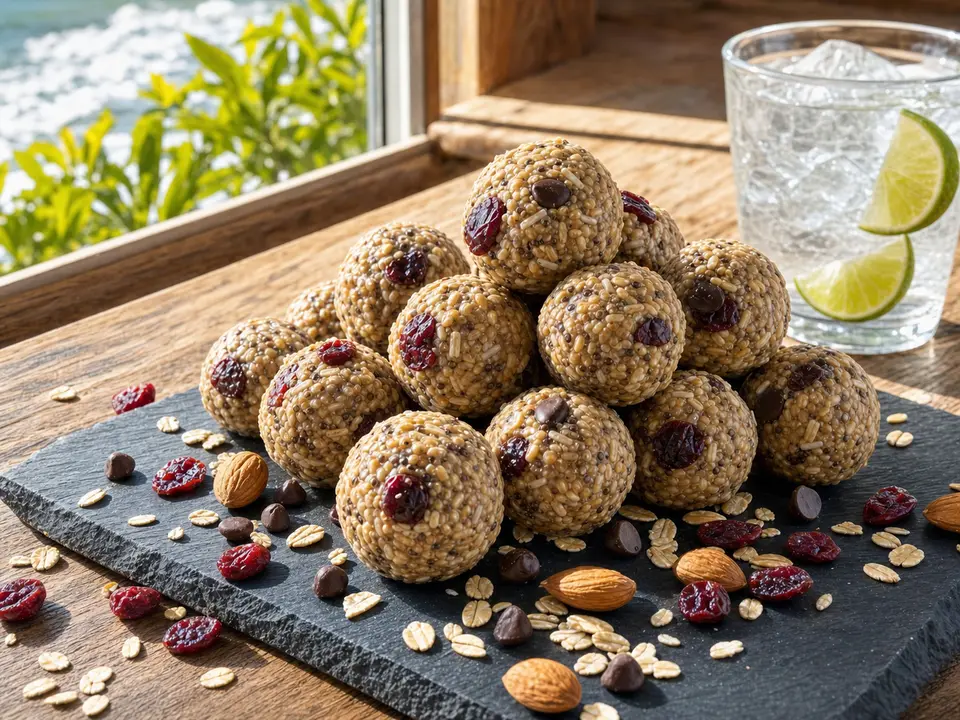
Use the kitchen batch when you want six portions from honey and maple syrup. Use that guide when you want a sealed gel, a caffeine flavor, or a brand sodium figure you can read on the packet. If you want something to chew instead of squeeze, use the trail mix energy bites.
The same carbohydrate job shows up in other forms. A drinkable energy gel is the sip version of this batch. Real food during a long session is the chewable version when you can come in. Homemade energy bars are the slower bite, with more fat, so they need more time. A sports drink versus water is the bottle version when the gram target is easier to drink than to squeeze.
How long do homemade energy gels keep?
Cap each tube and refrigerate the batch for up to 2 weeks. The recipe has no preservatives. Leave the batch at home if the car will sit in the sun, and carry one tube in a cooler bag. If a cap was left open, portion a new tube from a fresh stir.
Frequently Asked Questions
What is an energy gel?
An energy gel is a small carbohydrate serving you take with water on a run or before you paddle back out. This homemade running gel is a carb gel of about 30 g of carbohydrate and about 110 calories, with no caffeine. This batch makes 6 gels. Sealed sports gels are compared on the best energy gels guide.
How do you make homemade energy gels?
Stir 1/2 cup honey, 3 tablespoons maple syrup, 1 tablespoon lemon juice, 1/2 teaspoon fine sea salt, and 1 tablespoon water until the salt dissolves. Thin with another teaspoon of water if the mix is paste-thick. Split into 6 tubes, about 2 tablespoons each. There is no cook time. Cap the tubes and refrigerate them.
Are homemade energy gels good running gels?
Yes. This batch works as a running gel when you want about 30 g of carbohydrate in a tube. That 30 g is the low end of the ISSN range of about 30 to 60 g of carbohydrate per hour for extended high-intensity work. Take one with water on a normal run before a race. The mix makes 6 gels.
What are running gels?
A homemade running gel is this recipe: 6 tubes of about 2 tablespoons, each about 30 g of carbohydrate, 110 calories, and about 190 mg of sodium, with no caffeine in the ingredient list. Sealed running gels, caffeine, and list prices are compared on the best energy gels guide.
What is a carb gel?
A carb gel is a carbohydrate serving you take in a tube. This recipe lists about 30 g of carbohydrate and 110 calories per gel. That 30 g is the low end of the ISSN 2017 range of about 30 to 60 g of carbohydrate per hour for extended high-intensity work [1].
How long do homemade energy gels last?
Cap the tubes and keep them in the fridge for up to 2 weeks. This recipe has no preservatives. Take one tube in a cooler bag for the session. Make a fresh batch if the mix smells off or a cap was left open.
Can you use honey as an energy gel?
Yes. USDA FoodData Central lists about 17 g of carbohydrate and 64 calories in one tablespoon of honey, so a honey-forward mix reaches a gel-size target without cooking. This recipe uses 1/2 cup honey plus 3 tablespoons maple syrup, split into 6 gels of about 30 g of carbohydrate and 110 calories.
What is a maple syrup energy gel?
A maple syrup gel uses 1/2 cup maple syrup in place of the 1/2 cup honey. Keep the 3 tablespoons maple syrup, 1 tablespoon lemon juice, 1/2 teaspoon fine sea salt, and 1 tablespoon water, then divide into 6 gels. The 30 g and 110 calorie figures on this page are for the honey-forward batch.
What are sports gels?
Sports gels are sealed packets. This page is the kitchen recipe. The best energy gels guide lines up eight store packets on carbs, sodium, caffeine, and price. This homemade batch has no caffeine. Use the kitchen batch when you want six portions from honey and maple syrup.
Should I make energy gels or buy store packets?
Make this batch when you want six gels from honey, maple syrup, lemon juice, fine sea salt, and water. Buy a sealed packet when you want a brand caffeine number or a list price. The best energy gels guide owns that comparison. This recipe does not rank brands.
Do homemade gels replace a sports drink or electrolyte gels?
No. Each gel lists about 190 mg of sodium from 1/2 teaspoon of fine sea salt in the whole batch. That sodium supports the drink you take with the gel. On a hot session or a long paddle, keep water or an electrolyte drink as well. The gel is the carbohydrate serving, not the bottle.
What is an energy jelly or energy goo?
It is this homemade energy gel. Each of the 6 servings is about 2 tablespoons, about 30 g of carbohydrate and 110 calories, from honey, maple syrup, lemon juice, fine sea salt, and water. Take it with water.
Sources
- [1] Kerksick et al., ISSN Position Stand: Nutrient Timing, 2017
- [2] USDA FoodData Central, Honey, SR Legacy, FDC 169640. 304 kcal and 82.4 g carbohydrate per 100 g. 1 tablespoon is 21 g. Read again from FoodData Central on November 7, 2026.
- [3] USDA FoodData Central, Syrups, maple, SR Legacy, FDC 169661. 260 kcal and 67.04 g carbohydrate per 100 g. 1 tablespoon is 20 g. Read again from FoodData Central on November 7, 2026.
- [4] USDA FoodData Central, Lemon juice, raw, SR Legacy, FDC 167747. 22 kcal and 6.9 g carbohydrate per 100 g. 1 fluid ounce is 30.5 g. Read again from FoodData Central on November 7, 2026.
- [5] USDA FoodData Central, Salt, table, SR Legacy, FDC 173468. 38,758 mg sodium per 100 g. 1 teaspoon is 6 g. Read again from FoodData Central on November 7, 2026.