Published: September 3, 2026 | By the SurferFood Editorial Team
Pack the meals that are hard to invent at 5 a.m., then buy fruit and drinks when you arrive. A multi-day surf trip is an endurance week with bad kitchens. Competitive surfing reviews note that some events run two or three days and that daily carbohydrate should match the load, often 5 to 7 g per kg on moderate days and more when the hours add up [1]. Freeze a breakfast, cook a tray of bowls, and leave room in the cooler for ice. This is travel-and-fuel advice, not a medical diet.
Key takeaways
- Daily carbohydrate for moderate to heavy training commonly sits at 5 to 7 g per kg of body weight, with higher targets on extreme days [1][2].
- When you have less than 4 hours between sessions, ISSN nutrient timing favors faster carbohydrate, not a heavy sit-down feast [2].
- USDA leftover guidance is to refrigerate perishable food within 2 hours, or within 1 hour above 90F [3].
- Bring one make-ahead breakfast and one batch of grain bowls. Buy produce and extra fluids at the destination.
- A cooler, ice, and a simple kit from our gear page matter as much as the recipes.
Quick Guide
What does a surf trip actually demand?
You are stacking dawn patrol, a possible second session, driving, and late dinners. A 2016 joint position of the Academy of Nutrition and Dietetics, Dietitians of Canada, and ACSM frames carbohydrate as the main fuel for that kind of day and scales it to training load [4]. Elite surfers in one review trained up to about 7 hours a day in camp-style blocks [1]. Your weekend is smaller, but the mistake is the same: under-eat on day one and feel it on day three.
The Pack List
Four Layers in the Cooler
If it is hard to cook at the house or camp, it belongs in the car. If it is easy to buy, leave the space for ice.
Which meal-prep recipes travel for a surf week?
Cook once at home for the first two or three days. After that, shop and repeat a simple pattern. Start with make-ahead breakfast burritos for surf week. They freeze, they reheat in a few minutes, and each one holds 23 g of protein and 45 g of carbohydrate.
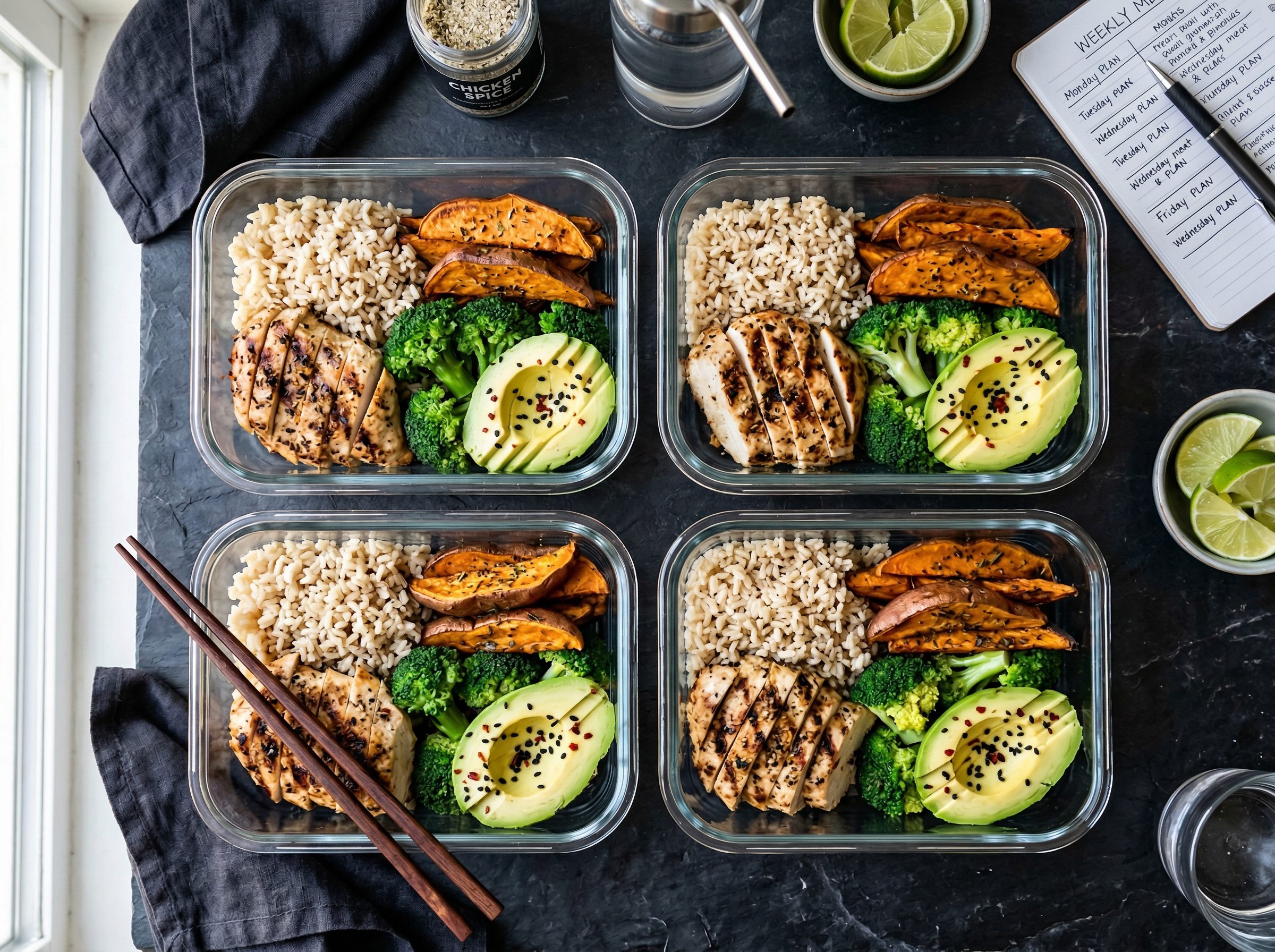
For lunch and the gap between sessions, pack Surfer's meal prep rice bowls. Four servings of chicken, rice, and vegetables give you a known 38 g of protein and 55 g of carbohydrate per bowl. If you want a cooler salad that does not need a stove, use the Mediterranean quinoa power salad.
A big swell day that starts at a beach parking lot is a different problem. The big-day beach fuel plate is built to eat without a kitchen. Pair any of these with the timing notes in our pre-surf nutrition guide. On tropical reef trips, read ciguatera risk for surf travelers before you default to grilled catch of the day.
Day Rhythm
How should you eat across two or three surf days?
Repeat a small menu. Novelty is how you end up with fried food at 10 p.m. and nothing for dawn.
Stage the morning
Put breakfast where you cannot miss it. Charge the blender if you brought one. Freeze water bottles so they work as ice and later as drinks.
Eat, then sip
A burrito, oats, or toast beats coffee alone. Add fluid on the drive. Save the heavy dinner calories for after the last session, not before the first.
Fast carbs, some protein
If the second paddle is inside 4 hours, ISSN guidance points to quicker carbohydrate rather than a huge meal [2]. A bowl, a wrap, or yogurt and fruit is enough.
Rebuild, then restock
Eat a real dinner with carbs, protein, and vegetables. Refill the cooler. If you are on day two of three, shop before you are tired and hungry.
How do you keep trip food safe without a full kitchen?
Treat the cooler like a fridge, not a picnic. USDA leftover advice is clear: get perishable food into the cold within 2 hours, and within 1 hour if the air is above 90F [3]. Keep the cooler closed. Use a block of ice or frozen bottles, not a thin bag of cubes that is gone by noon.
Cooked meal-prep is usually a 3-to-4-day food. If the trip is longer, shop halfway. Skip raw chicken in a warm car. Pack cooked protein, cans, or pouches. Wash hands or use wipes before you eat on the tailgate.
A cheap kit still helps. Our gear reviews cover blenders and other kitchen tools worth packing when the rental is empty. You do not need a full setup. You need one way to reheat and one way to blend a recovery drink.
What should you leave at home?
Leave foods that only work in your own kitchen. Fragile salads, huge tubs of leftovers, and anything you have never eaten before a session all cause problems. Leave the plan to "just eat out." Remote lots and early tides do not care about restaurant hours.
Leave the idea that beer is recovery. Sequence food and fluid first. For drink timing on hot days, use surf hydration: what to drink before you paddle out.
The night before a long day in the water, make dinner the carb meal. See Carb-Loading the Night Before a Surf Trip.
This article is educational and is not medical advice. It is not a prescription for calories, sodium, or a medical diet. People with food allergies, diabetes, or other conditions should use a clinician or registered dietitian for personal plans.
Frequently asked questions
What food should I pack for a multi-day surf trip?
Pack one make-ahead breakfast, one batch of rice or grain bowls, fruit that travels, a salty snack, and a protein you can eat cold. Breakfast burritos and meal-prep rice bowls cover dawn patrol and the first lunch. Buy milk, greens, and extra fruit at the destination so the cooler is not a week of leftovers.
How much should I eat on a surf trip with two sessions a day?
Think in daily carbohydrate, not one huge dinner. Sports nutrition guidance for moderate to heavy training often lands around 5 to 7 grams of carbohydrate per kilogram of body weight per day, and higher when the load is extreme. A 160-pound surfer at 6 g per kg needs about 430 grams of carbohydrate across the whole day, split over meals and snacks.
What should I eat between two surf sessions on the same day?
If you have less than 4 hours, go lighter and faster. ISSN timing guidance calls for aggressive carbohydrate when recovery is short. A rice bowl, a burrito, yogurt and fruit, or a smoothie beats a heavy fried plate. Add fluid and sodium so the second paddle does not start from a hole.
How do I keep surf trip food safe in a cooler?
Use a hard cooler, freeze bottles as extra ice, and keep raw meat separate or skip it and pack cooked protein. USDA leftover guidance is to refrigerate perishable food within 2 hours, or within 1 hour if it is above 90F. Eat cooked meal-prep within 3 to 4 days, and do not leave the cooler open on hot sand.
What if I cannot cook on a surf trip?
Lean on no-reheat and low-reheat food: overnight oats, fruit, tuna or salmon packets, tortillas, nut butter, and a premade salad or grain bowl. A rental kitchen or camp stove still helps for rice and eggs. Pack a simple kit from the gear page so you are not buying a new blender every trip.
Should I buy all my surf trip food when I arrive?
Buy perishable produce and extra drinks on arrival. Bring the meals that are hard to improvise at 5 a.m., especially breakfast and the first recovery bowl. Remote breaks and contest weeks punish you if the only open store sells chips and soda.
Sources
- [1] Santos, "Nutrition Strategies for Competitive Surfing: a review," University of Porto repository, 2021 - https://repositorio-aberto.up.pt/bitstream/10216/136453/2/499761.pdf
- [2] Kerksick et al., "ISSN Position Stand: Nutrient Timing," Journal of the International Society of Sports Nutrition, 2017 - https://pmc.ncbi.nlm.nih.gov/articles/PMC5596471/
- [3] USDA Food Safety and Inspection Service, "Leftovers and Food Safety" - https://www.fsis.usda.gov/food-safety/safe-food-handling-and-preparation/food-safety-basics/leftovers-and-food-safety
- [4] Thomas, Erdman, and Burke, "Nutrition and Athletic Performance," Academy of Nutrition and Dietetics, Dietitians of Canada, and ACSM joint position, Medicine and Science in Sports and Exercise, 2016 - https://pubmed.ncbi.nlm.nih.gov/26891166/
Cook Once
Start With the Rice Bowls
One tray of meal-prep bowls plus a freezer breakfast covers the first half of most surf weekends.