Published: November 23, 2026 | By the SurferFood Editorial Team
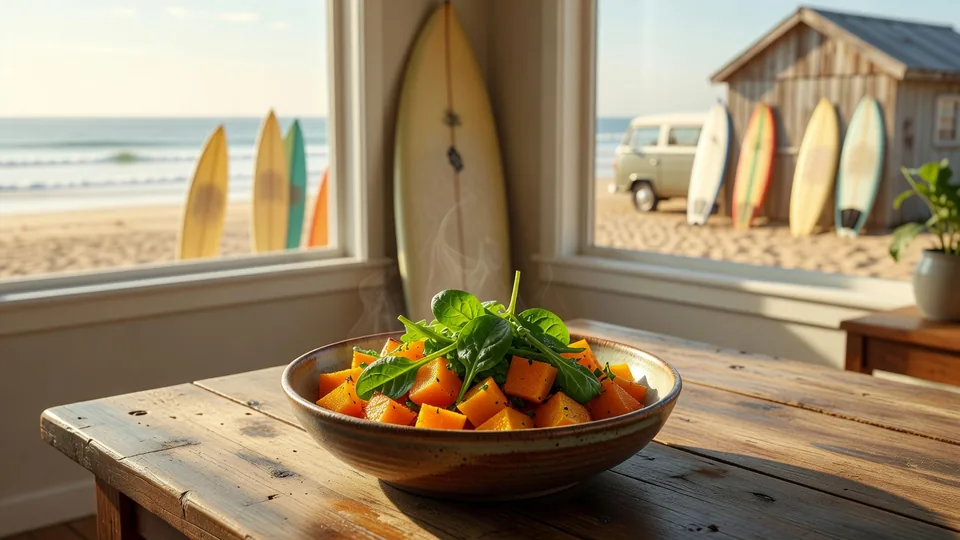
The sweet potato power bowl is a recovery plate you already know: roasted starch, protein, and greens after you surf. This is that bowl built on winter vegetables. Roast butternut squash, parsnip, and cauliflower on one sheet, then reheat the batch inside the leftover window USDA prints. A warm starch plate after a cold session may support the pattern in the cold-water nutrition post. This page does not set a calorie target.
Key takeaways
- Before a cold session, stay with a light bite. After you are dry, eat a warm starch and protein plate. That timing lives in the cold-water nutrition post.
- The Inertia's winter vegetable note names parsnips for roasting and cauliflower where you might mash a potato [1]. A separate Inertia recipe roasts cubed butternut squash with black beans [2]. This page makes a bowl, not an enchilada.
- Cool leftovers in shallow containers. Refrigerate them within 2 hours, or within 1 hour above 90 F. They keep 3 to 4 days in the fridge. Reheat to 165 F [3].
- The meal-prep rice bowls are the batch habit. The sweet potato bowl is the recovery shape. This sheet pan is the winter starch.
- Do not move the macro line from the sweet potato recipe onto this bowl. The ingredients are different.
Why a warm bowl after cold water?
Read the cold-water nutrition post for the clock. Keep the pre-surf meal smaller and lower in fat. After the suit comes off, eat starch plus protein. A roasted squash bowl may support that later plate. Eat the light bite first. Eat this bowl when you are dry.
The Inertia winter note points at parsnips for roasting and at cauliflower where you might mash a potato [1]. Use them as food you can roast and reheat. This page does not repeat that article's disease claims. The enchilada recipe roasts cubed butternut squash and mixes it with black beans [2]. This bowl keeps those two foods and drops the sauce and tortillas.
Sheet pan
A squash bowl you can reheat
One pan of vegetables, beans, and a protein you already cook. Cube size changes the time, so this page does not print a minute count.
- Butternut squash, peeled, seeded, and cut into bite-size cubes.
- Parsnips, peeled and cut to a similar size. Cauliflower, cut into florets.
- Olive oil, salt, and black pepper. Black beans, drained and rinsed.
- A handful of greens for each bowl.
- Protein you already trust: eggs, leftover cooked poultry, or fish you check with a thermometer.
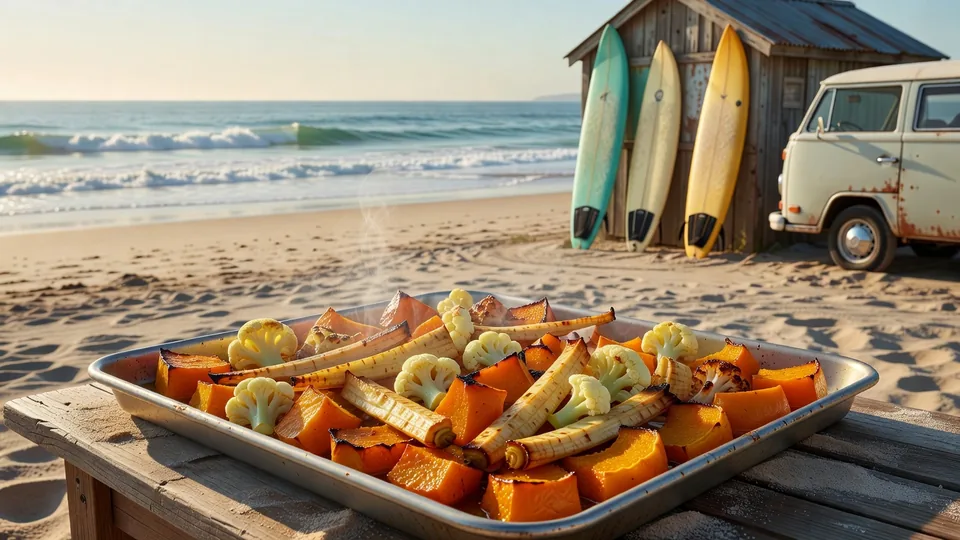
Heat the oven. Toss the squash, parsnips, and cauliflower with oil, salt, and pepper. Spread them in one layer so the edges can brown. Roast until a cube of squash is soft all the way through and the edges have color. Turn the pan once. Smaller pieces finish sooner.
Warm the beans in a small pot, or stir them through the vegetables near the end. Put greens in a bowl, then the roast, the beans, and the protein. Cook eggs while the tray rests if eggs are the protein. Eat one bowl after you are dry. Cool the rest before it goes in the fridge.
How hot does the protein need to be?
If you cook poultry for the bowl, USDA says all poultry should reach 165 F [3]. If you cook fish, FDA says most seafood should reach 145 F, and the flesh should look clear and separate with a fork [4]. An opened can is perishable. USDA camping guidance says to put opened canned food on ice, which at home means the refrigerator, at 40 F or below [3][5].
How does this fit a meal-prep week?
The meal-prep rice bowls are the batch habit: cook once, portion it, and reheat. Roast this sheet, cool it fast, and portion it with greens or with rice you already made. The sweet potato power bowl is the recovery shape when sweet potato is the starch. If you swap the starch, do not reuse either recipe's macro line.
Cooling is the step people skip. USDA says to divide large amounts into shallow containers so food gets to 40 F or below quickly. A deep tray of hot squash can sit between 40 F and 140 F for too long. That range is the danger zone. Refrigerate perishable leftovers within 2 hours, or within 1 hour if the air is above 90 F. In the refrigerator they keep 3 to 4 days. In the freezer they keep 3 to 4 months. They are safe longer, but they can dry out [3].
Reheat leftovers to 165 F, covered so they heat through. In a microwave, cover the food, rotate it, and check the temperature in several places, because microwaves have cold spots. Let it rest, then check again with a food thermometer [3]. You can reheat from frozen. It takes longer, and it still needs to reach 165 F [3].
The fridge window is 3 to 4 days, not an open-ended surf week. Freeze what you will not eat in that time. The cold-water nutrition post still sets the morning: a light bite, a warm drink, then this bowl once you are dry.
This article is educational and is not medical advice. It is not a treatment plan. If you have a medical condition or take medicines that change fluid, salt, or food needs, talk with a qualified clinician.
FAQ
Can I eat the squash bowl before I surf?
Make the pre-surf meal the light one from the cold-water nutrition post. Eat this bowl after you are dry. A heavy roast right before a cold paddle is the pattern that post tells you to skip.
How long do the leftovers keep?
USDA says 3 to 4 days in the refrigerator if you cooled them within 2 hours, or within 1 hour when the air is above 90 F. Reheat to 165 F. Freeze what you will not eat in that window.
Can I use the sweet potato macro numbers on this bowl?
No. Those numbers describe the sweet potato recipe. This bowl changes the starch. This page does not print a calorie target.
What protein goes on top?
Eggs, leftover poultry reheated to 165 F, or fish cooked to 145 F. Put an opened can in the refrigerator and use the same leftover clock as the rest of the bowl.
Does this replace the winter nutrition post?
No. That post is the timing, the thermos, and the light morning. This post is one bowl that can be the dense plate after you are dry.
Roast the sheet, cool it in shallow containers, and reheat it to 165 F. The sweet potato power bowl is the same recovery shape with a different starch. The meal-prep rice bowls are the batch habit. The cold-water nutrition post is the reason the heavy bowl waits until you are dry.
Sources
- [1] Phil White, The Inertia, "4 White Vegetables to Add to Your Winter Diet," February 9, 2017. https://www.theinertia.com/health/4-white-vegetables-to-add-to-your-winter-diet/
- [2] Taylor Pitz, The Inertia, "Recipe: Butternut Squash and Black Bean Enchiladas," January 4, 2016. https://www.theinertia.com/health/recipe-butternut-squash-and-black-bean-enchiladas/
- [3] U.S. Department of Agriculture, Food Safety and Inspection Service, "Leftovers and Food Safety," updated July 31, 2020. https://www.fsis.usda.gov/food-safety/safe-food-handling-and-preparation/food-safety-basics/leftovers-and-food-safety
- [4] U.S. Food and Drug Administration, "Selecting and Serving Fresh and Frozen Seafood Safely." https://www.fda.gov/food/buy-store-serve-safe-food/selecting-and-serving-fresh-and-frozen-seafood-safely
- [5] U.S. Department of Agriculture, Food Safety and Inspection Service, "Food Safety While Hiking, Camping and Boating." https://www.fsis.usda.gov/food-safety/safe-food-handling-and-preparation/food-safety-basics/food-safety-while-hiking-camping
Next Step
Open the Sweet Potato Power Bowl
Use that recipe when sweet potato is the starch. Use this sheet pan when you want squash, parsnip, and cauliflower instead. Do not swap the macro lines.