Published: November 9, 2026 | By the SurferFood Editorial Team
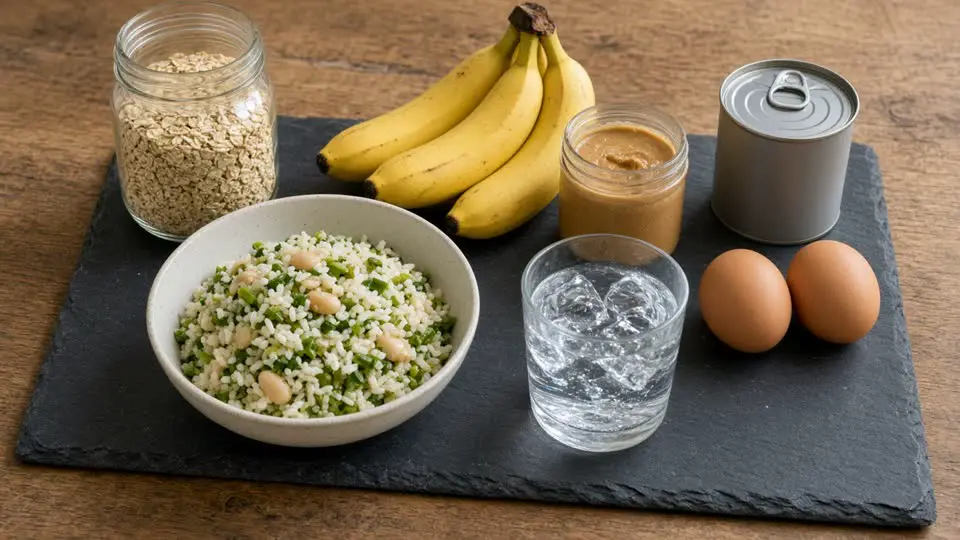
A week of sessions does not need specialty bars. Oats, eggs or canned fish, rice, beans, bananas, and peanut butter cover the plate before you paddle, the jar between sessions, and the bowl after.
Budget fuel on this page means repeatable pantry units, cooked more than once. It is not a race to the lowest calorie count. A dollar total needs a dated local flyer. This page does not have one, so the list stays in units.
Key takeaways
- Shop oats, eggs, rice, beans, bananas, peanut butter, frozen vegetables, tortillas, and a couple of cans of light tuna.
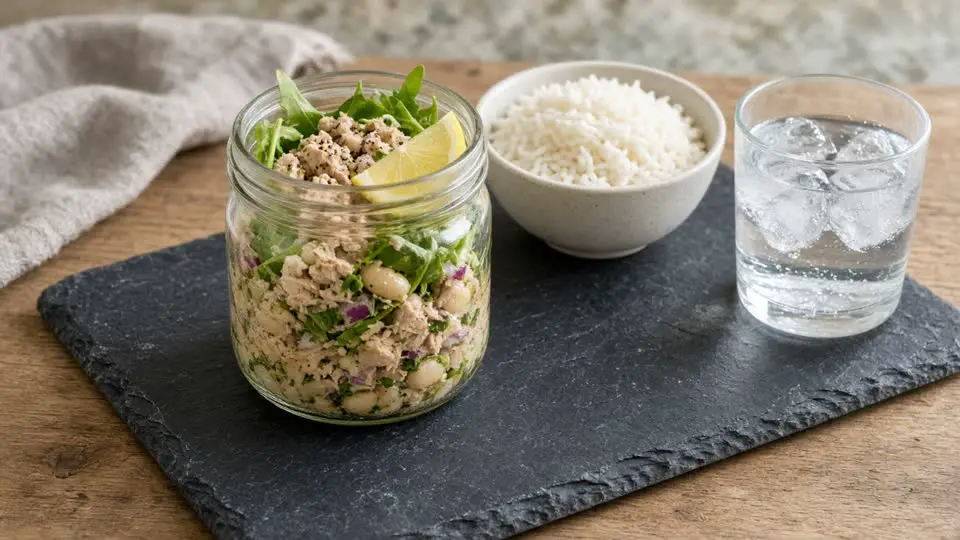
- Use overnight oats before you paddle, tuna and white bean jars between sessions, and a rice bowl after.
- The published meal-prep bowls use chicken. The cheaper bowl keeps the same shape and swaps in eggs, beans, or fish.
- Canned light tuna is a Best Choice in FDA and EPA fish advice. That advice calls 2 to 3 servings a week a fine pattern, so beans and eggs fill the other days [8].
- Bars are the packaged swap, not the meal. The DIY surf energy bars post is the sibling for that job.
What does a staple actually contain?
These figures are FoodData Central values for one listed portion. They are building blocks, not a meal plan and not a price.
- Dry rolled oats, 1 cup (81 g): about 307 kcal, 10.7 g protein, and 54.8 g carbohydrate. Per 100 g the same record lists 379 kcal, 13.15 g protein, and 67.7 g carbohydrate [1].
- A medium banana (118 g): about 105 kcal and 27 g carbohydrate [2].
- A large egg (50 g): about 72 kcal and 6.3 g protein [3].
- Cooked long-grain white rice, 1 cup (158 g): about 205 kcal, 4.3 g protein, and 44.5 g carbohydrate [4].
- Canned white beans, 1 cup (262 g): about 299 kcal, 19.0 g protein, and 55.5 g carbohydrate [5].
- Light tuna canned in water, drained solids from the listed can portion (107 g): about 96 kcal and 20.3 g protein. Per 100 g that record lists 90 kcal and 19.0 g protein [6].
- Smooth peanut butter without salt, 2 tablespoons (32 g): about 191 kcal, 7.1 g protein, and 7.1 g carbohydrate [7].
Shopping list
A 7-day unit list, not a receipt
Buy this once for one person. Cook the three templates across the week. Do not treat the counts as a calorie target.
- Dry rolled oats, 2 lb
- Eggs, 1 dozen
- Bananas, 7
- Peanut butter, 1 jar
- Dry rice, 2 lb
- Canned white beans, 4 cans
- Canned light tuna in water, 2 or 3 cans, then switch to beans or eggs
- Frozen vegetables, 2 bags
- Corn tortillas, 1 package
A can is not the same thing as the 4-ounce serving in the fish advice. Keep the week's fish near that 2 to 3 serving pattern and rotate [8].
Three templates from recipes already on the site
Before you paddle, use the overnight oats. That recipe lists 24 g protein, 60 g carbohydrate, and 436 kcal per serving. Those are the recipe's listed estimates, with the ingredient table on the page. The jar is ready when the alarm goes off. Timing for a carbohydrate meal sits in the pre-surf guide.
Between sessions, use the tuna and white bean jars. The recipe builds 2 servings from 2 cans of light tuna in water, 1 can of cannellini beans, vegetables, a little oil, and lemon. It is a no-cook jar for a fridge day, not a dashboard lunch.
After you get out, use the shape of the meal-prep bowls. The published bowl is chicken thighs, brown rice, broccoli, and sweet potato. The recipe lists 38 g protein, 55 g carbohydrate, and 516 kcal per serving. For the cheaper week, keep the starch, the vegetables, and a protein, and use eggs, the beans, or the tuna you already bought instead of the chicken. The recovery guide is the reason the bowl has starch and protein together.
What travels for 48 hours without a fridge?
Pack dry oats, the peanut butter, bananas, tortillas, and unopened cans. Those foods do not need a cold box while the package is sealed.
Cooked rice, cooked eggs, opened cans, yogurt, and the tuna jars are perishable. USDA says leftovers must be refrigerated within 2 hours of cooking, or within 1 hour if the temperature is over 90 F. Perishable food left out longer than that should be thrown away. In the refrigerator, leftovers keep 3 to 4 days [9]. A cooler with ice is a different trip. This list is the no-fridge kit.
What should you skip when money is tight?
Skip single-serve gels as breakfast. A gel is a measured carbohydrate for long work, and the pre-surf guide already covers that job. It does not replace the week's meals.
Skip a cafe breakfast every dawn. The oats, the eggs, and a banana do that job from food you already bought.
Use the DIY bars when you want a bar in the bag. They are the packaged-swap sibling. They are not a substitute for the oats, the jar, or the bowl.
This article is educational and is not medical advice. It is not a treatment plan. If you have a medical condition or take medicines that change fluid, salt, or food needs, talk with a qualified clinician.
FAQ
How much does a week of this food cost?
This page does not give a dollar total. Store prices move, and a real total needs a dated flyer from your store. Shop the unit list and use your receipt.
Can I eat tuna jars every day?
Use them on some days, not every lunch. FDA and EPA place canned light tuna in the Best Choices group and call 2 to 3 servings a week a fine pattern. A serving in that advice is about 4 ounces. Beans and eggs cover the other days [8].
Do I need protein powder for these meals?
No. Eggs, canned fish, beans, oats, and peanut butter already carry protein. If you add powder, the tub label is the dose.
What travels for 48 hours without a fridge?
Dry oats, peanut butter, bananas, tortillas, and unopened cans. Cooked rice, eggs, opened cans, and the tuna jars need refrigeration within 2 hours, or within 1 hour above 90 F [9].
Shop the unit list, cook the oats, the jars, and a rice bowl, and let the receipt be the price. The DIY bars cover the packaged swap when you still want something in a wax box.
Sources
- [1] U.S. Department of Agriculture, FoodData Central, "Cereals, oats, regular and quick, not fortified, dry" (FDC 173904). https://fdc.nal.usda.gov/portal-data/external/173904
- [2] U.S. Department of Agriculture, FoodData Central, "Bananas, raw" (FDC 173944). https://fdc.nal.usda.gov/portal-data/external/173944
- [3] U.S. Department of Agriculture, FoodData Central, "Egg, whole, raw, fresh" (FDC 171287). https://fdc.nal.usda.gov/portal-data/external/171287
- [4] U.S. Department of Agriculture, FoodData Central, "Rice, white, long-grain, regular, enriched, cooked" (FDC 168878). https://fdc.nal.usda.gov/portal-data/external/168878
- [5] U.S. Department of Agriculture, FoodData Central, "Beans, white, mature seeds, canned" (FDC 175204). https://fdc.nal.usda.gov/portal-data/external/175204
- [6] U.S. Department of Agriculture, FoodData Central, "Fish, tuna, light, canned in water, drained solids" (FDC 334194). https://fdc.nal.usda.gov/portal-data/external/334194
- [7] U.S. Department of Agriculture, FoodData Central, "Peanut butter, smooth style, without salt" (FDC 172470). https://fdc.nal.usda.gov/portal-data/external/172470
- [8] U.S. Food and Drug Administration, "Questions and Answers from the FDA/EPA Advice about Eating Fish." https://www.fda.gov/food/consumers/questions-answers-fdaepa-advice-about-eating-fish-those-who-might-become-or-are-pregnant-or
- [9] USDA Food Safety and Inspection Service, "Leftovers and Food Safety," updated July 31, 2020. https://www.fsis.usda.gov/food-safety/safe-food-handling-and-preparation/food-safety-basics/leftovers-and-food-safety
Next Step
Open the Meal-Prep Bowls
Shop the unit list, cook the oats, the jars, and a rice bowl, and let the receipt be the price. The DIY bars cover the packaged swap when you still want something in a wax box.