Published: September 14, 2026 | By the SurferFood Editorial Team
Rank recovery meals by protein, carbohydrate, and how fast you can actually eat them, not by a mystery score. The International Society of Sports Nutrition's 2017 protein position stand gives a general per-serving target of 0.25 g of high-quality protein per kg, or an absolute dose of 20 to 40 grams [1]. The same group's nutrient-timing stand says carbohydrate timing matters most when the next session is inside about 4 hours [2]. We scored eight SurferFood recovery plates against those targets plus prep time. This is not a ranking of every restaurant bowl on earth. It is a kitchen ranking of our listed recipes, with the method in the open.
Key takeaways
- ISSN's 2017 protein stand lists a general serving of 0.25 g per kg, or 20 to 40 grams of high-quality protein [1].
- When the next paddle is inside 4 hours, ISSN favors aggressive carbohydrate, including about 1.2 g per kg per hour in the hardest cases [2].
- On our board, the teriyaki chicken rice bowl ranks first for protein plus carbs. The green smoothie ranks first for speed.
- A shake can bridge the gap. A plate still wins when you can sit down. See why a protein shake is the post-surf go-to.
- Macros on SurferFood pages are estimates from listed ingredients, not lab assays.
How We Ranked
What counts as a recovery meal here?
We only ranked recipes we already publish with listed macros. Protein score favors 30 to 44 grams. Carb score favors 50 grams or more, because a long paddle empties glycogen. Speed score favors food you can eat within about 30 minutes of toweling off. We did not taste-test every bowl in a blind panel. We did not invent restaurant winners. If a meal is not on this list, it is not "worse." It is just not in our recipe file.
Which post-surf meals rank highest on our board?
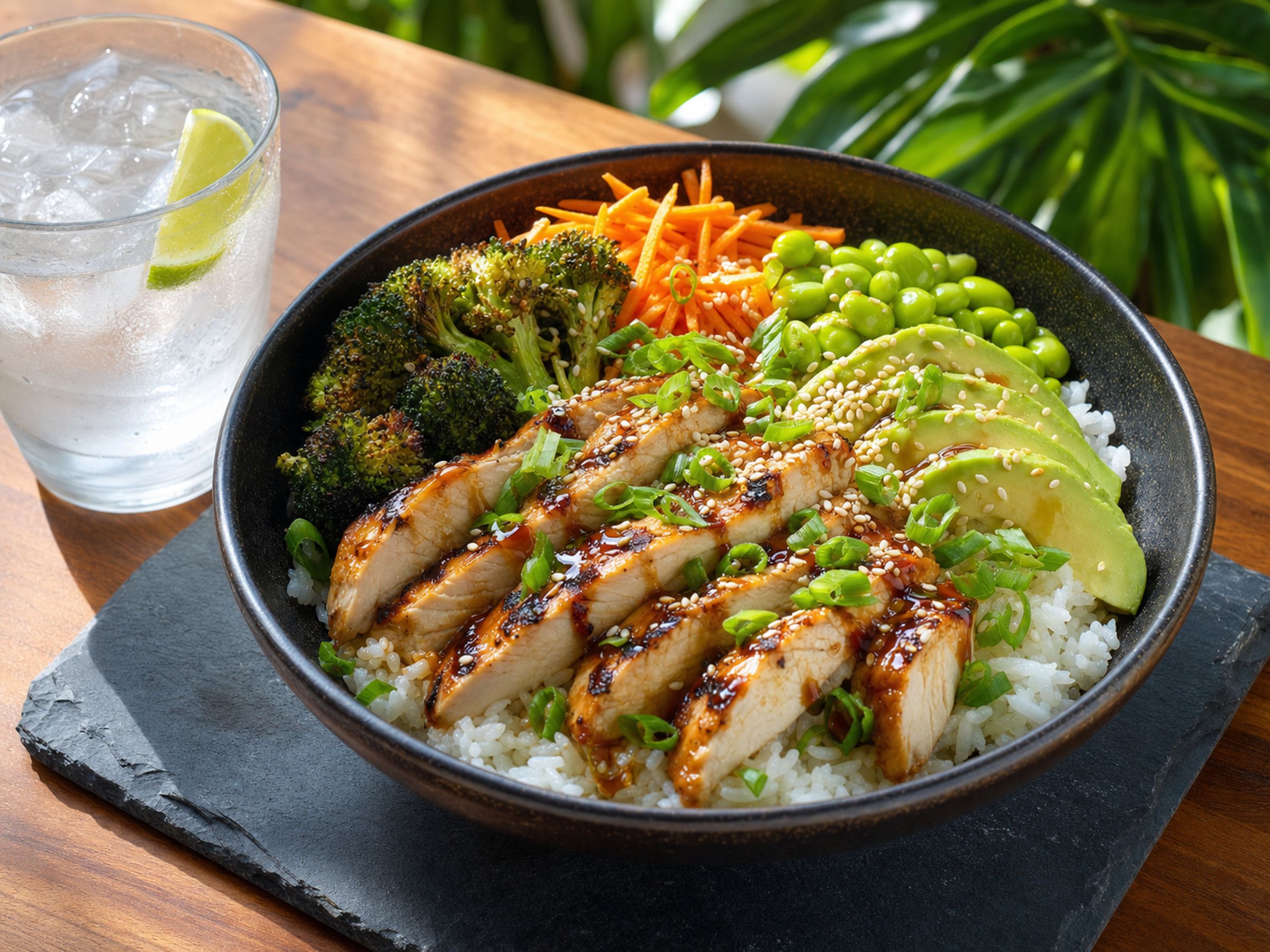
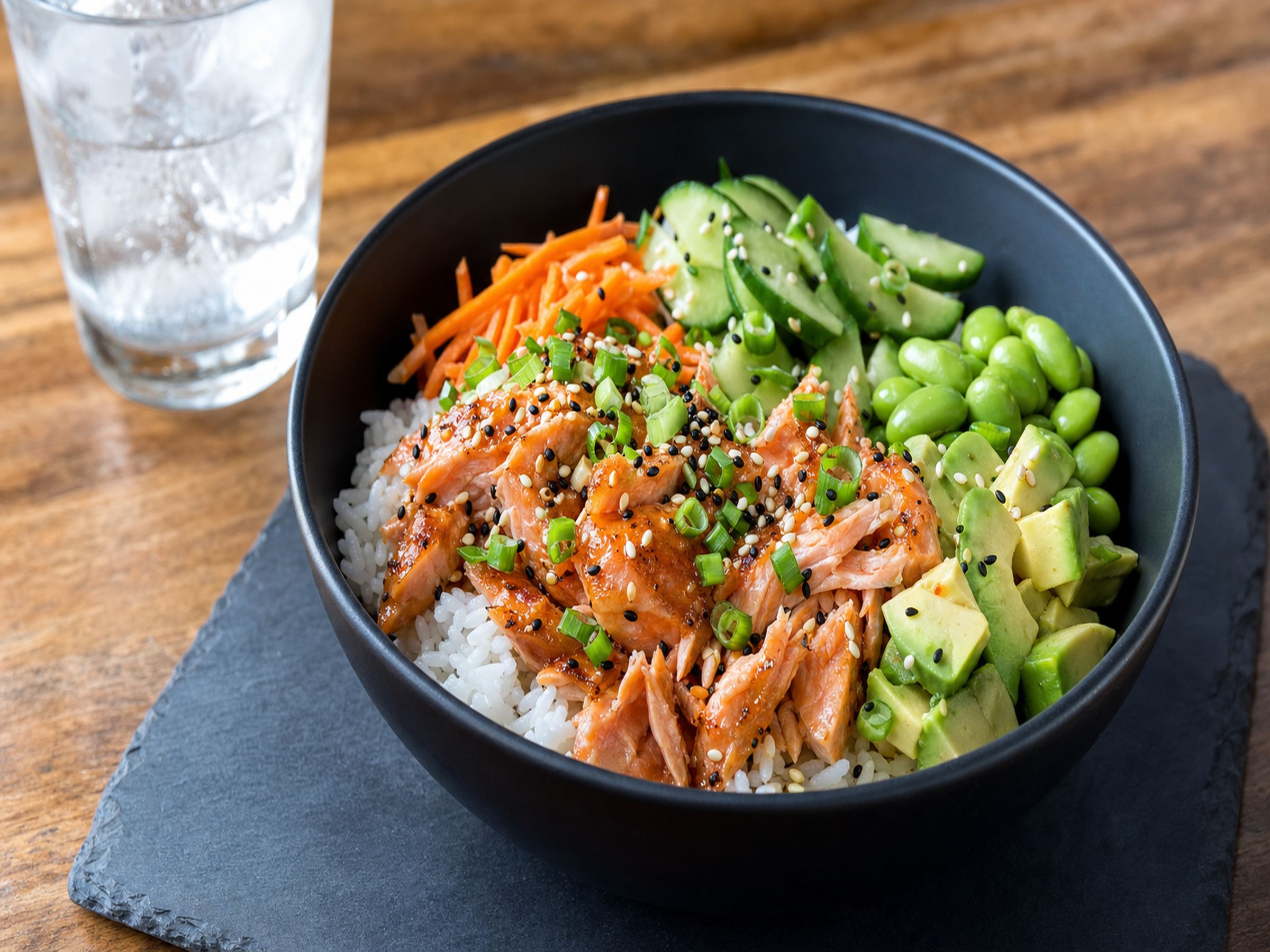
The teriyaki chicken rice bowl sits at number 1 because it hits 44 g protein and 62 g carbohydrate in one plated serving [recipe macros]. That lands inside ISSN's protein serving range and gives enough starch for a real glycogen refill [1][2]. Miso-ginger salmon is a close second: 39 g protein and 63 g carbohydrate, and it plates in about 25 minutes.
Poke ranks lower on carbs (38 g) even though protein is excellent at 42 g. A green smoothie ranks last as a "meal" and first as a bridge: 30 g protein, 48 g carbohydrate, 5 minutes. Use the table. Do not treat the numbers as a trophy.
Kitchen Board
SurferFood recovery meals, ranked
Listed macros are estimates. Rank is for our recipes only, scored on protein, carbs, and time to eat.
| Rank | Meal | Protein | Carbs | Time | Best use |
|---|---|---|---|---|---|
| 1 | Teriyaki Chicken Recovery Rice Bowl | 44 g | 62 g | 35 min | Best all-around refill |
| 2 | Miso-Ginger Salmon Recovery Rice Bowl | 39 g | 63 g | 25 min | Best fish-and-rice plate |
| 3 | Sweet Potato Recovery Power Bowl | 40 g | 58 g | 45 min | When you can cook at home |
| 4 | Grilled Mahi Mahi Recovery Plate | 44 g | 46 g | 30 min | High protein, add extra rice |
| 5 | Surfer's Meal Prep Rice Bowls | 38 g | 55 g | Reheat | Best if you cooked Sunday |
| 6 | Salmon Poke Recovery Bowl | 42 g | 38 g | 20 min | Fast plate, lighter starch |
| 7 | Post-Session Protein Tacos | 36 g | 42 g | 25 min | When you want a handheld meal |
| 8 | Green Recovery Smoothie | 30 g | 48 g | 5 min | Best bridge before a real plate |
Why does the chicken rice bowl beat poke on this list?
Protein is a tie in spirit. Both sit in ISSN's 20 to 40 gram serving band, and the chicken bowl is at the top of it [1]. Carbohydrate is not a tie. Ivy's classic timing work, summarized in the ISSN nutrient-timing stand, found muscle glycogen restoration about 50% faster over four hours when carbohydrate was taken within 30 minutes versus a two-hour delay [2]. A 62 gram rice bowl simply gives the muscle more starch to store than a 38 gram poke bowl.
If you love poke, add extra rice or fruit. The rank then jumps. The method is the point, not the trophy.
When should a smoothie beat a bowl?
When you cannot sit down. ISSN says protein taken in the hours around exercise still supports muscle protein synthesis, and a 20 to 40 gram dose is the usual serving [1]. A 5-minute smoothie that you actually drink beats a perfect bowl you abandon for a beer. Drink the smoothie, then eat a plate within a couple of hours. That is the honest rank for a workday dawn patrol.
For a same-day second session, bias the higher-carb bowls. Nutrient timing matters most when recovery is short [2]. The chicken bowl, miso salmon, or a reheated meal-prep rice bowl are the practical picks. Read the broader protocol in our post-surf recovery guide.
What caveats should you keep in mind?
We did not run a metabolic cart on these plates. We did not survey 200 surfers. We did not include takeout. Rankings that pretend otherwise are marketing. Ours is a scoring of listed SurferFood macros against published ISSN ranges. Your stomach, your budget, and the fish on special can beat any row in that table.
This article is educational and is not medical advice. It is not a treatment plan. If you have a medical condition or take medicines that change fluid, salt, or food needs, talk with a qualified clinician.
Frequently asked questions
What is the best meal after surfing?
The best meal is one you will eat soon that has about 20 to 40 grams of protein and enough carbohydrate to refill glycogen. On our board, the teriyaki chicken rice bowl ranks first for that combo. If you cannot cook, a recovery smoothie plus a later plate is the honest answer.
How did SurferFood rank post-surf meals?
We scored our own listed recipes on protein, carbohydrate, and time to eat, using ISSN serving ranges. This is a kitchen ranking, not a lab contest or a list of every restaurant meal. Macros are estimates from listed ingredients.
Do I need 60 grams of carbs after every session?
Not after a short, easy session in cool water. After a long paddle, or when you will surf again the same day, ISSN treats carbohydrate timing as more important. Then a higher-carb bowl is the safer default for most surfers.
Is poke a good recovery meal?
Yes for protein. Our salmon poke bowl lists 42 grams, which sits in ISSN's serving range. Carbohydrate is lighter at 38 grams, so add rice or fruit if the session was long. Poke is still one of the fastest plates we publish.
Can a protein shake replace a recovery meal?
It can start recovery. It should not be the only food after a two-hour paddle if you can eat more. Use a shake when you are leaving the lot, then eat a plate. That is the go-to pattern, not a forever substitute.
What should I eat if I have two sessions in one day?
Bias carbohydrate and eat sooner. ISSN flags short recovery as the time when carb timing matters most. Reheat a rice bowl, drink a smoothie, and add fruit so the second paddle does not start empty. Save the heavy fried plate for a rest night.
Sources
- [1] Jager et al., "ISSN Position Stand: Protein and Exercise," Journal of the International Society of Sports Nutrition, 2017 - https://pmc.ncbi.nlm.nih.gov/articles/PMC5477153/
- [2] Kerksick et al., "ISSN Position Stand: Nutrient Timing," Journal of the International Society of Sports Nutrition, 2017 - https://pmc.ncbi.nlm.nih.gov/articles/PMC5596471/
- [3] SurferFood recipe index, listed per-serving macros - https://surferfood.com/recipes
Next Step
See the Recovery Science
Macros only help if the timing is right. The recovery guide covers glycogen, protein, and the first two hours after you rinse off.