Published: October 12, 2026 | By the SurferFood Editorial Team
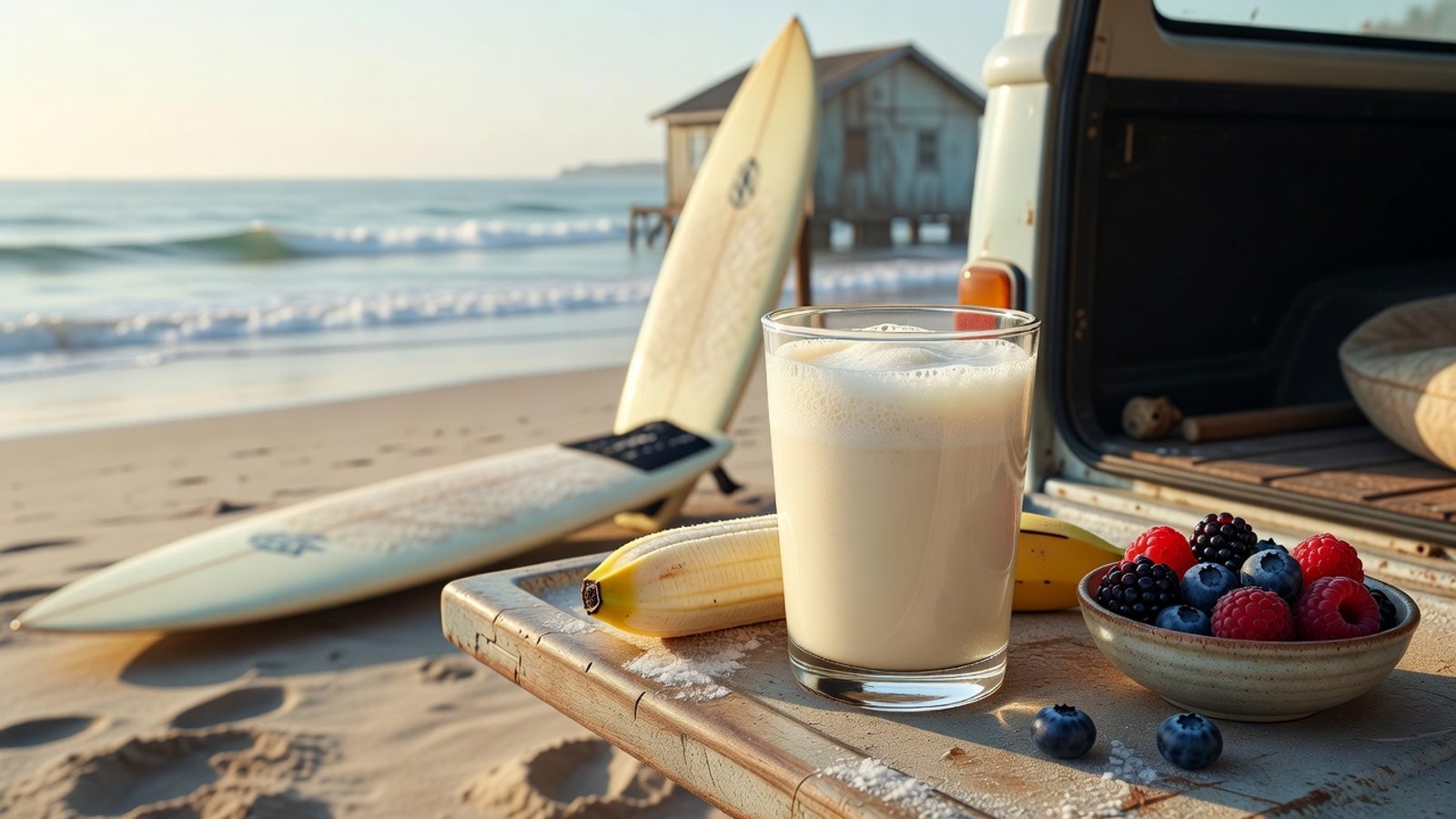
The best protein powder after surfing is the one you will drink, in a dose around 20 to 40 grams, beside some carbohydrate. Whey is the fast option, casein is the evening option, and a plant powder works when dairy does not. Fish and rice are still the same kind of recovery.
Key takeaways
- Most exercising people do well with about 1.4 to 2.0 grams of protein per kilogram of body weight per day, spread through the day.
- A practical serving is about 0.25 grams per kilogram, or roughly 20 to 40 grams of high-quality protein.
- Eating protein before or after training both work. The effect of the session on muscle building lasts at least 24 hours, so the exact minute you open the shaker is flexible.
- Endurance athletes still need carbohydrate first. Protein is the add-on that may limit muscle damage and support recovery.
- Powders are supplements. The FDA does not approve them before they are sold. A third-party mark such as NSF Certified for Sport is a quality check, not a promise of better surfing.
Recovery
What should a post-surf protein actually do?
It should help you meet a protein serving while you also replace carbohydrate and fluid.
The International Society of Sports Nutrition puts daily protein around 1.4 to 2.0 grams per kilogram for most people who train (Jäger and colleagues, 2017). A serving that supports muscle protein synthesis is about 0.25 grams per kilogram, or roughly 20 to 40 grams, spread every 3 to 4 hours.
Surfing is mostly an endurance day with short bursts. That position stand tells endurance athletes to get carbohydrate in for performance, and notes that adding protein may help offset muscle damage and support recovery. Blend the shake with fruit, milk, or a meal that includes rice or potato if you have another session later. The recovery guide covers the rest of that window.
Protein before or after the work both help, and the muscle response lasts at least 24 hours, even though it fades (Jäger and colleagues, 2017). Drink the shake when you can. Then eat a normal meal.
Which type of powder fits which surf day?
Match the powder to the clock and to your stomach. The types below are the real choices on the shelf.
Whey concentrate or whey isolate, when you need a fast drink. Whey is a milk protein that digests quickly. The ISSN notes that rapidly digested proteins with plenty of essential amino acids, including leucine, stimulate muscle protein synthesis most effectively. Isolate is filtered further than concentrate and is often lower in lactose. Concentrate usually costs less and still works if dairy sits fine. Either one can go in the iced coffee protein shake.
Micellar casein, when the shake is the last food of the night. Casein digests more slowly. A pre-sleep casein serving of about 30 to 40 grams has been shown to raise overnight muscle protein synthesis (Jäger and colleagues, 2017). That is a better job for casein than a thick shake on a hot beach. Yogurt or cottage cheese covers the same idea if you hate powders.
A milk blend, when one tub has to cover both jobs. Some powders mix whey and casein. Use the grams of protein on the label, not the grams of powder.
Soy, pea, or a pea-and-rice mix, when you do not drink dairy. Plant powders can fill the same 20 to 40 gram serving. Look for one that supplies the essential amino acids, or mix foods that do. Soy is the plant protein people most often use on its own. Pea is easy to find. Rice protein is milder and often mixed with pea. If the shake feels thin, add a milk you tolerate or a real meal next to it. Read the sugar line before you double the scoop.
Collagen is a poor stand-in here. It does not replace a protein that supplies the essential amino acids. If you use it for another reason, still eat a full protein source after surfing.
How do you read the label without getting sold?
Use the protein grams per scoop, the ingredient list, and a testing mark. Ignore the front-of-tub wave photo.
A useful label shows about 20 to 40 grams of protein in a serving you will drink. If a blend needs three scoops to reach 20 grams, it is an expensive flavored drink.
The FDA does not have the authority to approve dietary supplements before they are marketed. The company is responsible for keeping the product from being adulterated or misbranded (FDA, Questions and Answers on Dietary Supplements). A third-party test matters more than a slogan.
NSF Certified for Sport says its mark means the product was screened for 290 substances banned by major sports organizations, the contents match the label, contaminants are not at unsafe levels, and the plant is GMP certified and audited (NSF, What Our Mark Means). Search the current flavor on the NSF directory. A logo on a cousin product is not the same thing.
Skip tubs that promise fat loss or a recovery complex you cannot identify as food. Extra caffeine in a nighttime shake is a bad surprise. If you want coffee, use a plain protein in the coffee shake.
When is food the better powder?
When you can eat it. Powder is for the gap, not the standard.
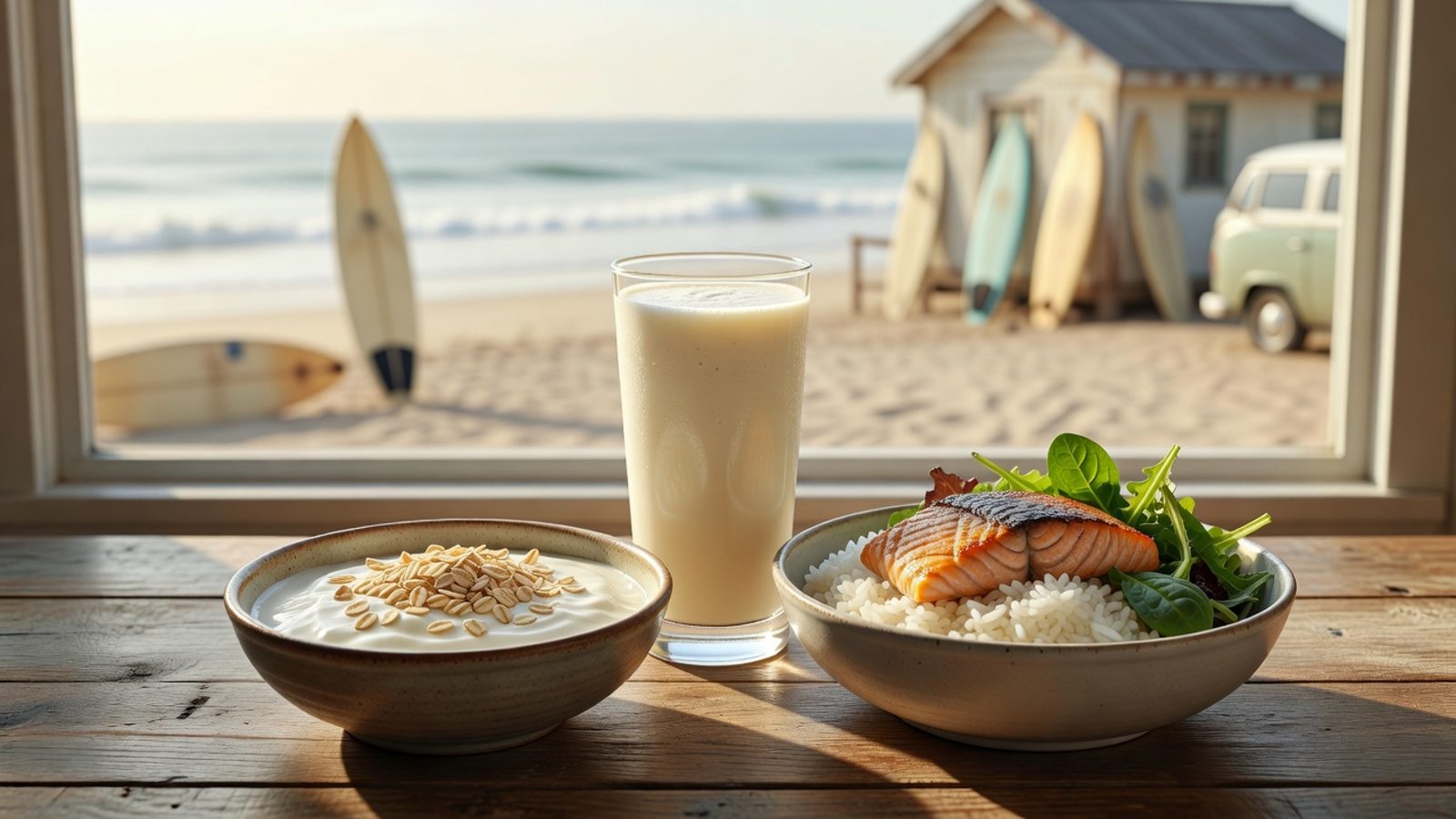
Eggs, yogurt, milk, fish, chicken, tofu, and beans can cover the same 20 to 40 gram serving. The ISSN notes that food can hit the daily amount, and that a powder is the practical backup when a meal is hard to get. After most local surfs, a plate beats a shaker. See the recovery meal ranking and the miso ginger salmon rice bowl.
Use a powder when the next meal is hours away, when dawn patrol killed your appetite, or when you want a drink such as the green recovery smoothie. The post-surf protein shake guide covers that parking-lot shake.
Drink water either way. Put carbohydrate in the same blender or on the next plate. One shake does not finish the day.
This article is educational and is not medical advice. It is not a treatment plan. If you have a medical condition or take medicines that change fluid, salt, or food needs, talk with a qualified clinician.
Frequently asked questions
What is the best protein powder after surfing?
A whey, casein, or complete plant powder you digest well, with about 20 to 40 grams of protein in the serving, ideally from a currently tested batch. No single brand fits every stomach.
Do I have to drink it within 30 minutes?
No. Protein before or after the session both support recovery, and the exercise effect lasts many hours. Have the shake when you can, then eat the meal.
Is plant protein enough?
It can be, if the serving hits the same protein range and the day still covers essential amino acids. Soy, or a pea-and-rice blend, is the usual approach.
Should I buy a mass gainer after big surf?
Most surfers do not need one. Those tubs often pile on sugar and calories. A normal scoop plus a banana and milk is easier to steer.
Are protein powders approved before sale?
No. The FDA does not approve dietary supplements before they are marketed. Choose a product with current third-party certification, and talk with a clinician if you have kidney disease or you stack several products.
Pick one plain powder you tolerate, drink it with fruit when the kitchen is far away, and cook a real recovery plate when you get home. The recovery guide covers the rest of that hour.
Magnesium, zinc, and potassium are a separate recovery question from the scoop. Read Minerals Surfers Need: Magnesium, Zinc, Potassium.
Sources
- Jäger R, Kerksick CM, Campbell BI, et al. International Society of Sports Nutrition position stand: protein and exercise. Journal of the International Society of Sports Nutrition. 2017. https://link.springer.com/article/10.1186/s12970-017-0177-8
- U.S. Food and Drug Administration. Questions and answers on dietary supplements. https://www.fda.gov/food/information-consumers-using-dietary-supplements/questions-and-answers-dietary-supplements
- NSF. What our mark means. Certified for Sport. https://www.nsfsport.com/our-mark.php
Next Step
Read the Recovery Guide
Pick one plain powder you tolerate, drink it with fruit when the kitchen is far away, and cook a real recovery plate when you get home. The recovery guide covers the rest of that hour.