Published: October 12, 2026 | By the SurferFood Editorial Team
Magnesium, zinc, and potassium cover muscle function, immune work, and nerve signals. They do not replace water and salt when a long session leaves you cramping.
Electrolyte drinks mostly talk about sodium. The useful move is to know what each mineral does, eat it on purpose, and stop treating a random pill as the fix for every calf cramp.
Key takeaways
- Magnesium helps regulate muscle and nerve function. Adult men need about 400 to 420 mg a day, and adult women about 310 to 320 mg, from food and other sources combined.
- Extreme magnesium deficiency can include muscle cramps. Short-term low intake often has no obvious symptoms.
- Zinc supports immune function, taste, wound healing, and making proteins. Adult men need about 11 mg a day, and adult women about 8 mg. The zinc fact sheet does not list cramps as a zinc problem.
- Potassium supports muscle contraction and nerve signals. Adult men need about 3,400 mg a day, and adult women about 2,600 mg. Heavy sweating can be one path to a severe potassium shortage.
- Food is the default. Extra magnesium from pills has its own limit, and most potassium supplements carry only a small dose.
Minerals
Why do cramps send surfers looking past the sports drink?
A surf cramp is often fluid, salt, fatigue, or a muscle asked to paddle longer than it trained for. Minerals still belong in the conversation because muscle and nerve tissue depend on them.
Start with the basics in the surf hydration guide. If you are already drinking and salting food and the cramps keep showing up, look at the rest of the plate. Magnesium and potassium are the two minerals in this trio tied to muscle symptoms when intake is truly low. Zinc gets lumped in with electrolytes even though its job is different.
This is daily eating, not a parking-lot ritual.

What does magnesium do, and where do you get it?
Magnesium helps regulate muscle and nerve function, blood sugar, and blood pressure, and it is used to make protein, bone, and DNA (NIH Office of Dietary Supplements).
For adults, the NIH lists about 400 to 420 mg a day for men and 310 to 320 mg a day for women. Many people in the United States get less than that from diet alone. Once supplements are added in, total intakes are often above the recommended amounts.
A short stretch of low magnesium usually does not announce itself. Over a long time, deficiency can bring loss of appetite, nausea, fatigue, and weakness. Extreme deficiency can cause numbness, tingling, muscle cramps, and heart-rhythm problems. That is a medical problem, not the ordinary burn after a long paddle.
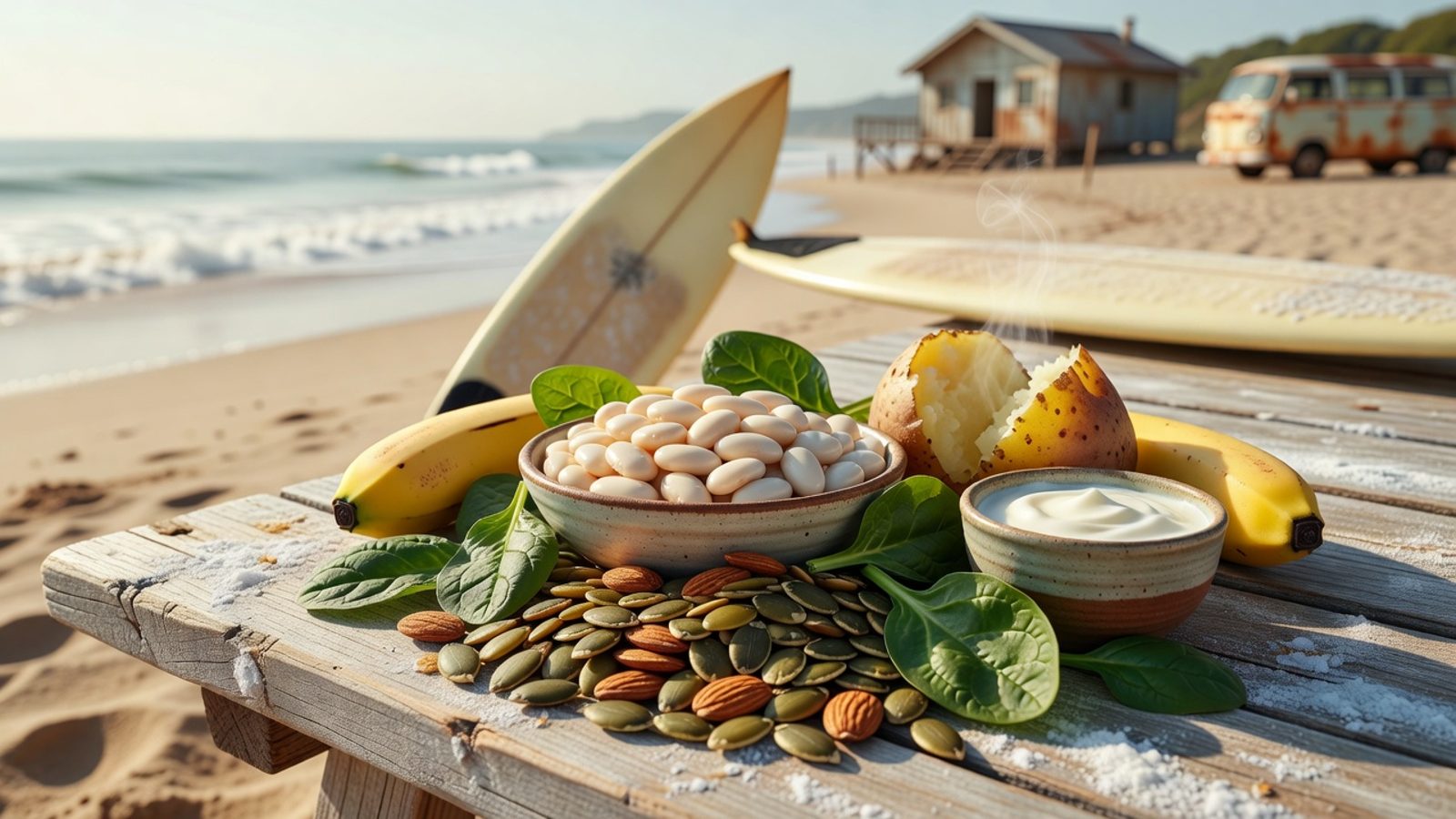
Food the NIH highlights: legumes, nuts, seeds, whole grains, leafy greens such as spinach, fortified cereals, milk, and yogurt. Pumpkin seeds on oats, a spinach-and-bean lunch, or the trail mix energy bites beat a new capsule.
Magnesium from food is not something healthy people need to cap. The adult upper limit for magnesium from supplements and medications is 350 mg a day. High intakes from those products can cause diarrhea, nausea, and abdominal cramping. Forms the NIH notes as easier to absorb include citrate, lactate, chloride, and aspartate. If a powder already upsets your gut, more is the wrong direction.
Where does zinc fit if the problem is cramping?
Zinc helps the immune system, wound healing, taste, and the making of DNA and proteins. It is not described as a cramp mineral on the NIH consumer sheet (NIH Office of Dietary Supplements).
Adult males need about 11 mg a day. Adult females need about 8 mg. Oysters are unusually rich. Meat, fish, poultry, crab, lobster, and fortified cereals are solid sources. Beans, nuts, eggs, and dairy add some.
Zinc still matters on a surf trip, for a different reason. Cuts, sun, and irregular meals are when immune function and healing matter. Fish, eggs, or a normal meat or tofu meal beats a zinc lozenge taken for cramps.
The adult upper limit is 40 mg a day from food and supplements combined. Extra zinc can cause nausea. Over a long time it can lower copper and interfere with magnesium absorption. A zinc pill plus a fortified shake and a multivitamin is an easy overshoot.
If you eat little or no meat, use seafood, dairy, or fortified cereal you tolerate, plus beans, nuts, and whole grains.
How do surfers actually hit the potassium number?
Potassium supports muscle contraction, nerve signals, heart function, and kidney function. Adult men need about 3,400 mg a day, and adult women about 2,600 mg (NIH Office of Dietary Supplements).
Many diets in the United States land below that, even with supplements. Most potassium pills provide no more than 99 mg per serving. Food does the job: bananas, dried fruit, orange juice, potatoes, spinach, tomatoes, broccoli, beans, nuts, milk, yogurt, and fish.
A practical day is banana or potato at breakfast, beans or yogurt at lunch, and fish with a starch at dinner. Banana almond toast covers the morning. Salted potatoes in a cooler carry potassium and carbohydrate together. Hot sessions also fit electrolyte snacks for summer surf.
Getting too little potassium can raise blood pressure and kidney-stone risk. A severe shortage is different. Prolonged vomiting or diarrhea, some medicines, and heavy sweating can drive blood potassium very low. Symptoms include tiredness and muscle weakness. Severe cases can affect breathing and heart rhythm and need medical care.
Potassium from food has not been shown to harm healthy people with normal kidneys. People with kidney disease, and people on certain blood pressure medicines, can run potassium too high. Salt substitutes are often potassium chloride. Ask a clinician before you load up on those.
Should you add a mineral pill for surf season?
Use food first, and use a supplement only to fill a gap you can name.
The supplements guide is the wider map, including what is worth buying and what is just a tub. For these three minerals:
Build meals from nuts, seeds, beans, whole grains, leafy greens, fruit, potatoes, and seafood or meat. If a clinician has suggested magnesium, stay under the 350 mg daily cap from supplements and medicines, and watch for diarrhea. Do not stack zinc on a guess. A potassium tablet will not match a potato.
Cramps that show up only in the longest, hottest sessions still point back to fluid, sodium, pacing, and carbohydrate. Minerals are the steady background.
This article is educational and is not medical advice. It is not a treatment plan. If you have a medical condition or take medicines that change fluid, salt, or food needs, talk with a qualified clinician.
Frequently asked questions
Will a magnesium pill stop surf cramps?
Only if the cramps come from magnesium deficiency, which is the extreme end of low intake. Ordinary surf cramps more often track fatigue, fluid, or salt. High-dose magnesium pills can also cause diarrhea and stomach cramps.
Does zinc prevent cramps?
The NIH zinc sheet does not list muscle cramps as a sign of low zinc. Eat zinc-rich foods on trips. Do not megadose it for your calves.
How much potassium is in a pill compared with food?
Most potassium supplements provide no more than 99 mg per serving. Fruit, potatoes, beans, dairy, and fish are how adults reach the daily amount. Read the drink label, then eat a meal.
Can I get these minerals from one trail mix?
Nuts and seeds help with magnesium and add some zinc. Dried fruit helps with potassium. A mix is a snack. Add meals around it.
Who should avoid extra potassium?
People with kidney disease and people on certain medicines, including some blood pressure drugs, can run potassium too high. Talk with a clinician before using salt substitutes or potassium pills.
Put nuts, greens, potatoes, fruit, and a seafood or bean meal on the weekly list, and check the supplements guide before you buy another tub. Trail mix energy bites are an easy snack to keep in the bag.
Potatoes, bananas, and other foods that carry these minerals into a long session are covered in Real Food to Eat During Long Surf Sessions.
Sources
- NIH Office of Dietary Supplements. Magnesium: fact sheet for consumers. https://ods.od.nih.gov/factsheets/Magnesium-Consumer/
- NIH Office of Dietary Supplements. Zinc: fact sheet for consumers. https://ods.od.nih.gov/factsheets/Zinc-Consumer/
- NIH Office of Dietary Supplements. Potassium: fact sheet for consumers. https://ods.od.nih.gov/factsheets/Potassium-Consumer/
Next Step
Read the Supplements Guide
Put nuts, greens, potatoes, fruit, and a seafood or bean meal on the weekly list, and check the supplements guide before you buy another tub. Trail mix energy bites are an easy snack to keep in the bag.