Published: November 16, 2026 | By the SurferFood Editorial Team
A big swell week can outrun the plate you eat in a normal week. More time in the water, shorter gaps between sessions, and skipped meals add up. Sports nutrition has a name for the shortfall: low energy availability. The signs below may point to it. They are not a diagnosis you make from a blog.
Key takeaways
- The Australian Institute of Sport describes low energy availability as the dietary energy left for the body after you account for the energy exercise uses [1].
- Under-fueling can be accidental. A bigger load, short turnarounds, or no time to cook can do it. An eating disorder is one cause, not the only cause [1].
- Signs that may point to a lasting shortfall include fatigue, a drop in performance, injuries or illnesses that keep coming back, menstrual changes, unplanned weight loss, and mood changes. See a sports dietitian or a doctor [1][2].
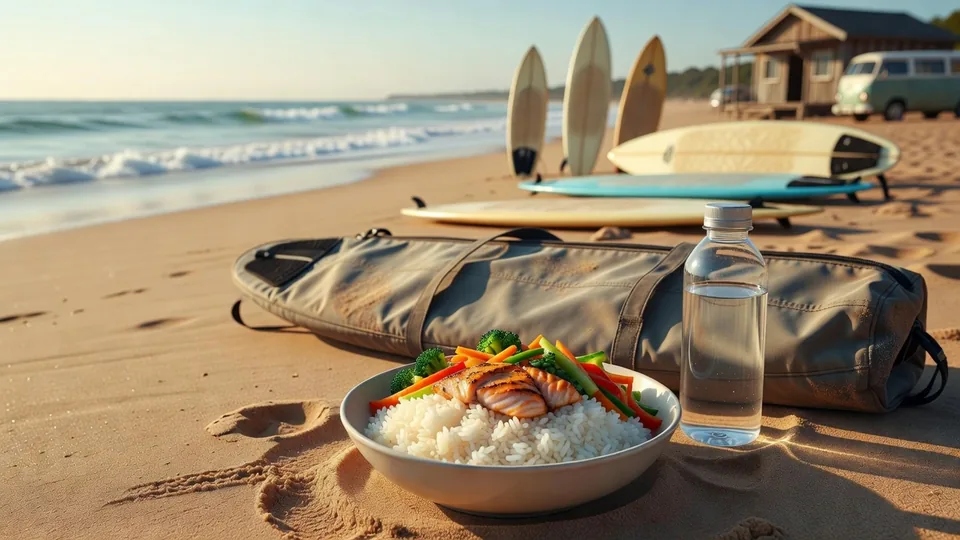
- First move: eat more around sessions. Use Fueling by Session: Match Food to Surf Intensity and a real plate such as the big-day beach fuel plate.
- Photo Macros can estimate a plate. It is not a diagnosis and it is not a calorie prescription.
What does low energy availability mean?
AIS says hard training raises energy needs, and missing those needs for a long stretch can affect health and performance. Low energy availability is the dietary energy left after you subtract the energy exercise spends. RED-S is the syndrome AIS describes when that shortfall lasts long enough to disturb health and performance. The underlying cause, in their words, is low energy availability [1].
This page will not diagnose RED-S. If the signs stick around, talk with a sports dietitian or a doctor. AIS says treatment should involve a qualified sports medicine practitioner [1].
Watch list
Signs that may point to a shortfall
AIS lists early signs that can show up when intake stays below what training costs. One of them on a single Thursday is not a syndrome. A cluster that lasts is a reason to get help [1].
- Unplanned weight loss
- Menstrual dysfunction
- Injuries and illnesses that keep coming back
- A drop in performance
- Changes in mood or in how you act around other people
- Disordered eating, or a lack of normal growth in a younger athlete
A sports dietitian is the person who matches food to the week. Do not turn this list into a label.
How does a swell week outrun a normal plate?
AIS lists causes that are easy to miss. A jump in training, or short gaps between sessions, can raise the energy you spend above the energy you eat. So can a lack of time, money, or skill for cooking, or simply not knowing what the week requires. Disordered eating can also be part of it. It is not required for the shortfall to start [1].
Precision Hydration makes the same split. Some athletes restrict on purpose. Others drift into the gap when training rises and meals do not, or when the day is too busy to eat. A body weight that looks useful for a sport is not automatically the weight that supports hormones and recovery [2].
Surfing is not on the AIS list of sports where RED-S is discussed most often. That list names sports where leanness, appearance, or a weight class is part of performance, including long distance running, road cycling, gymnastics, dancing, wrestling, and boxing [1]. A surf week can still outrun your meals.
A short local and an all-day tide are not the same meal. The session fueling guide separates them: a small familiar meal before a short surf, a fuller carbohydrate-led meal for a long one, and a real plate after.
Which signs may point to a shortfall?
Precision Hydration adds flags that overlap the AIS list: poor recovery, under-performing, early weight loss, repeated injuries or stress fractures, frequent illness, trouble staying warm or cooling down, irritability, broken sleep, fatigue, and menstrual changes. Some of these can belong to another medical problem, or look like overtraining, and need a clinician to sort out [2].
Fatigue after one huge session can be the session. Fatigue that does not lift, periods that stop, or an injury that will not settle is different. Do not start a fast or a stricter diet to fix it [1].
What should you do first?
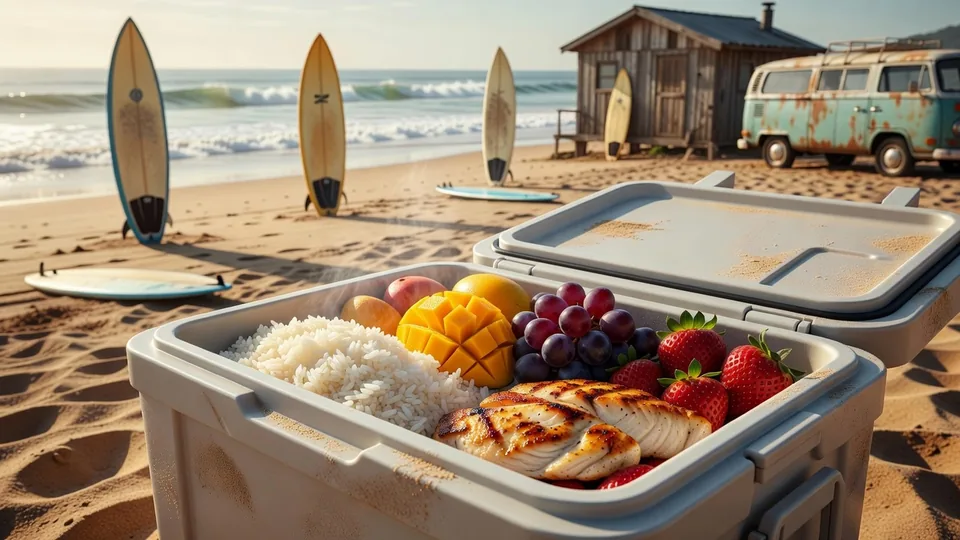
Eat more food around the sessions you are actually doing. Put a meal on either side of the surf, not one huge meal at the end of the day. If you are at the beach for hours, graze from a plate you packed. The big-day beach fuel plate is the no-cook option on this site for that kind of day: protein, fruit, and something you can eat between sessions instead of one heavy sitting.
AIS says there are not currently any standardised guidelines that let you calculate an exact energy-availability number at home, because intake and the energy exercise uses are hard to measure precisely [1]. Do not pick a daily calorie target off a forum and call it yours.
If a clinician is already treating low energy availability, AIS describes a practical approach drawn from the IOC consensus statement: raise current intake by about 300 to 600 kcal a day, and fix how that food is spread through the day and around training, including what the meals are made of [1]. That range is a clinical starting point. It is not a number to copy on your own, and it is not a promise that 300 kcal fixes a surf week.
Photo Macros can estimate what is on a plate from a photo. Use it to see whether lunch was smaller than you thought. The tool does not decide whether you have RED-S.
Bring a sports dietitian the pattern: how often you surf, what you eat around sessions, whether periods have changed, and whether injuries or illness are stacking up [1].
This article is educational and is not medical advice. It is not a treatment plan. If you have a medical condition or take medicines that change fluid, salt, or food needs, talk with a qualified clinician.
FAQ
Is one tired surf a sign of low energy availability?
No. A single flat session has a lot of ordinary causes, including a bad night of sleep or a meal that was too small that morning. Look for a cluster that lasts, then talk with a sports dietitian or a doctor.
Can I calculate my energy availability at home?
AIS says there are not currently any standardised guidelines for that calculation, because intake and the energy exercise uses are hard to measure precisely. Do not pick a daily number off a chart and call it your target.
Should I eat less to feel lighter in bigger surf?
No. AIS says a lasting gap between what you eat and what training costs can affect health and performance. If you want to change your intake, do it with a sports dietitian, not by skipping meals in a swell.
What should I eat on a long beach day while I sort this out?
Eat more food around the sessions you are actually doing. Use the fueling-by-session guide to size the plate, and use a real plate such as the big-day beach fuel plate when you will be out for hours.
Does the photo macro tool diagnose this?
No. Photo Macros estimates what is on a plate. It can show that lunch was smaller than you thought. It does not decide whether you have low energy availability or RED-S.
Eat more around the sessions you are doing, and get a sports dietitian involved if the signs last. The session fueling guide, the big-day beach fuel plate, and Photo Macros are the tools on this site. None of them replaces that appointment.
Sources
- [1] Australian Sports Commission, Australian Institute of Sport, "Energy Availability." https://www.ausport.gov.au/ais/nutrition/energy-availability
- [2] Griffin, Inez, "Are you fueling adequately to maintain health and performance?" Precision Hydration. https://www.precisionhydration.com/performance-advice/nutrition/what-is-relative-energy-deficiency-in-sport/
Next Step
Open the Big-Day Beach Fuel Plate
Eat more food around the sessions you are doing. The beach plate is a no-cook option for a long day while you line up a sports dietitian if the signs last.