Published: October 19, 2026 | By the SurferFood Editorial Team
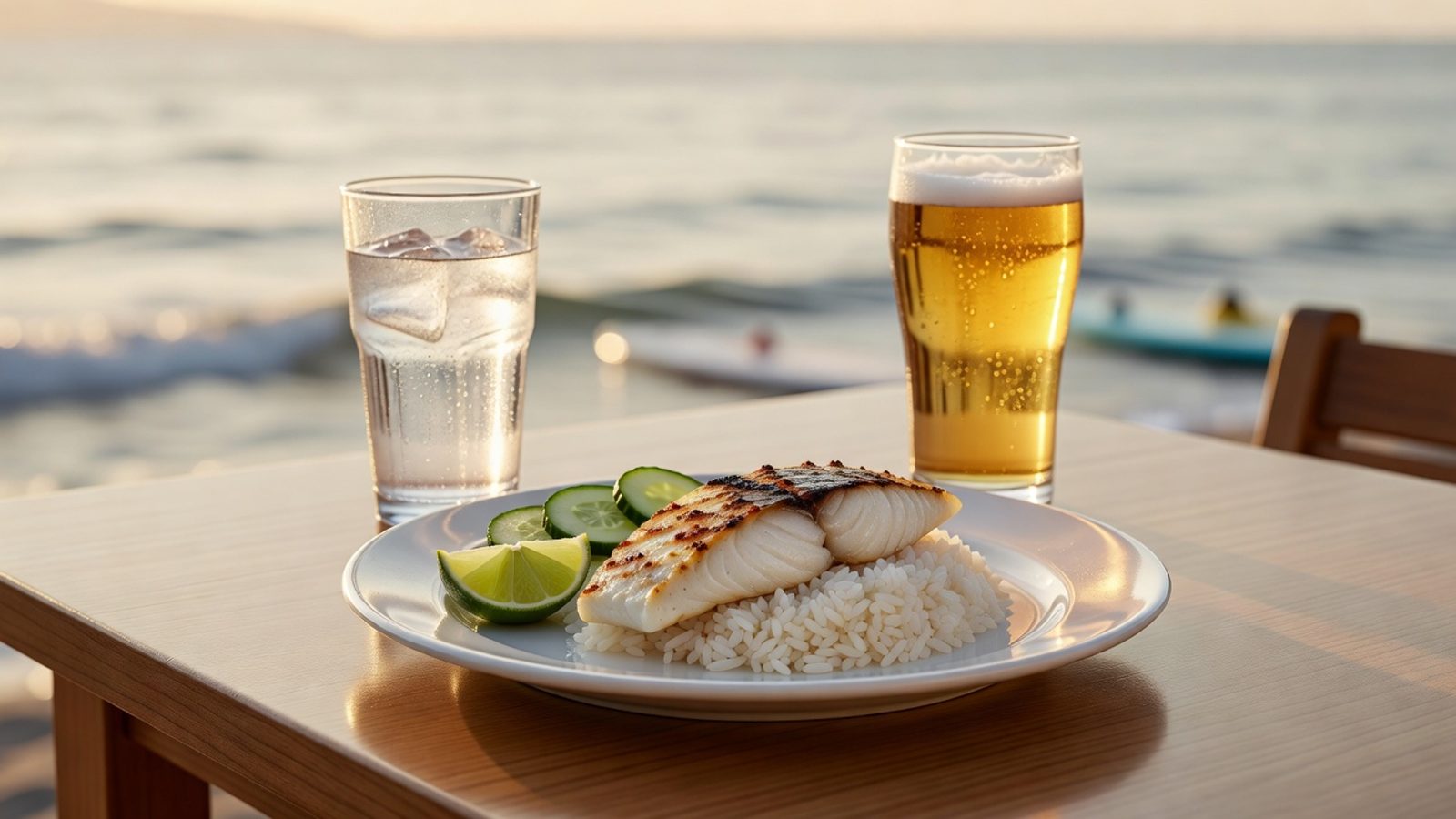
Drink water and eat something before you open a beer. A post-surf beer can stay in the ritual if you want it, after fluid and food, and in a small amount.
The bottle is social. It is a weak recovery plan when it replaces water and a meal. The hydration guide covers what to drink during the session. This is about the beer that shows up after you are already out.
Key takeaways
- Water and food come first. A beer, if you want one, comes after.
- Alcohol increases urine loss, so beer is a poor stand-in for the water you sweated.
- A large volume of regular beer, used as the rehydration drink, slowed fluid recovery and worsened reaction time and balance in a small study.
- About 12 standard drinks after hard exercise reduced muscle protein synthesis. One beer is not that dose.
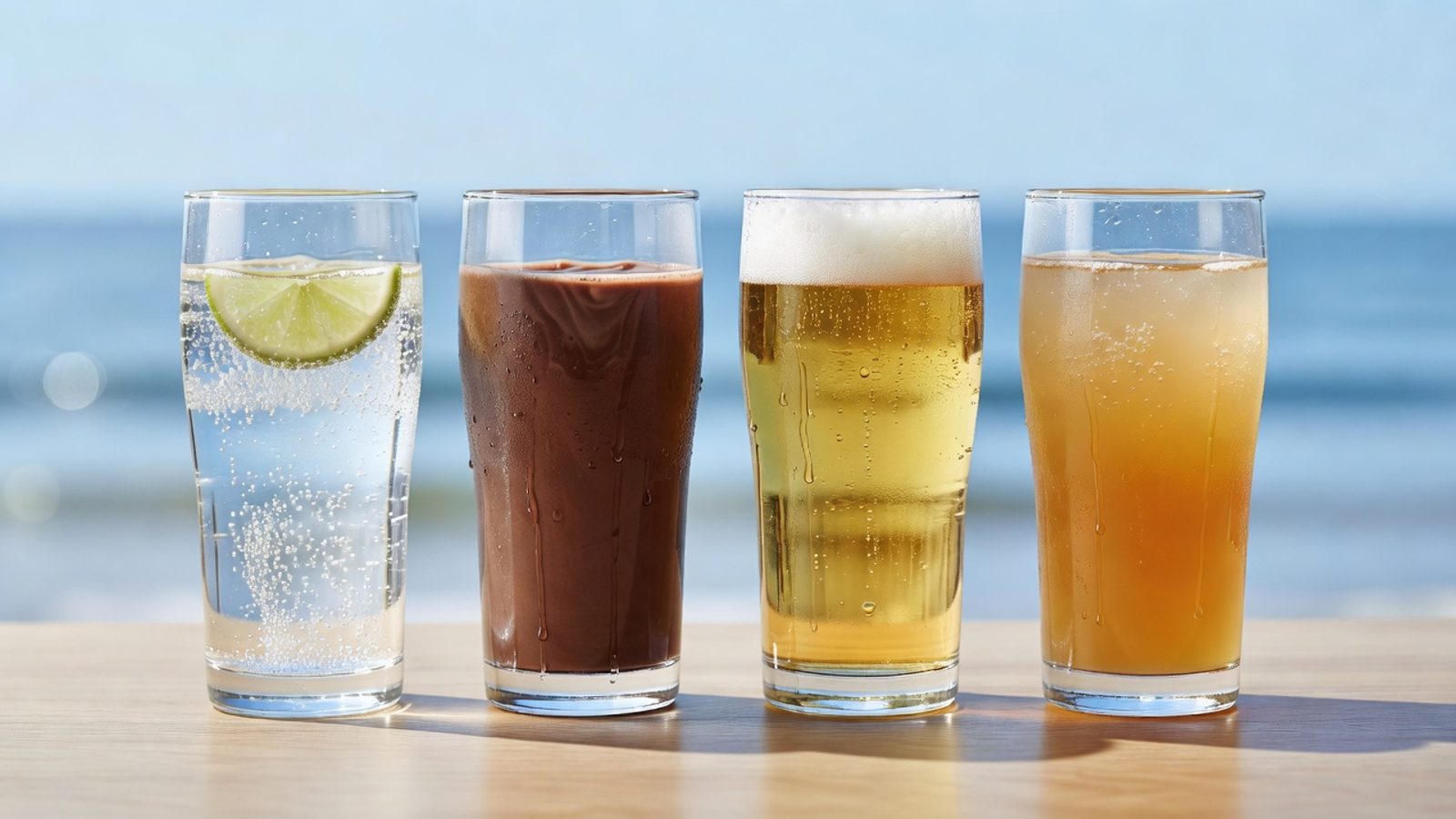
- Sparkling water with citrus, chocolate milk, non-alcoholic beer, and kombucha are the easy swaps.
What does alcohol do to fluid balance?
It makes you lose extra fluid. Regular beer is a clumsy way to replace sweat.
NIAAA explains the mechanism. Alcohol suppresses vasopressin, the hormone that tells the kidneys to hold fluid. You urinate more, and you lose extra fluid. That mild dehydration can add to thirst, fatigue, and headache. People also fall asleep faster after drinking, then sleep in fragments and wake earlier. That is a rough match for dawn patrol. NIAAA on hangovers
Two exercise studies tested alcoholic drinks as the rehydration beverage, not as one beer after dinner.
Shirreffs and Maughan dehydrated people by about 2 percent of body mass, then had them drink about 150 percent of the fluid they had lost. Drinks with up to 2 percent alcohol did not differ much from an alcohol-free drink. A 4 percent drink tended to delay the return of blood and plasma volume. Shirreffs and Maughan, 1997
Flores-Salamanca and Aragon-Vargas studied 11 men who had lost about 2 percent of body mass in the heat. Each man replaced that loss, about 1.6 liters in an hour, with water, beer at 4.6 percent alcohol, or a low-alcohol beer. Urine output was higher after the regular beer. Reaction time was slower and balance was worse. Blood alcohol reached 0.857 grams per liter right after that beer trial. Flores-Salamanca and Aragon-Vargas, 2014
NIAAA counts 12 ounces of regular beer, about 5 percent alcohol, as one standard drink (about 14 grams of pure alcohol). The same volume at 10 percent alcohol counts as two standard drinks. NIAAA standard drink
A single 12-ounce beer after you have already drunk water is not the same test as 1.6 liters of beer used as your only fluid. It is still not a rehydration drink. Have the water first. Long, hard sessions in the heat also call for carbohydrate with that fluid. A sweet soda does not cover it. See sports drinks versus real hydration. ISSN nutrient timing position stand
What does alcohol do to muscle recovery?
A huge intake can blunt the muscle-building response after exercise. A normal single beer has not been tested that way.
Parr and colleagues studied eight physically active men after lifting and hard cycling. Protein alone raised muscle protein synthesis. The same protein plus about 1.5 grams of alcohol per kilogram of body weight, about 12 standard drinks, made that rise about 24 percent smaller. Alcohol with carbohydrate and no protein cut it by about 37 percent compared with protein alone. The authors concluded that this intake suppresses the muscle response and may impair recovery. Parr et al., 2014
About 12 drinks is a binge, not a toast. NIAAA defines binge drinking as a pattern that brings blood alcohol to 0.08 percent. For a typical adult that is five or more drinks for men, or four or more for women, in about two hours. Harm can show up at any amount, and the risk rises as the amount rises. NIAAA drinking patterns
NIAAA also links drinking with a higher risk of muscle wasting. Heavy drinking raises fracture risk and reduces bone density. Even low intakes raise the odds of recurrent gout attacks. If joints are why you are rethinking the cooler, the food side is in joint-friendly eating for surfers over 40. NIAAA on alcohol and the body
Who should skip the beer?
Skip it if you will drive, if you are under 21, if you are pregnant or might be, if alcohol clashes with your medicines, or if a medical condition makes drinking a bad idea.
NIAAA lists those situations, and says to avoid alcohol when you need skill, coordination, and alertness. That includes another surf and the drive home. People with rheumatoid arthritis should also limit alcohol, especially on medicines such as methotrexate, and should ask their doctor what amount, if any, fits. Arthritis Foundation anti-inflammatory diet
If none of that applies and you still want a beer, keep it small. One 12-ounce regular beer is one standard drink. A stronger can can be two. Eat first so the beer is not dinner.
Recovery
What should you drink instead, or first?
Water first, then food, then a beer only if you still want one.
- Drink water. Have a second glass if the first one disappears.
- Eat carbohydrate and protein. ISSN describes about 20 to 40 grams of high-quality protein after exercise as support for muscle repair, with carbohydrate helping refill fuel when the session was hard. The recovery guide is the plate. Chocolate milk is the parking-lot version: fluid, carbohydrate, and protein together.
- Then, if you want a cold bottle, pick a swap or one modest beer.
- Sparkling water with citrus. Fluid, with the bite of a cold drink, and no alcohol.
- Chocolate milk. Use it as the recovery drink, not as a mixer.
- Non-alcoholic beer. You keep the taste. It is not the same as the low-alcohol beer in the study above, but that study is the closest test: a large volume of low-alcohol beer led to less urine loss than regular beer.
- Kombucha, if you want something tart and bubbly. Treat it as a flavored drink, not as a treatment.
- A blender drink once you are home. The green recovery smoothie is food in a glass.
NIAAA says time is what clears a hangover. Coffee, a shower, or another drink the next morning will not undo it. Electrolyte products have not been shown to track how bad a hangover feels. Drinking less, or not drinking, is the reliable move. NIAAA on hangovers
This article is educational and is not medical advice. It is not a treatment plan. If you have a medical condition or take medicines that change fluid, salt, or food needs, talk with a qualified clinician.
FAQ
Can I have the beer the minute I hit the sand?
Have water and some food first. Have the beer after that only if you are done in the water and you are not driving.
Does one beer wreck recovery?
The muscle study used about 12 standard drinks, not one. One regular beer is still a bad substitute for water and a meal. Drink those first.
Is low-alcohol beer fine for rehydration?
In that small study, a large volume of low-alcohol beer led to less urine loss than regular beer and looked closer to water. Drink water anyway, then choose the beer you actually want.
What counts as one beer?
Twelve ounces at about 5 percent alcohol is one NIAAA standard drink. The same can at 10 percent alcohol counts as two.
I surf again at dawn. Should I skip it?
A smaller intake makes the early alarm easier. Alcohol can fragment sleep and wake you earlier.
What if I take medication for joint pain?
Ask the clinician who prescribed it. The Arthritis Foundation flags alcohol limits for rheumatoid arthritis treated with medicines such as methotrexate.
Water, food, then a beer only if you want it. On a long day, build the plate from the recovery guide and keep the bottle as the optional last step.
Sources
- National Institute on Alcohol Abuse and Alcoholism. Hangovers. Updated December 2025. https://www.niaaa.nih.gov/publications/brochures-and-fact-sheets/hangovers
- National Institute on Alcohol Abuse and Alcoholism. What is a standard drink? Updated December 2025. https://www.niaaa.nih.gov/alcohols-effects-health/what-standard-drink
- National Institute on Alcohol Abuse and Alcoholism. Understanding alcohol drinking patterns. Updated January 2026. https://www.niaaa.nih.gov/alcohols-effects-health/alcohol-drinking-patterns
- National Institute on Alcohol Abuse and Alcoholism. Alcohol's effects on the body. Updated June 2025. https://www.niaaa.nih.gov/alcohols-effects-health/alcohols-effects-body
- Shirreffs SM, Maughan RJ. Restoration of fluid balance after exercise-induced dehydration: effects of alcohol consumption. Journal of Applied Physiology. 1997. NCBI abstract: https://eutils.ncbi.nlm.nih.gov/entrez/eutils/efetch.fcgi?db=pubmed&id=9338423&rettype=abstract&retmode=text
- Flores-Salamanca R, Aragon-Vargas LF. Postexercise rehydration with beer impairs fluid retention, reaction time, and balance. Applied Physiology, Nutrition, and Metabolism. 2014. NCBI abstract: https://eutils.ncbi.nlm.nih.gov/entrez/eutils/efetch.fcgi?db=pubmed&id=25041559&rettype=abstract&retmode=text
- Parr EB et al. Alcohol ingestion impairs maximal post-exercise rates of myofibrillar protein synthesis following a single bout of concurrent training. PLOS ONE. 2014. https://pmc.ncbi.nlm.nih.gov/articles/PMC3922864/
- Kerksick CM et al. International Society of Sports Nutrition position stand: nutrient timing. Journal of the International Society of Sports Nutrition. 2017. https://pmc.ncbi.nlm.nih.gov/articles/PMC5596471/
- Arthritis Foundation. Anti-inflammatory diet do's and don'ts. https://www.arthritis.org/health-wellness/healthy-living/nutrition/anti-inflammatory/anti-inflammatory-diet
Next Step
Read the Recovery Guide
Water, food, then a beer only if you want it. On a long day, build the plate from the recovery guide and keep the bottle as the optional last step.