Published: October 5, 2026 | By the SurferFood Editorial Team
Spirulina and other algae are concentrated dried foods. A small spoon in a smoothie, or a sheet of nori with a normal meal, is the amount that belongs in a surfer's week.
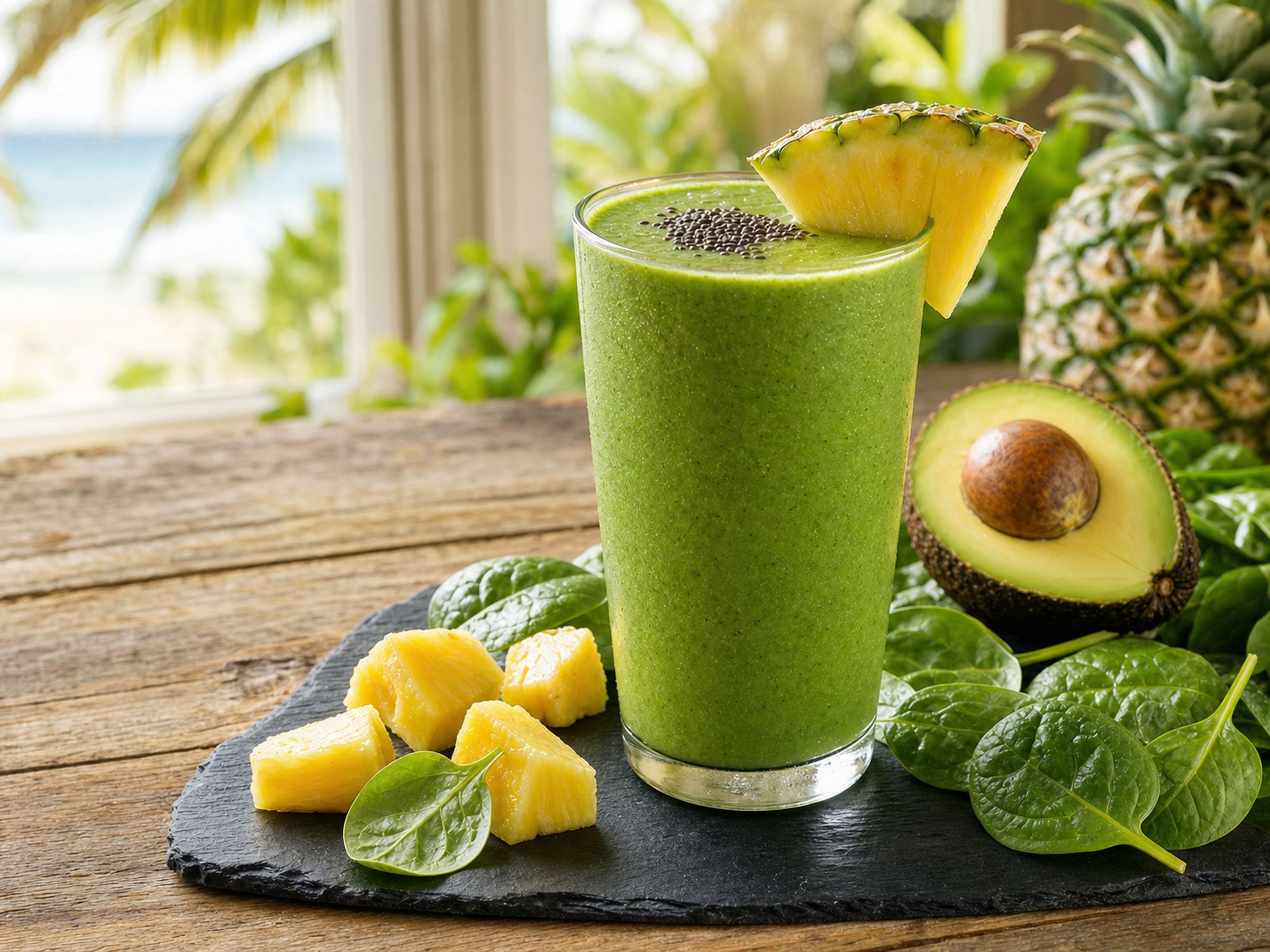
The bag looks like a supplement because the food was dried and powdered. You still use it as food. Stir it into something you would eat anyway. The easiest place to try it after a session is the green recovery smoothie recipe.
Key takeaways
- Spirulina is a dried blue-green powder. Nori, wakame, and dulse are seaweeds you can cook or snack.
- A half teaspoon to a teaspoon is enough. A heap mostly tastes like a pond.
- Fold it into a smoothie that already has fruit, greens, and a protein you tolerate.
- Buy tested products. Use kelp as a seasoning, because some seaweeds are naturally very high in iodine.
- Algae seasons a meal or tints a drink. It does not stand in for the meal.
Algae
What are spirulina and the other algae surfers buy?
Spirulina is a dried cyanobacterium, usually grouped with algae, and sold as powder or tablets.
It grows in warm alkaline water, then gets harvested and dried. The powder is dark green to blue-green. The taste is grassy, oceanic, and a little bitter. Chlorella is a different freshwater green alga, sold the same way, with a similar smell. Some labels say the cell wall is cracked so the powder is easier to digest. You do not need a winner. Pick one you will actually use more than once.
Sea vegetables are the algae you can see. Nori is the sheet around sushi rice. Wakame is the green ribbon in miso soup. Dulse is a reddish flake that turns savory in a pan. Kombu and other kelps are the thick pieces used for broth. They are closer to a vegetable than to a scoop.
"Superfood" on a label means the seller wants the jar to stand out. The plain fact is that drying packs minerals, protein, and pigment into a small volume. A teaspoon is an add-in. It is a poor excuse for skipping lunch.
Why do surfers bother with them?
A little seaweed or spirulina adds minerals and a sea-savory or green note to food you are already making.
Coastal kitchens have used sea vegetables for a long time, in Japan, Korea, Ireland, the Caribbean, and plenty of other shores. Surfers pick them up because a dry pack is light in a board bag and the flavor matches fish and rice. The powder is the modern, less traditional form of the same pantry idea.
Dried spirulina brings plant protein in a spoon, plus pigments such as chlorophyll and blue-green phycocyanin. Those pigments explain the color. Color is a clue that you added the powder. Seaweeds bring savor, fiber, and minerals from seawater. Iodine is the one to respect, because some kelps are naturally very high in it.
A scoop does not erase soreness, clear your skin, or replace sleep. If a brand promises a disease result, ignore the promise and read the ingredient list. Use the food for flavor and for a small nutrient bump inside a meal that already has carbohydrate, protein, and fluid.
How do you add a spoonful to the green recovery smoothie?
Blend the green recovery smoothie recipe as written, then add a half teaspoon of spirulina and taste.
Start small. A half teaspoon tints the drink and adds the grassy note. A full teaspoon is plenty for most people. A tablespoon takes over the glass, and you will stop making these. The powder clumps on a thick smoothie if you do not blend again. Give it a few more seconds.
Build the drink so the powder is a guest. Acidic fruit helps. Pineapple, green apple, lemon, or lime cut the pond flavor. Banana smooths it. Spinach or cucumber adds volume. Ginger makes it taste chosen. Yogurt, or a protein you already tolerate, keeps the glass from being colored water. Fluid matters after a session. Milk, a plant milk you digest, coconut water, or water and ice all work.
Drink it when you are back and a plate is not ready. The smoothie carries fluid, carbohydrate from the fruit, and some protein across the gap. If dinner is a rice bowl in twenty minutes, skip the smoothie. Stacking both, heaped, is how a reasonable add-in becomes a second meal you did not need.
Chlorella swaps in at the same small dose. Tablets travel cleaner than a bag of powder in a damp rental. Swallow them with the drink, or crush them into it. Keep kelp powder out of the blender. Kelp belongs in a broth, in pinches.
How do seaweeds fit a normal surf week?
Use them as a sheet, a flake, or a strip in soup, the way coastal cooks already do.
A sheet or two of nori with rice is a salty snack for the gap between sessions. It will not carry a long paddle by itself. It can keep you from buying a random sweet when lunch is awkward. Rehydrate a small pinch of wakame for miso soup or a grain bowl. It swells, so start with less than you think. Dulse flakes work on eggs or potatoes. A strip of kombu in the rice pot adds savor, and you can pull the strip out before you eat.
Seaweed used like a seasoning is the whole trick. A bowl of nothing but rehydrated kelp is a stunt, and it can pile on iodine in a way a nori sheet does not. At a camp with a real market, buy the local sea vegetable people already cook and copy their amount.
What should you be careful about?
Buy from a company that tests for contaminants, keep the dose small, and talk to a clinician before a daily kelp or algae habit if you have a thyroid condition.
Algae and seaweeds grow in water. They can collect metals and other contaminants when the water or the drying is sloppy. A reputable brand can tell you who tests the lot. The cheapest unmarked bag at a stall is a worse bet. A bright label is not quality control.
Iodine is the other limit. You need some. Very high intakes, especially from kelp powders and kelp capsules, are a known problem. Nori and a pinch of wakame are ordinary food. Kelp capsules plus kelp flakes plus a heap of spirulina is how a little seaweed becomes a lot. If you are pregnant, nursing, or on thyroid medication, ask a clinician before powdered algae becomes a daily habit. This is a kitchen primer, not a prescription.
A big first dose of chlorella or spirulina gives some people a stomachache. That is a reason to stay at a half teaspoon. If a jar smells like old fish or paint, throw it out. Fresh spirulina smells green and a bit like the sea.
Keep the powder sealed, cool, and dry. Camp humidity turns it into a brick and the flavor goes stale. A small jar you finish beats a tub that lives over the stove.
Does algae replace a recovery meal?
It sits inside a smoothie or a plate. The plate is still the recovery meal.
After surfing you still want fluid, salt on real food, carbohydrate, and a portion of protein that matters. Spirulina can ride along in the drink. Nori can ride along on the rice. Fish, oats, eggs, fruit, and rice are still doing the heavy work. Powder stirred into plain water is mostly green water.
Use the green recovery smoothie recipe as the base, add the small spoon, and treat that as the experiment. On days you want to chew, cook food and let seaweed season it.
This article is educational and is not medical advice. It is not a treatment plan. If you have a medical condition or take medicines that change fluid, salt, or food needs, talk with a qualified clinician.
Frequently asked questions
How much spirulina should a surfer use?
Start with half a teaspoon in a smoothie and see if you like it. A teaspoon is a common kitchen amount. More creates a flavor problem before it creates a plan.
Is spirulina the same as seaweed?
Spirulina is a freshwater cyanobacterium sold as powder. Nori, wakame, dulse, and kelp are seaweeds. You can eat both. They do not swap one for one in a recipe.
Will it help me paddle longer?
Paddle time comes from sleep, a meal you digested, and enough carbohydrate for the work. Plan those. Let algae be a small add-in if you enjoy it.
Can I take it on an empty stomach before dawn patrol?
A lot of people feel queasy that way. Put the spoon in a smoothie with fruit and some protein, or add it after you surf.
What if I hate the taste?
Use nori or dulse on food, or skip algae. Lemon, pineapple, and ginger can hide a half teaspoon. They will not hide a heaping spoon. There is no prize for finishing a drink you hate.
Are the bright blue drinks the same thing?
Often the color comes from a spirulina extract or a related pigment. Read the label. A blue soda is still a soda. If you want the food, measure a spoon into the green smoothie.
Stir a small spoon of spirulina into the green recovery smoothie recipe the next time you want a drink after the session. Keep the recipes and guides on SurferFood for the meals around it, and leave algae as the add-in.
Next Step
Blend the Green Recovery Smoothie
Stir a small spoon of spirulina into the green recovery smoothie recipe the next time you want a drink after the session. Keep the recipes and guides on SurferFood for the meals around it, and leave algae as the add-in.