Published: September 14, 2026 | By the SurferFood Editorial Team
Use nuts as a between-session snack, not as the entire pre-surf meal. USDA FoodData Central lists 1 ounce of raw almonds, about 28 grams or 23 kernels, at 164 calories, 6.0 grams of protein, 6.1 grams of carbohydrate, and 14.2 grams of fat [1]. That fat is why a handful travels well and why it sits heavy if you ate it in the parking lot. Harvard T.H. Chan School of Public Health's Nutrition Source notes that nuts are rich in unsaturated fat and that, in large observational cohorts, higher nut intake is linked with lower heart-disease risk [2]. That is a daily-pattern finding, not a claim that almonds make you surf better. The surf job is simpler: a measured ounce in the car after you get out, or mixed into bites you can count.
Key takeaways
- USDA lists 1 ounce of raw almonds at 164 kcal, 6.0 g protein, 6.1 g carbohydrate, and 14.2 g fat [1].
- Harvard's Nutrition Source describes nuts as unsaturated-fat foods linked, in cohort data, with lower heart-disease risk [2].
- Eat nuts after a session or between tides. Keep the serving small in the last 30 minutes before you paddle out.
- Pair nuts with a faster carbohydrate if you still have another hour in the water. See the carb-timing guide.
- This is food education, not a supplement pitch. We do not rank mystery "surf nut" brands.
The Tradeoff
Why do nuts work in a board bag?
They do not spoil in a hot hour the way yogurt does. They do not crush like a banana. The calorie density is high, so a small bag actually moves the needle after a paddle. The same density is the problem if you eat 4 ounces while you wait for a set. That is 600-plus calories of mostly fat, which is a slow exit from the stomach. Portable does not mean unlimited.
How many nuts should a surfer eat as a snack?
Start with 1 ounce. For almonds that is about 23 kernels and 164 calories [1]. That is a snack, not a meal. If you just finished a two-hour session and dinner is far away, you can go to 1.5 ounces and add fruit. If you are still in a wetsuit and about to paddle back out, stay closer to a small handful or switch to dates.
ISSN's pre-event guidance still prefers carbohydrate when the work is soon [3]. Nuts are the sidekick. Fruit, pretzels, or a gel do the immediate job. Nuts keep you from getting hungry an hour later.
Which nuts are better for a surf day?
Almonds are the easy default because the USDA numbers are clear and the bag is everywhere [1]. Walnuts bring more omega-3 ALA. Peanuts are technically legumes and usually cheaper. Salted nuts help if you have been sweating. Unsalted nuts are better if you already ate a salty lunch and just need calories.
Harvard's Nutrition Source frames nuts as a heart-healthy fat source in an overall pattern, not as a magic sports food [2]. Do not buy a "performance nut mix" for the label. Buy a nut you like, measure it once so you know what an ounce looks like, and reuse that visual.
When are nuts the wrong surf snack?
In the last 20 to 30 minutes before a hard paddle, especially if you are prone to reflux. Fat slows gastric emptying. A greasy handful plus coffee is a common way to feel the first wave in your chest. After the session, nuts are useful. Before a heavy dawn patrol, a banana still wins.
They are also the wrong only food on a hot double session. You still need fluid and sodium. Pair the bag with the plan in surf hydration or the food-first ideas in electrolyte snacks for summer surf.
How do you pack nuts so the serving stays honest?
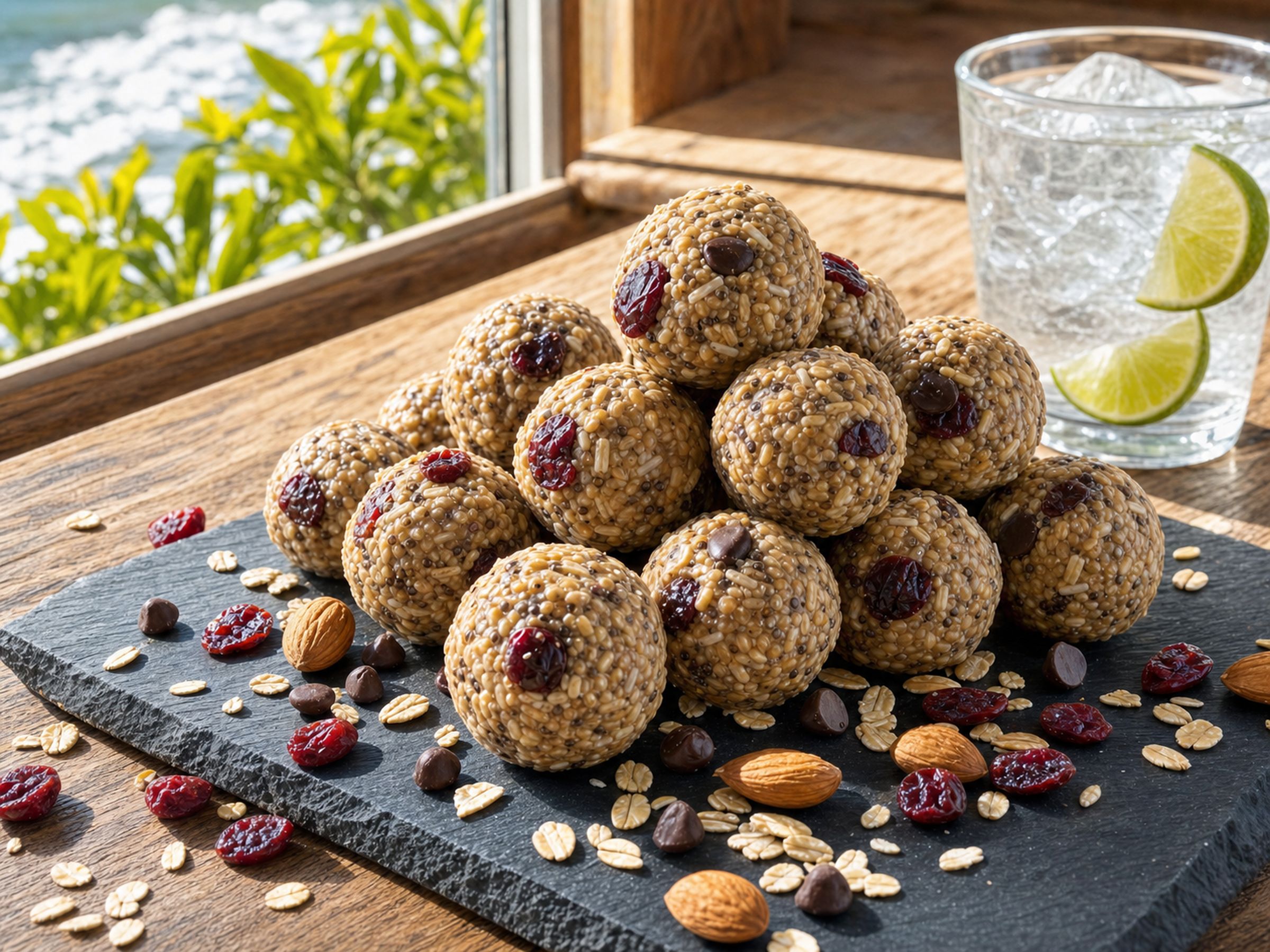
Pre-portion. Our no-bake energy bites put nuts with oats so each piece is about 130 calories with 5 g protein and 14 g carbohydrate. That is easier than an open bag in a windy lot. A small reusable tin with one measured ounce works the same way.
If you travel, nuts also beat a lot of gas-station pastry. They are not safer than cooked leftovers in a cooler. They are the backup when the cooler plan fails. For trip packing, use what to pack for multi-day sessions.
This article is educational and is not medical advice. It is not a treatment plan. If you have a medical condition or take medicines that change fluid, salt, or food needs, talk with a qualified clinician.
Frequently asked questions
Are nuts a good snack before surfing?
A small handful can work an hour or more before you paddle out. In the last 20 to 30 minutes, choose faster carbohydrate. USDA data show an ounce of almonds is mostly fat, about 14 grams, which digests slowly. Save the larger serving for after you get out.
How many almonds should I eat after a surf session?
Start with 1 ounce, about 23 almonds and 164 calories per USDA FoodData Central. Add fruit or a meal if you are still hungry after a long paddle. Nuts are a useful bridge. They are not the whole recovery plate.
What is the protein in a serving of almonds?
USDA lists 6.0 grams of protein in 1 ounce of raw almonds, with 6.1 grams of carbohydrate and 14.2 grams of fat. That protein helps a little. It does not replace a 20 to 40 gram recovery serving from a meal or shake.
Should I eat salted or unsalted nuts after surfing?
Salted nuts can help replace sodium after a hot session. Unsalted nuts are better if your last meal was already salty. Either way, drink fluid with them. Nuts replace calories. They do not hydrate you on their own.
Can trail mix replace a recovery meal?
No. Trail mix is a portable calorie snack, not a complete recovery meal. Recovery still needs a full protein serving and, after a long paddle, more carbohydrate than most mixes provide. Eat the mix, then eat a plate when you can sit down.
Do nuts cause stomach issues in the water?
They can if the serving is large and recent. Fat stays in the stomach longer than a banana. If you get reflux or slosh, keep nuts for the car after the session and use simpler carbs before you paddle.
Sources
- [1] USDA FoodData Central, Nuts, almonds (FDC 170567), 1 oz (28 g) - https://fdc.nal.usda.gov/food-details/170567/nutrients
- [2] Harvard T.H. Chan School of Public Health, The Nutrition Source, Nuts for the Heart - https://nutritionsource.hsph.harvard.edu/nuts-for-the-heart/
- [3] Kerksick et al., "ISSN Position Stand: Nutrient Timing," Journal of the International Society of Sports Nutrition, 2017 - https://pmc.ncbi.nlm.nih.gov/articles/PMC5596471/
Next Step
Pack a Measured Bite
Our no-bake energy bites portion the nuts with oats so the snack is portable and not an unbounded handful.