Published: October 19, 2026 | By the SurferFood Editorial Team
Eat fish, olive oil, and colorful plants, and keep that pattern for years. That way of eating may support your joints. It will not make arthritis go away.
The recovery guide already points at fatty fish and berries after you surf. This is the joint and aging angle: what to eat on ordinary days once the walk up the beach comes with a complaint from your knees.
Key takeaways
- A Mediterranean-style plate, kept up for years, may help prevent joint problems and may help you manage ones you already have.
- Repeat oily fish, olive oil, colorful produce, tart cherries, nuts, and other everyday protein foods.
- Vitamin D and calcium support bones. Muscle helps you stay steady on wet rock.
- Omega-3 pills are a clinician question. Dinner comes first.
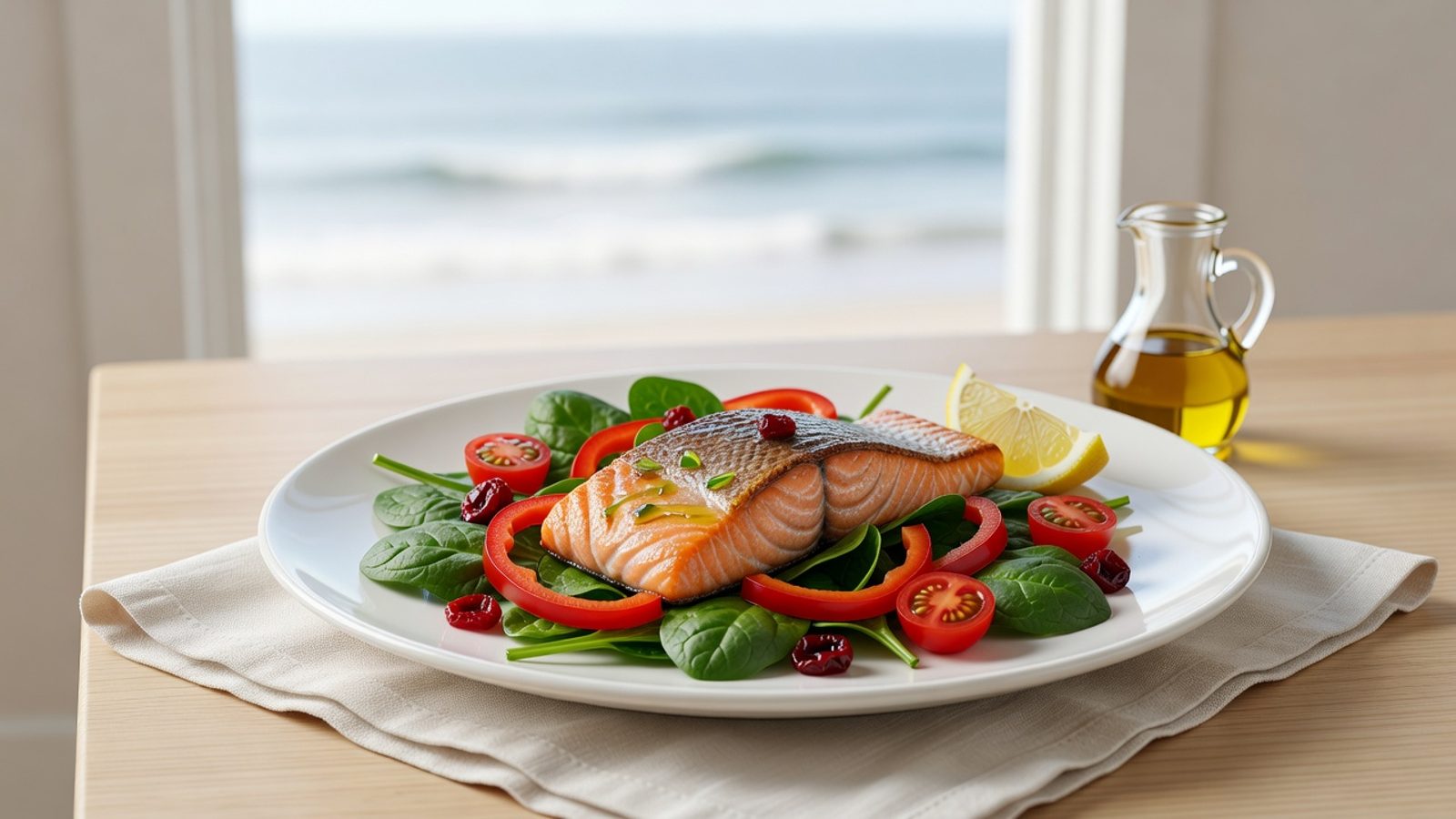
- One salmon plate covers fish, olive oil, greens, and tart cherries.
What eating pattern may help joints?
A Mediterranean-style plate, eaten for years, is the pattern with the best support.
Harvard Health says the research points to a benefit for prevention. An anti-inflammatory diet may help prevent arthritis and may help with the heart and blood-sugar problems that often travel with it. If you already have joint pain, food can be part of managing it, and it is not enough on its own. Harvard quotes Natalie McCormick saying this pattern, kept up for years, may cut gout risk by as much as 60 percent, and may ease osteoarthritis pain and slow further damage. Harvard Health on joints and diet
The patterns named there are the Mediterranean diet and the DASH diet. That means fruit and vegetables, olive oil, whole grains, fish, lean meat, and beans, with fewer sugary drinks and less highly processed food. Cherries, leafy greens, olive oil, and fatty fish such as salmon, sardines, and mackerel are the foods Harvard ties to that effect. Nuts are linked with lower inflammation markers. The whole plate matters more than any single food. Harvard Health on foods that fight inflammation
Which foods are worth eating on repeat?
Oily fish twice a week, olive oil on most days, and colorful produce at meals.
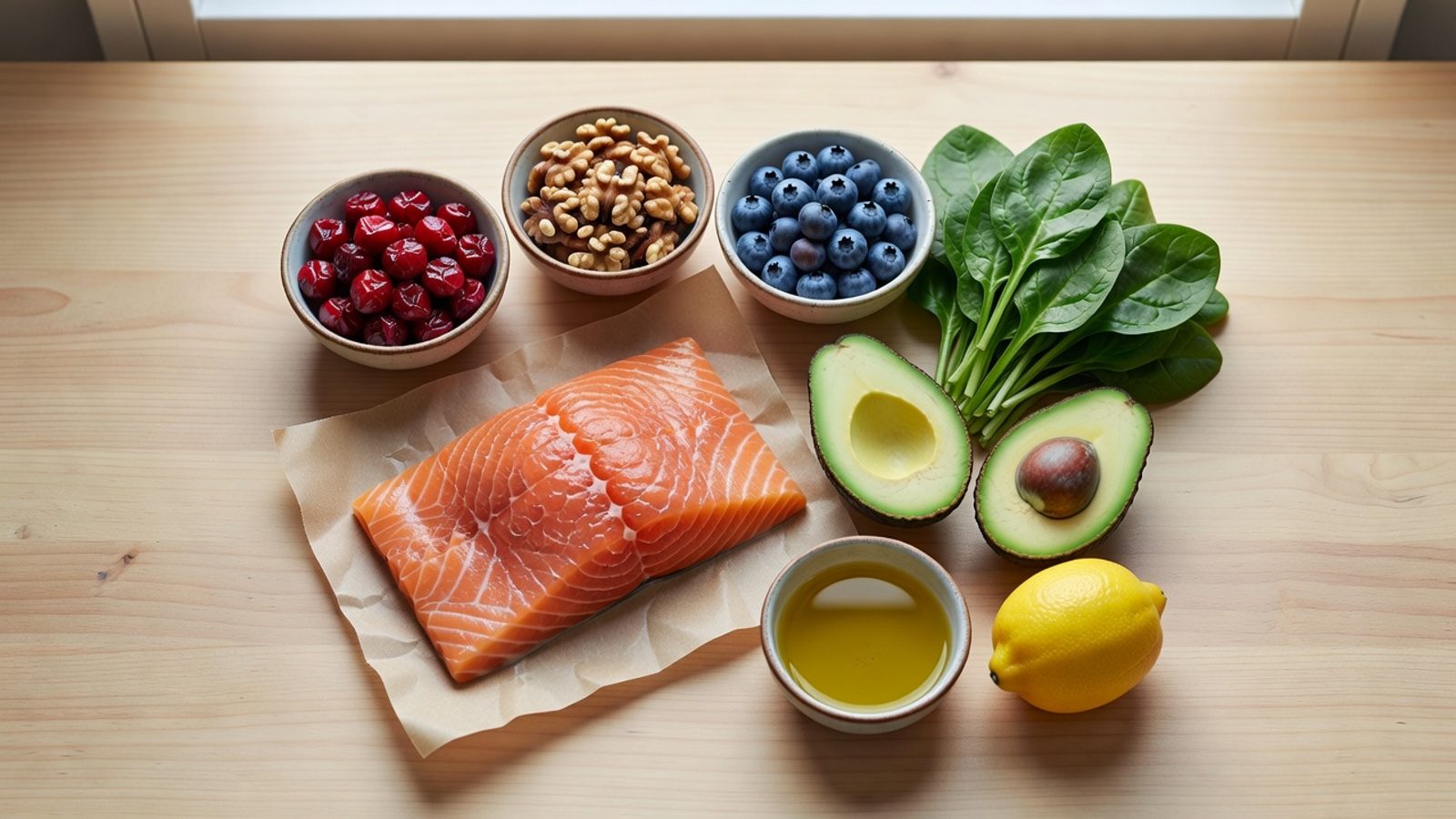
The Arthritis Foundation suggests at least 3 to 4 ounces of salmon, tuna, sardines, or anchovies twice a week, and 2 to 3 tablespoons of olive oil a day. Extra virgin oil contains oleocanthal, which can lower inflammation and pain. The same guidance highlights cherries, berries, spinach, kale, broccoli, and about 1.5 ounces of nuts. Arthritis Foundation anti-inflammatory diet
Cherries have a track record with gout, mainly through uric acid, though those results are mixed. Cherry products may also help recovery after exercise. A few dried cherries on a plate, or the tart cherry recovery smoothie, is enough to use them. Arthritis Foundation on foods for arthritis
NIH lists salmon, mackerel, tuna, herring, and sardines as sources of EPA and DHA. It has not set a recommended amount for those two fats. Flax, chia, and walnuts provide ALA, and the body converts only a little of that into EPA and DHA. Some trials suggest omega-3 supplements may help manage rheumatoid arthritis alongside usual care, and some people may need less pain medication. It is not clear that the pills reduce joint pain, swelling, or stiffness. High doses can cause bleeding problems with warfarin and similar drugs. Food comes first. The supplements guide is there if a clinician has already raised a pill. NIH ODS omega-3 fact sheet
What about vitamin D, calcium, and protein?
Get vitamin D and calcium from food most days, and put a protein food on the plate after you surf.
Vitamin D helps you absorb calcium and, with calcium, helps protect against osteoporosis. Muscles need it to move. A shortage may mean weak, painful muscles. Muscle also helps you keep balance and avoid falls on wet rock. NIH ODS vitamin D fact sheet
Daily vitamin D from NIH:
- Adults 19 to 70: 15 micrograms (600 IU)
- Adults 71 and older: 20 micrograms (800 IU)
Fatty fish and fortified milk are the practical food sources. A cup of fortified milk has about 3 micrograms (120 IU). Many soy, almond, and oat milks are fortified. Skin production slows with age, and NIH still says to use sunscreen of SPF 15 or higher if you are out more than a few minutes.
Daily calcium from NIH:
- Adults 19 to 50, and men 51 to 70: 1,000 mg
- Women 51 to 70, and all adults 71 and older: 1,200 mg
Milk, yogurt, and cheese are the main sources. Canned salmon and sardines count if you eat the bones. Kale, broccoli, and bok choy do too. Bone loss speeds up in middle age, and postmenopausal women absorb less calcium. NIH ODS calcium fact sheet
Put the protein on the post-surf plate. A 3 to 4 ounce piece of fish matches the serving above. The poke bowl and the miso ginger salmon bowl are two easy versions. If you skip fish, keep the oil, the vegetables, and beans or yogurt.
What should you know about alcohol?
Less alcohol is the safer call for gout and for bone.
NIAAA says even low levels of alcohol raise the odds of recurrent gout attacks. Alcohol also impairs fracture repair and reduces bone density. Heavy use raises fracture risk. NIAAA on alcohol and the body People with rheumatoid arthritis should limit alcohol, especially on medicines such as methotrexate, and should ask their doctor what amount fits. Arthritis Foundation anti-inflammatory diet
For the beer after a session, see The Post-Surf Beer: Recovery Facts and Better Swaps.
Joints
What is a simple plate you can cook after a surf?
Cook 4 ounces of salmon in a tablespoon of olive oil and eat it on greens with tart cherries.
Ingredients
- 4 ounces salmon fillet, or 1 can of salmon, drained
- 1 tablespoon extra virgin olive oil, plus 1 teaspoon for the greens
- 2 big handfuls of spinach or mixed greens
- 1 cup chopped tomato, bell pepper, or carrot
- 2 tablespoons dried tart cherries
- Lemon, salt, and black pepper
- Optional: 1 cup cooked rice after a long paddle
Steps
- Pat the fillet dry and season it. With canned salmon, keep the soft bones if you want the calcium.
- Warm the tablespoon of oil over medium heat. Cook the fillet until it flakes and the center is opaque. Canned salmon only needs a minute in the oil.
- Toss the greens and vegetables with the teaspoon of oil and a squeeze of lemon.
- Set the salmon on the greens, scatter the cherries, and add rice if you want it.
- Drink water with the plate. Eat once you are rinsed and sitting.
This article is educational and is not medical advice. It is not a treatment plan. If you have a medical condition or take medicines that change fluid, salt, or food needs, talk with a qualified clinician.
FAQ
Will changing my diet fix sore joints?
No. Harvard says this pattern may help prevent arthritis and may help you manage joint problems you already have. Keep the plan you make with your clinician.
How much fish is enough?
At least 3 to 4 ounces, twice a week. That is the Arthritis Foundation figure for salmon, tuna, sardines, anchovies, and similar fish.
Should I take fish oil?
Eat the fish first. NIH says omega-3 supplements may help some people with rheumatoid arthritis use less pain medication, and it is not clear they reduce pain or swelling. They can interact with blood thinners, so ask your clinician.
I surf in the sun. Do I still need vitamin D from food?
Yes. Older skin makes less, and sunscreen changes what you get outdoors. Adults 19 to 70 are set at 15 micrograms (600 IU) a day. Fatty fish and fortified milk cover the food side.
Do tart cherries help?
They may. The Arthritis Foundation ties cherries to gout, with mixed uric acid results, and says cherry products may help recovery after exercise.
What if I do not drink milk?
Use canned salmon or sardines with the bones, or kale, broccoli, and bok choy, or a fortified soy, almond, or oat milk. Women 51 and older, and every adult 71 and older, are at 1,200 mg of calcium a day. Men 51 to 70 are at 1,000 mg.
Use the poke bowl or the miso salmon bowl when you want the same foods on a tired night.
Sources
- Harvard Health Publishing. An anti-inflammatory diet may be good for your joints. February 1, 2022. https://www.health.harvard.edu/diet-and-nutrition/an-anti-inflammatory-diet-may-be-good-for-your-joints
- Harvard Health Publishing. Foods you should eat to help fight inflammation. https://www.health.harvard.edu/diet-and-nutrition/foods-you-should-eat-to-help-fight-inflammation
- Arthritis Foundation. Anti-inflammatory diet do's and don'ts. https://www.arthritis.org/health-wellness/healthy-living/nutrition/anti-inflammatory/anti-inflammatory-diet
- Arthritis Foundation. 6 foods that may help your arthritis. https://www.arthritis.org/health-wellness/healthy-living/nutrition/healthy-eating/six-foods-for-arthritis
- NIH Office of Dietary Supplements. Omega-3 fatty acids, consumer fact sheet. https://ods.od.nih.gov/factsheets/Omega3FattyAcids-Consumer/
- NIH Office of Dietary Supplements. Vitamin D, consumer fact sheet. https://ods.od.nih.gov/factsheets/VitaminD-Consumer/
- NIH Office of Dietary Supplements. Calcium, consumer fact sheet. https://ods.od.nih.gov/factsheets/Calcium-Consumer/
- National Institute on Alcohol Abuse and Alcoholism. Alcohol's effects on the body. Updated June 2025. https://www.niaaa.nih.gov/alcohols-effects-health/alcohols-effects-body
Next Step
Read the Recovery Guide
Use the poke bowl or the miso salmon bowl when you want the same foods on a tired night.