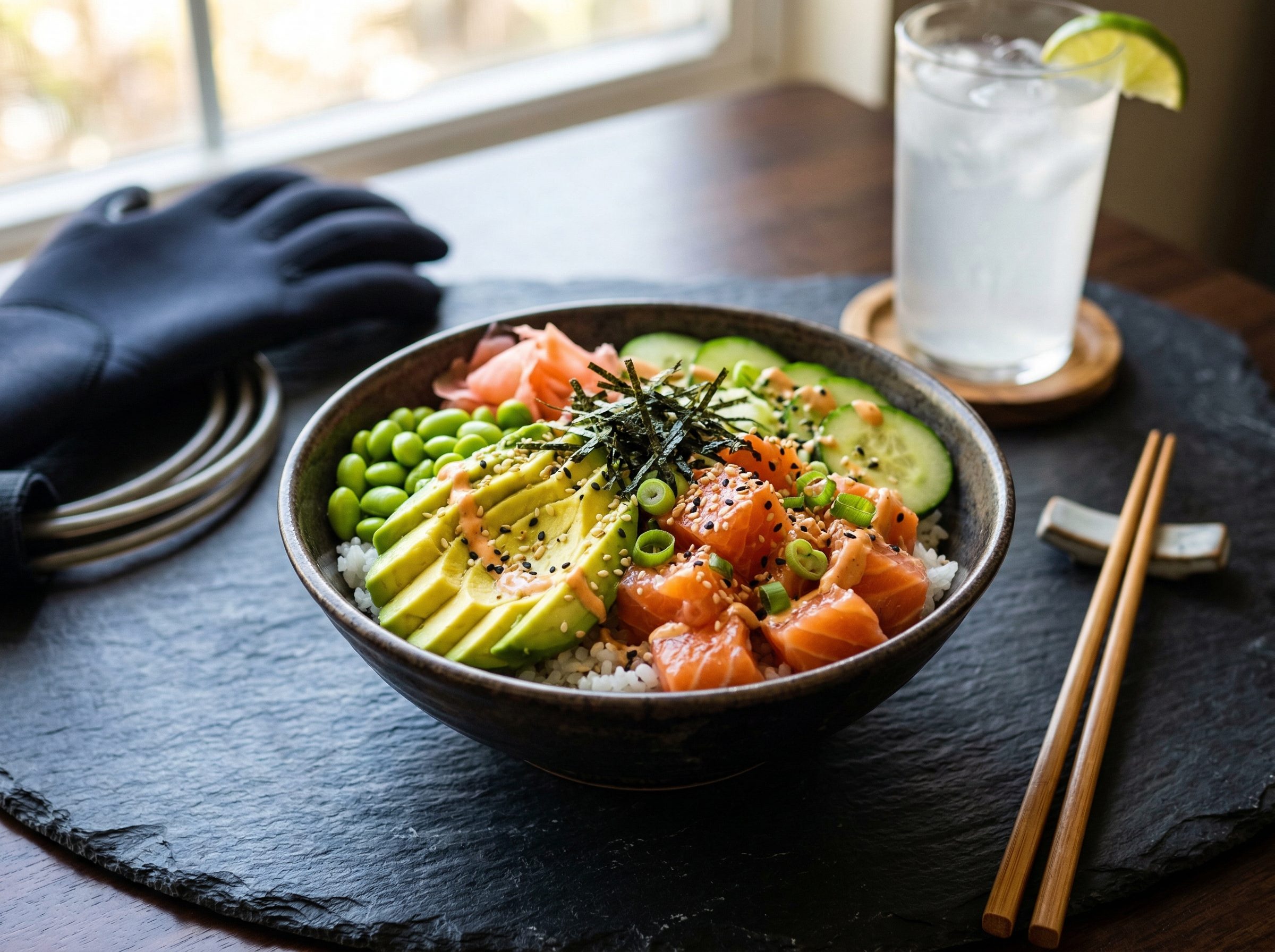
Published: October 5, 2026 | By the SurferFood Editorial Team
Whole30 can help a surfer who wants 30 days of meat, seafood, eggs, vegetables, fruit, and plain fats, with sugar and packaged bars off the table. It gets hard on big surf days because the rules also cut grains, legumes, and dairy, which are the cheap carbs and the easy breakfasts a lot of sessions run on.
Treat it as a short experiment with a reintroduction at the end. Rice is still a useful surf food the rest of the year. For the approach that keeps real food and still allows oats, rice, and bread you digest, read whole-food surf fueling.
Key takeaways
- Whole30 removes added sugar, alcohol, grains, legumes, and dairy for 30 days, and it asks you not to rebuild junk food with different flour.
- The helpful part is cooking plain meals and noticing how you feel once the ultra-sweet snacks are gone.
- Potatoes, fruit, and plantain have to carry the paddle once rice, oats, tortillas, and beans are off the plate.
- Start on a normal month at home. A contest week or a boat trip is a bad time to open a ban list.
- Dropping bars and sugary drinks, while keeping the starches you surf well on, gets you most of the useful part.
Whole30
What is Whole30 actually asking you to eat?
For 30 days you eat meat, seafood, eggs, vegetables, fruit, and natural fats, and you skip the program's no list.
That no list usually includes added sugar, alcohol, grains, legumes, dairy, and additives such as carrageenan, MSG, and sulfites. The program also asks you not to bake pancakes from almond flour and dates and call it a win. The aim is to notice habits. A new dessert with a different flour hides the habit.
Read the current rules if you are going to follow the program for real. Editions change small details. The shape stays. You cook. You read labels. You stop drinking for a month. Carbohydrate comes from potatoes, fruit, and other starchy vegetables. After day 30 you bring foods back one at a time so you can tell what bothered you.
People skip that last part. They do 30 strict days, feel something, and then either fall into a pizza or stay eliminated with no end date. The program is an elimination plus a reintroduction. A surfer who stays in ban mode forever ends up with a cramped menu the moment a trip gets weird.
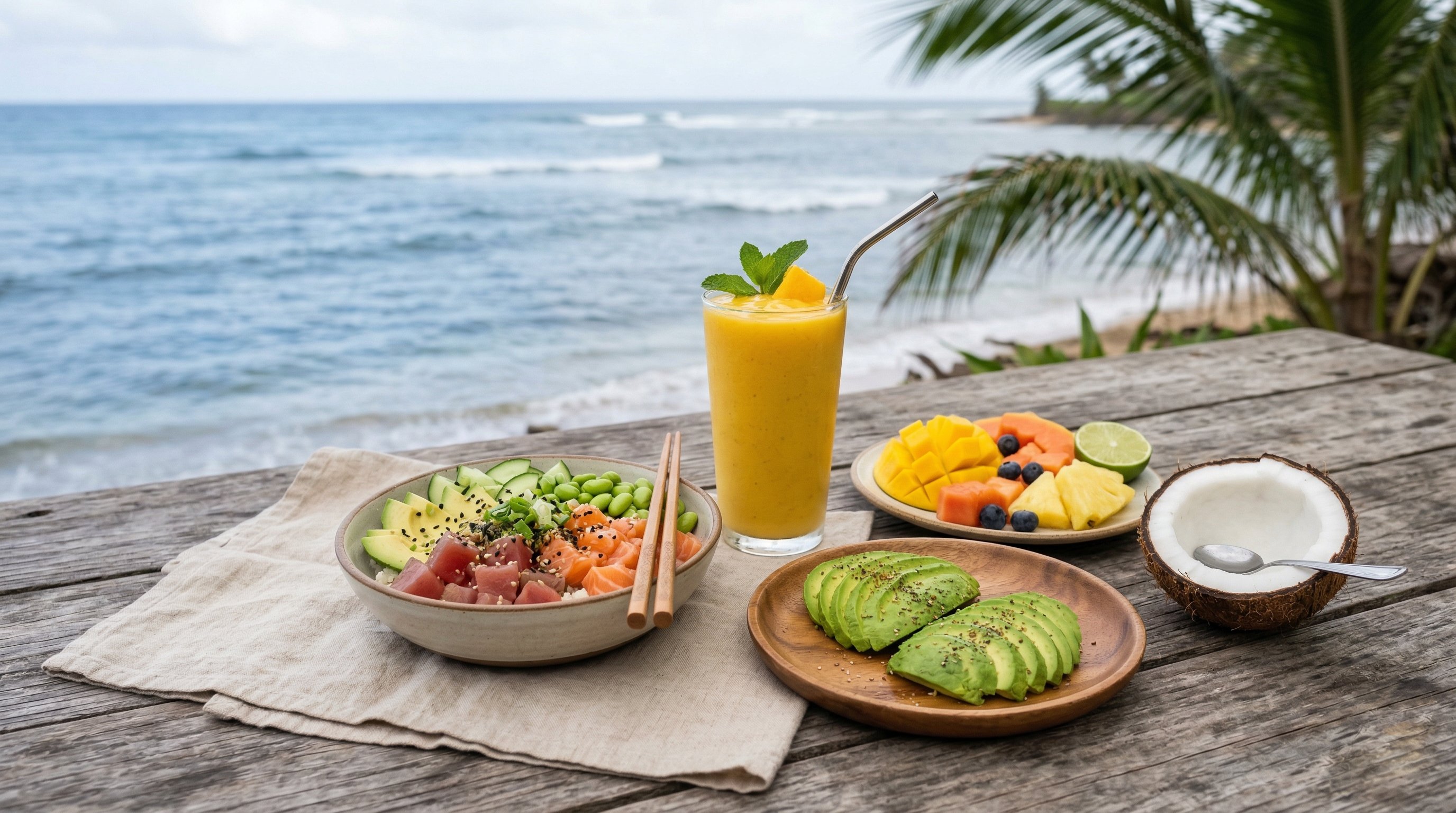
What helps when you surf?
You cook real meals, the sugary extras drop out, and foods that were making mornings worse get easier to spot.
A month without packaged bars, candy coffee drinks, and late beers changes how a lot of people feel at dawn. That part matches whole-food surf fueling. Eggs and potato, fish and salad, fruit, olive oil on vegetables, a handful of nuts. None of that needs a brand name. If the old pattern was a bar, an energy drink, and whatever the camp grilled at 10 p.m., the rules force a better grocery run.
Cooking volume goes up. That helps on a trip if someone owns the kitchen. Chicken, canned fish, eggs, frozen vegetables, potatoes, bananas, oranges, and avocados can feed a house. You spend less time guessing what the powder in a wrapper was supposed to be.
Some surfers notice a food that was quietly annoying them. A lot of ice cream. A daily beer. Sweetened yogurt. Wheat in every snack. Removing several things at once makes the month feel different. It does not, by itself, name the one food that mattered. Reintroduction is how you find out. Add one food back, eat a normal portion, surf, and watch for a couple of days before you add the next.
A piece of fish and a potato after a session is a solid recovery meal on this plan. You get there by cooking, not by buying a special product.
What gets hard on a big surf day?
Portable carbohydrate gets bulky or easy to under-eat, and dawn patrol loses the breakfasts you can eat half-asleep.
Paddling runs on carbohydrate. On Whole30 the main sources are fruit, potato, sweet potato, plantain, winter squash, and other starchy vegetables. Those work. They are heavier in a backpack than bread, they spoil faster in a hot car, and most of them need cooking. A banana is still allowed and still excellent. A cold baked potato plus several bananas is a legal plan for a long session. It is a clumsier plan than rice, oats, and a tortilla with egg.
Dawn patrol is the pinch point. Oats, toast, and yogurt are what many surfers can face in the dark. Whole30 swaps those for potato and eggs you cooked ahead, or for fruit alone. Fruit alone can carry a short local. It is thin for a three-hour paddle if dinner was small. If you wake up and the potato is still raw, you will under-fuel and then blame the diet. The missing piece was the night-before plan.
Cost shows up on the road. Meat, fish, and fresh produce in a surf town add up once rice and beans can no longer stretch the cart. Legumes are out, so the cheap pot of food is gone. Travelers who cannot shop often repeat the same three meals, get sick of them, and quit.
Camp pizza, a birthday beer, a fish taco on a flour tortilla, soy sauce on a poke if you are avoiding additives. You can order carefully. You will also spend the meal managing rules. That wears people out in week three, and it wears them out faster when the swell arrives and they are actually hungry.
Dairy removal also drops yogurt and milk, which some people use as the easy protein before a surf. Eggs can replace them if you planned the eggs.
You can still surf well on the program. The risk is under-eating carbohydrate, then deciding a strict streak matters more than the session. Eat the potatoes. Eat the fruit. Salt your food. A tiny "clean" plate before a long paddle is the failure mode to watch.
How does it compare with whole-food surf fueling?
Whole-food fueling drops the processed bars and keeps the starches that make sessions easier to feed.
Both want food you can name. The split is the ban list. Whole-food surf fueling, no processed bars still uses oats, rice, bread, beans, and yogurt when you digest them. Those foods pack, reheat, and sit well before a paddle. Whole30 removes that list for a month so you can test life without it.
If wheat already bothers your gut, you can avoid wheat without a brand program. If you already know you surf better with rice, a 30-day ban will fight you and then hand rice back at the end. Take the lesson you came for.
A middle path, if you want the cleanup with fewer rules:
- Drop sugary drinks, candy, and bars for a month.
- Keep one or two starches you digest, such as rice, oats, or potato.
- Keep yogurt or beans if they sit well.
- Cook fish, eggs, and vegetables the way you would on Whole30.
- Watch energy in the water, sleep, and how your gut behaves.
- Change one thing at a time so you know what changed.
That month is easier to surf through. You also learn more, because ten foods did not disappear on the same Monday.
When is it reasonable to try, and when should you wait?
Try it at home, with a kitchen and a real question, during a month when the calendar can bend. Wait if the trip, the swell, or your relationship with food is already strained.
Useful questions sound specific. Does this yogurt bother me? Can I stop weeknight drinks and still want dawn patrol? What happens if I cook dinner every night for a month? A nearby shop and a flexible week make those answerable.
A two-week boat trip, a contest, or your first week of surfing every day is a poor launch. So is any month when dinner already feels like a crime. Elimination lists pile rules on people who needed regular meals. If you have a history of disordered eating, skip the ban list as a project. Talk with a clinician and build meals that support the surfing.
If you already started and a big swell shows up, eat more potato and fruit. A plate of potato and eggs, eaten because you are paddling, serves the experiment better than a skipped breakfast in the name of a perfect streak.
When day 30 ends, reintroduce on purpose. Rice for two days. Then wheat. Then dairy. Then beans. Surf on those days and write down what you notice. Keep what works. Leave what does not. That result belongs to you.
This article is educational and is not medical advice. It is not a treatment plan. If you have a medical condition or take medicines that change fluid, salt, or food needs, talk with a qualified clinician.
Frequently asked questions
Will Whole30 make me surf better?
It can, if the old pattern was chaotic snacking, low protein, and a lot of sugar. It can leave you flat if you under-eat starch on long days. A calmer stomach and steady energy are the signs that matter. A perfect streak is not one of them.
Can I eat white potatoes?
Yes. Potatoes are the main starch most people lean on. Sweet potatoes and fruit count too. Match the portion to how long you will paddle.
What about salt and coffee?
Salt your food. You lose salt in the water. Black coffee, or coffee with a milk alternative the program allows, is fine if you already tolerate it. Check the edition you are using. Leave new pre-workout powders out of the test.
Is sushi rice allowed?
Rice is a grain, so a strict reading says no. Sashimi with vegetables and fruit is the closer plate. If rice is what lets you surf twice a day, that belongs in the reintroduction notes, or it is a reason to choose whole-food fueling and skip the full ban.
What do I eat before dawn patrol?
Cook potato the night before and reheat it with eggs, or eat fruit you can face at dawn and a larger plate after. Test the portion on a small day before you trust it.
What should I do after the 30 days?
Bring foods back one at a time and keep cooking. Use whole-food surf fueling as the ongoing pattern. Bars stay a backup. Oats, rice, fruit, eggs, and fish stay available for the sessions that need them.
If you want the cleanup Whole30 is pointed at, start with real meals and a month without processed bars, using whole-food surf fueling. Use the full ban only when you have a question to answer and a calendar that can absorb a big swell.
Next Step
Read Whole-Food Surf Fueling
If you want the cleanup Whole30 is pointed at, start with real meals and a month without processed bars, using whole-food surf fueling. Use the full ban only when you have a question to answer and a calendar that can absorb a big swell.