Published: October 19, 2026 | By the SurferFood Editorial Team
A small coffee before surfing can sharpen a session if you already tolerate caffeine, you drink it with food, and you have tested that cup on land. A large coffee on an empty stomach, finished while you wax up, shows up as jitters or a messy paddle.
The FDA cites 400 milligrams of caffeine a day as an amount not generally associated with negative effects for most healthy adults. That is about two to three 12-fluid-ounce cups of brewed coffee [1]. It is a daily ceiling for most people, not a target before you paddle. Sensitivity varies with body size, medicines, and how fast you clear caffeine [1].
Key takeaways
- NIH summarizes a performance range of about 2 to 6 mg per kilogram, taken 15 to 60 minutes before exercise [2].
- More does not keep helping. Around 500 mg a day can hurt performance and sleep [2].
- Test a new dose on a rest morning before you use it in the lineup.
- Big-wave surfers often keep caffeine low on days with long breath-holds [3].
- A second cup, a gel, and an energy drink all add milligrams [1].
How much coffee is a surf dose?
Start with one small cup you already drink. Stay under a full performance dose until you know your response.
NIH's Office of Dietary Supplements summarizes studies in which about 2 to 6 mg of caffeine per kilogram of body weight, taken before exercise, improved endurance and some team-sport work. For a 154-pound (70 kg) person that range is 210 to 420 mg. Taking more did not improve results further and raised the chance of side effects [2].
Brewed coffee is an uneven scoop. FDA's table puts a typical 12-fluid-ounce regular coffee at 113 to 247 milligrams [1]. A short home mug is often less. A large cafe cup can clear the low end of that 210 mg figure by itself.
If one small coffee already leaves you calm and sharp, stay there. FDA's "too much" signs include a racing heart, palpitations, insomnia, anxiety, jitters, upset stomach, nausea, and headache [1]. Any of those in the water means cut the dose. People who are pregnant, trying to become pregnant, or breastfeeding, and anyone whose medicines change caffeine sensitivity, should talk with a clinician first [1].
Coffee
When should you drink it?
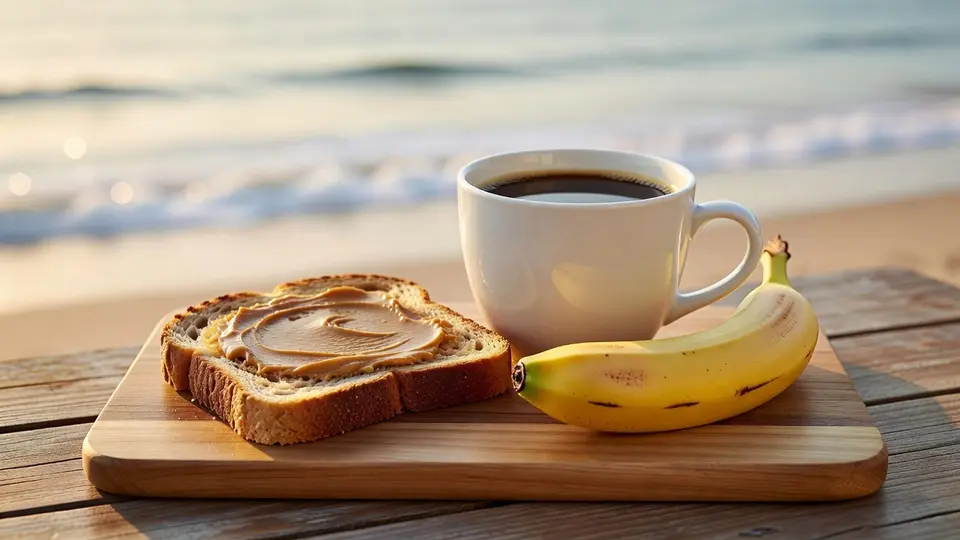
Drink it 15 to 60 minutes before you paddle, with a little food, and not as you run across the sand.
Caffeine reaches peak blood levels in about 45 minutes, and the half-life is about 4 to 5 hours [2]. A 6 a.m. cup can still be in you at lunch. The ODS review puts the performance window at 15 to 60 minutes before exercise [2]. Forty-five minutes with a banana or toast is the calmer landing. A cup finished on the sand is still arriving during the first duck dive.
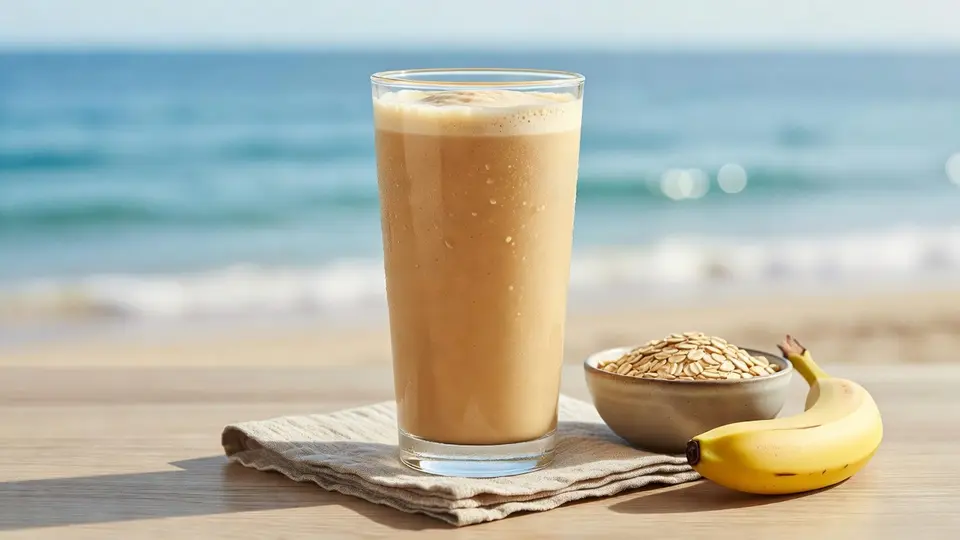
Coffee alone, then a hard paddle, is a common path to nausea. The Iced Coffee Protein Shake puts cold coffee, a banana, oats, and protein in one glass. Drink it 45 to 60 minutes out. On a cold morning, hot coffee plus a banana does the same job. Skip a second dose in the parking lot. The first cup is not gone yet [2].
Why do big-wave surfers limit caffeine?
A held breath gets harder when caffeine and a big meal are both in the way.
Big-wave surfer Mark Healey keeps caffeine minimal and eats easy-to-digest food before heavy water. He wrote that a breath-hold after a big meal or caffeine is, in his experience, knocked down by at least 30 percent [3]. That is one surfer's report, not a lab trial. It is why people cap the dose on days with long hold-downs.
The big-wave fueling piece shows how different that plate can look from a beach-break breakfast. ODS notes caffeine is more likely to help longer, stop-start efforts than one short sprint [2]. Some surfers feel focus. Some feel only jitters. The supplements guide leaves caffeine as a short entry because dose and timing decide it.
How do you test tolerance on land?
Use one measured cup on a non-surf morning. Eat your usual snack, finish the coffee, wait 45 minutes, then walk briskly or paddle flat water. Note your stomach, your mood, and whether you needed a bathroom. Check sleep that night. A cup that helps at 10 a.m. and ruins 10 p.m. fails for a week of dawn patrol.
Change one thing at a time. Decaf is not zero. FDA notes it typically still has 2 to 15 milligrams in an 8-fluid-ounce cup [1].
What are the tradeoffs on a surf day?
You trade a possible drop in perceived effort for sleep loss, gut upset, and a heart rate you did not ask for.
ODS reports that caffeine can reduce perceived fatigue so people hold a pace longer, and that during exercise it does not cause extra fluid loss that would hurt performance [2]. You still need water. See surf hydration. At 500 mg a day or more, caffeine might reduce performance and can disturb sleep [2]. A dawn-patrol cup is still in you at midday. Leave time for a bathroom stop before you suit up.
Energy drinks are an uneven add-on. FDA lists a 12-fluid-ounce energy drink from 41 to 246 milligrams, and medical experts advise against them for children and teens [1]. Pure powdered caffeine is a different product. FDA estimates toxic effects such as seizures can show up around 1,200 milligrams taken quickly [1]. Use coffee you brewed and can see.
If coffee makes the session worse, drop it. A banana and water still fuel the paddle. Carb timing is in what to eat before surfing.
A land-test coffee and banana
Use this on the test morning, then on a small surf day if it sat well.
Ingredients
- 8 to 12 fluid ounces of coffee you brewed
- 1 banana
- A glass of water
Steps
- Eat the banana with the first sips.
- Finish the cup at least 45 minutes before you plan to raise your heart rate.
- Drink the water alongside it.
- If you want the blended version later, use the iced coffee protein shake on the same clock.
This article is educational and is not medical advice. It is not a treatment plan. If you have a medical condition or take medicines that change fluid, salt, or food needs, talk with a qualified clinician.
FAQ
Is coffee before surfing a bad idea?
For most healthy adults who already drink a modest cup with food, it is a normal tool. The FDA figure of 400 mg a day is a ceiling for most adults, not a pre-paddle target [1].
How long before I paddle should I finish the cup?
Finish it 15 to 60 minutes before exercise, closer to 45 if your stomach is sensitive, and eat a banana or toast with it [2].
Will coffee dehydrate me in the lineup?
During exercise, caffeine does not cause extra fluid loss that would hurt performance [2]. Drink water anyway.
Should I drink coffee before big surf?
Keep it small or skip it when the day includes long breath-holds. Healey limits caffeine before heavy water for that reason [3].
Can I use an energy drink instead?
Count the label. A 12-fluid-ounce energy drink can land from 41 to 246 mg [1]. Coffee plus food is easier to measure.
What if caffeine wrecks my sleep after dawn patrol?
Cut the size. The half-life is about 4 to 5 hours, so a late second cup lingers into the night [2].
Try one familiar cup with a banana on a small morning before you change anything else. The iced coffee shake is the version with protein in the glass. The supplements guide is the short caffeine note this post expands.
A cold-water session changes the plate around that cup. Read Cold Water Surfing Nutrition: What to Eat in Winter.
Sources
- [1] U.S. Food and Drug Administration, "Spilling the Beans: How Much Caffeine is Too Much?" Content current as of August 28, 2024. https://www.fda.gov/consumers/consumer-updates/spilling-beans-how-much-caffeine-too-much
- [2] NIH Office of Dietary Supplements, "Dietary Supplements for Exercise and Athletic Performance: Fact Sheet for Health Professionals," Caffeine section. https://ods.od.nih.gov/factsheets/ExerciseAndAthleticPerformance-HealthProfessional/
- [3] Mark Healey, "Mark Healey's Nutrition Philosophy to Optimize Big Wave Performance," The Inertia, August 6, 2021. https://www.theinertia.com/surf/mark-healeys-nutrition-philosophy-to-optimize-big-wave-performance/
Next Step
Read the Supplements Guide
Try one familiar cup with a banana on a small morning before you change anything else. The iced coffee shake is the version with protein in the glass. The supplements guide is the short caffeine note this post expands.