Published: October 12, 2026 | By the SurferFood Editorial Team
The night before a long surf day is when you fill muscle glycogen. Breakfast still matters, because liver glycogen drops while you sleep.
Parking-lot snacks come too late for a dawn patrol, a boat trip, or a two-session swell day. Dinner is the part of the load you can finish before the alarm.
Key takeaways
- For hard efforts longer than about 90 minutes, sports nutrition guidance puts carbohydrate around 10 to 12 grams per kilogram of body weight per day across the 36 to 48 hours beforehand.
- You do not need a punishing depletion session first. A high-carb day with easy paddling, or even rest, can raise glycogen.
- Make dinner the biggest carb meal: rice, potato, pasta, bread, and fruit you already digest.
- Keep the plate familiar, with less fat and less fiber than a heavy restaurant dinner, so you sleep and do not feel stuck in the morning.
- Eat again after you wake up. An overnight fast lowers liver glycogen even when muscle stores are full.
Surf Trip
Why does the night before matter more than a parking-lot snack?
Muscle glycogen is the fuel you paddle on once the session gets long. A banana at the car helps, but it cannot replace a day of carbohydrate eaten while you are still on land.
For sustained or stop-and-start exercise longer than 90 minutes, guidance is about 10 to 12 grams of carbohydrate per kilogram of body mass per day in the 36 to 48 hours before the effort (Beck and colleagues, 2015). A long paddle day fits that better than a quick beach break.
Older plans started with a hard depletion workout and a low-carb stretch. Later work showed you can raise glycogen without that depletion phase, and that a single high-carb day can be enough. A 2019 endurance review reports the same pattern: a day at 10 to 12 grams per kilogram, with light training or rest, can supercompensate glycogen (Vitale and Getzin, 2019).
Ease off the extra gym session the day you travel. Eat carbs at lunch and again at dinner. Do not save the entire load for one plate at 10 p.m.
What should dinner actually look like?
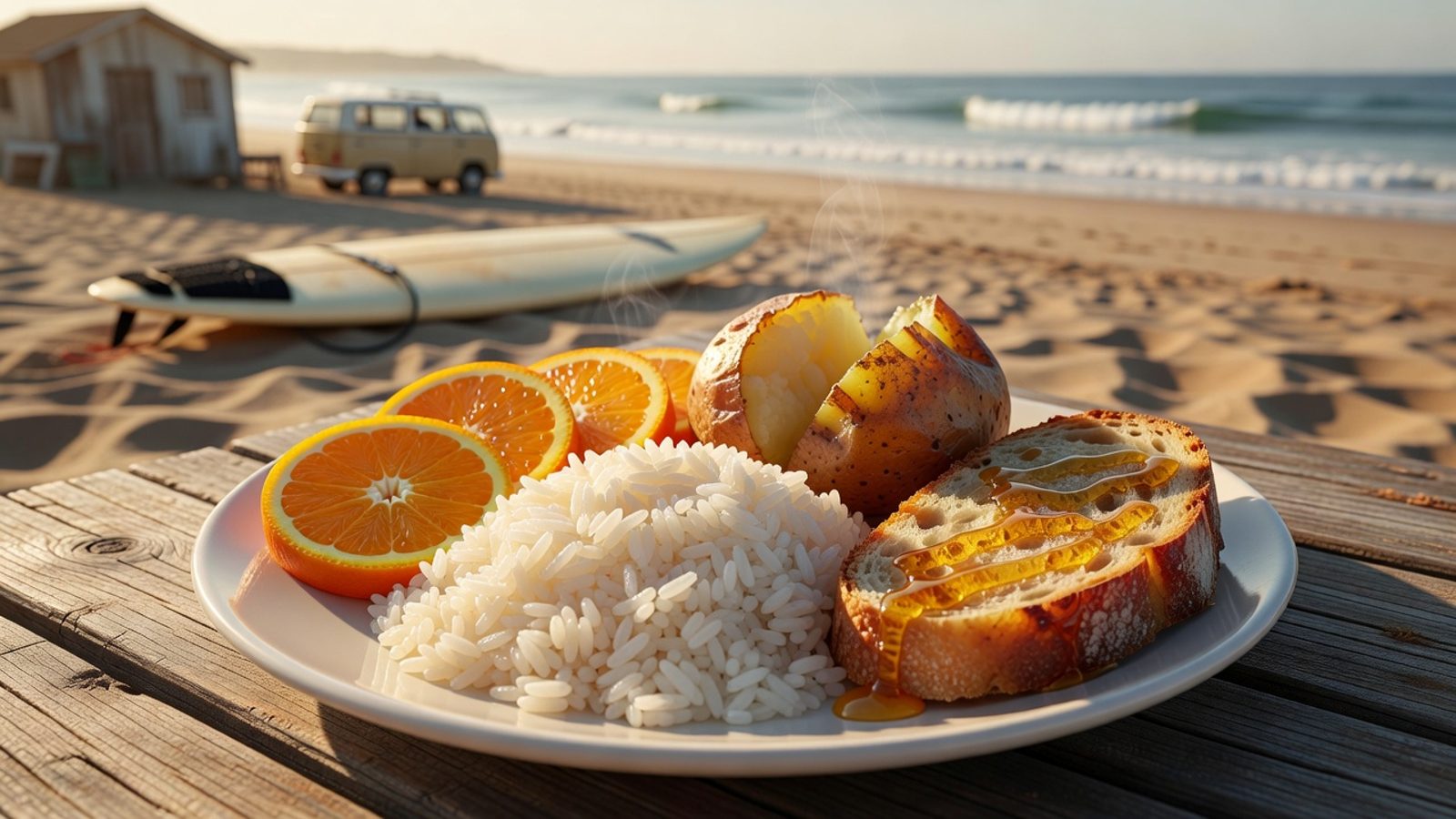
Dinner should be a large serving of a starch you trust, plus fruit, plus a modest portion of protein.
Good bases are white rice, potatoes, sweet potato, pasta, bread, or a mix. Add a ripe banana, mango, or a small glass of juice if that sits well. Protein can be eggs, fish, yogurt, tofu, or a normal serving of chicken. You are not trying to skip protein. You are trying to keep the plate from turning into a fat-heavy feast that digests slowly.
Practical plates that travel well:
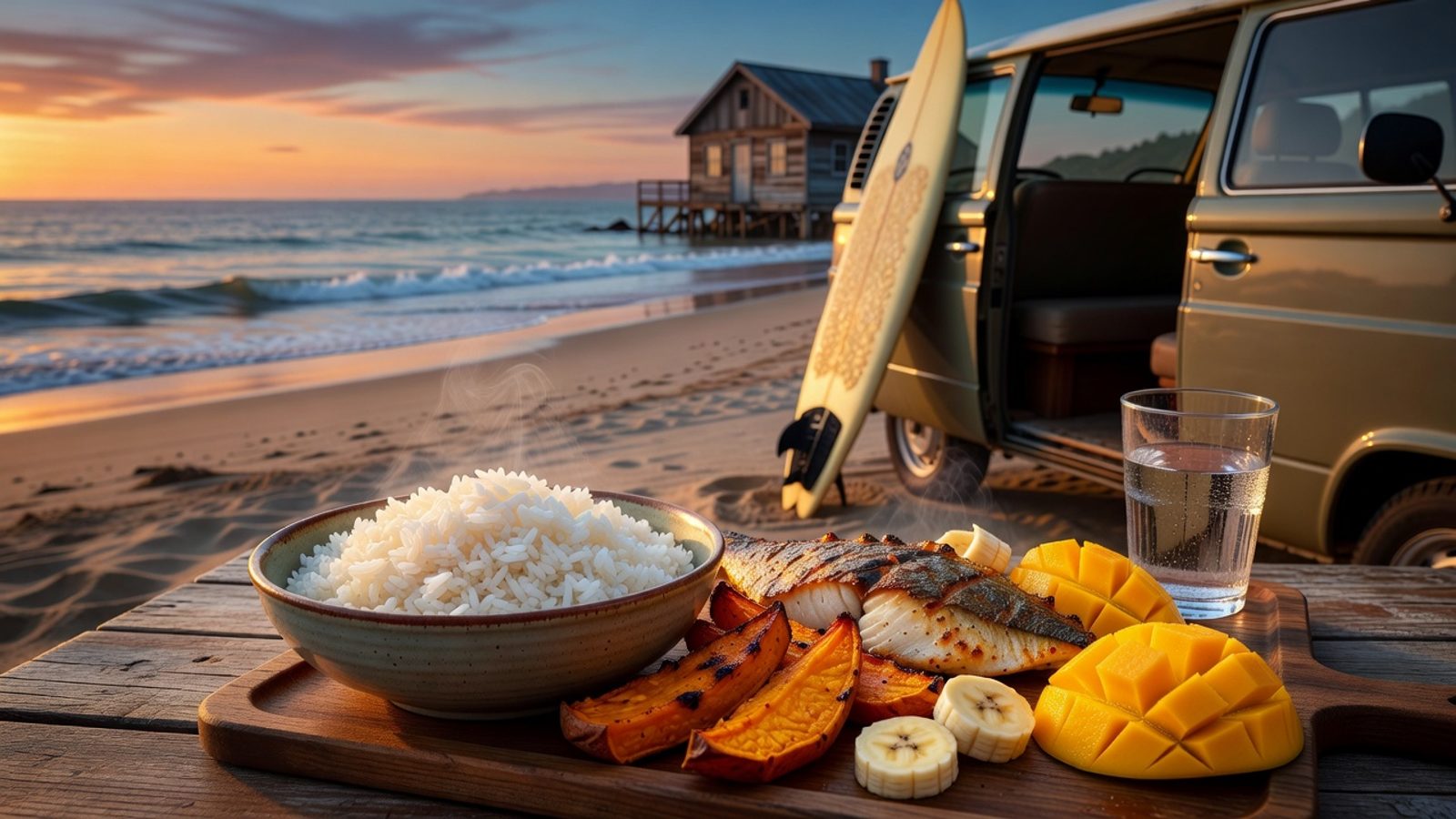
- Rice, a baked sweet potato, and grilled fish, with fruit on the side. The sweet potato power bowl is an easy template if you have a kitchen.
- Pasta with a light tomato sauce and a little cheese, not a cream sauce.
- Bread, jam, and a banana if the only kitchen is a hostel shelf. Add yogurt if you tolerate dairy.
- Oats mixed at dinner and left in the fridge. That jar is breakfast, not the whole load, so still eat a carb dinner.
Salt the food the way you normally would. Drink water with the meal. If tomorrow is hot and you know you cramp when you under-salt food, a normally salted dinner is more useful than a plain sports drink you have never tried.
Skip the experiment. New hot sauce, a huge bean bowl, or a deep-fried platter the night before a boat ride is how people lose the dawn session to their stomach.
How big is 10 to 12 grams per kilogram, in real food?
It is more carbohydrate than a typical dinner, spread through the whole day.
A 70 kilogram surfer at the low end of that range is near 700 grams of carbohydrate across the day, not in one bowl. Add carbs at breakfast on the travel day, at lunch, as snacks, and again at dinner. Bread, fruit, rice, potato, and a sports drink you already use can all count.
You do not need a scale on every trip. If your normal dinner is mostly salad and grilled meat, add a second starch and a piece of fruit. A mellow one-hour surf does not need a full load. Save the big carb day for the swell that will keep you in the water.
What about the morning you paddle out?
Eat again. The night meal does not replace breakfast.
Liver glycogen falls during an overnight fast. Endurance guidance still calls for about 1 to 4 grams of carbohydrate per kilogram in the 1 to 4 hours before exercise that lasts longer than about an hour, partly to top off the liver after sleep (Vitale and Getzin, 2019). The pre-surf fueling guide is the place for that morning window, including what to do when you only have a few minutes.
If the tide is too early for a real meal, use something small and familiar: a banana, a few bites of last night's oats, or white toast with honey. Then eat a proper breakfast after the first session if you are going back out. Same-day timing, including how close to the water you can still eat, is in what to eat before surfing.
How do you pull this off in a rental or a van?
Shop for carbs that do not need a full kitchen, and eat them on a schedule you have tested at home.
Rice packets, bread, bananas, potatoes you can microwave, and jars of oats survive a surf trip better than a plan that depends on one cafe. The surf trip packing guide is the list to build from before you leave. Cook extra at dinner so the morning is a reheat, not a hunt for food.
On a multi-day swell, repeat a carb dinner each night you expect a long session. One loading dinner does not cover four days of snack bars and coffee.
Test the meal on a normal weeknight before a boat trip. If a huge pasta plate keeps you awake, split the same carbs between an early dinner and a later bowl of cereal.
This article is educational and is not medical advice. It is not a treatment plan. If you have a medical condition or take medicines that change fluid, salt, or food needs, talk with a qualified clinician.
Frequently asked questions
Is one big pasta dinner enough carb loading?
No. The 10 to 12 gram target is for the day, across 36 to 48 hours. Eat carbohydrate at lunch, snacks, and dinner, then eat again in the morning.
Do I have to train hard and eat low carb the day before?
No. Light surf or a rest day plus a high-carb intake can raise glycogen. A brutal session the day you travel mostly makes you tired.
Should I cut fiber at dinner?
If beans, bran, or a huge salad bother you in the water, choose white rice, potato, regular pasta, or ripe fruit at the pre-trip dinner. Eat the high-fiber meals on rest days.
Will a sports drink at night replace dinner?
No. A familiar drink can add carbohydrate and fluid. It does not replace rice or potato plus a little protein. Do not debut a new drink the night before a trip.
What if I cannot eat in the morning?
Have a carb-heavy dinner and put a banana by your keys. Even a small morning snack helps after an overnight fast. Eat a full meal once you are out if another session is coming.
If tomorrow is a long one, build dinner around a starch you already like, then follow the pre-surf guide for the first meal after you wake up. Pack the leftovers the way you would pack wax.
Once you are in the water the next day, the portable foods are in Real Food to Eat During Long Surf Sessions.
Sources
- Beck KL, Thomson JS, Swift RJ, von Hurst PR. Role of nutrition in performance enhancement and postexercise recovery. Open Access Journal of Sports Medicine. 2015. https://pmc.ncbi.nlm.nih.gov/articles/PMC4540168/
- Vitale K, Getzin A. Nutrition and supplement update for the endurance athlete: review and recommendations. Nutrients. 2019. https://pmc.ncbi.nlm.nih.gov/articles/PMC6628334/
Next Step
Read the Pre-Surf Guide
If tomorrow is a long one, build dinner around a starch you already like, then follow the pre-surf guide for the first meal after you wake up. Pack the leftovers the way you would pack wax.