Published: October 12, 2026 | By the SurferFood Editorial Team
On a surf that runs past two hours, eat carbohydrate while the session is still going. Bananas, rice, potatoes, dates, and a familiar bread are enough if you can get them down and you have practiced them.
Pre-surf meals and post-surf bowls do not cover the middle. The food has to be simple, damp-proof, and easy to chew on the beach while you watch the lineup.
Key takeaways
- Carbohydrate during long exercise helps keep blood glucose up and carbohydrate oxidation going, especially past about two hours.
- A common target for efforts of about 1 to 2.5 hours is 30 to 60 grams of carbohydrate per hour. Longer days can go higher if your gut tolerates it.
- Drinks, gels, and low-fat, low-fiber solid foods can all hit that target. Use the form you will actually eat in a wetsuit.
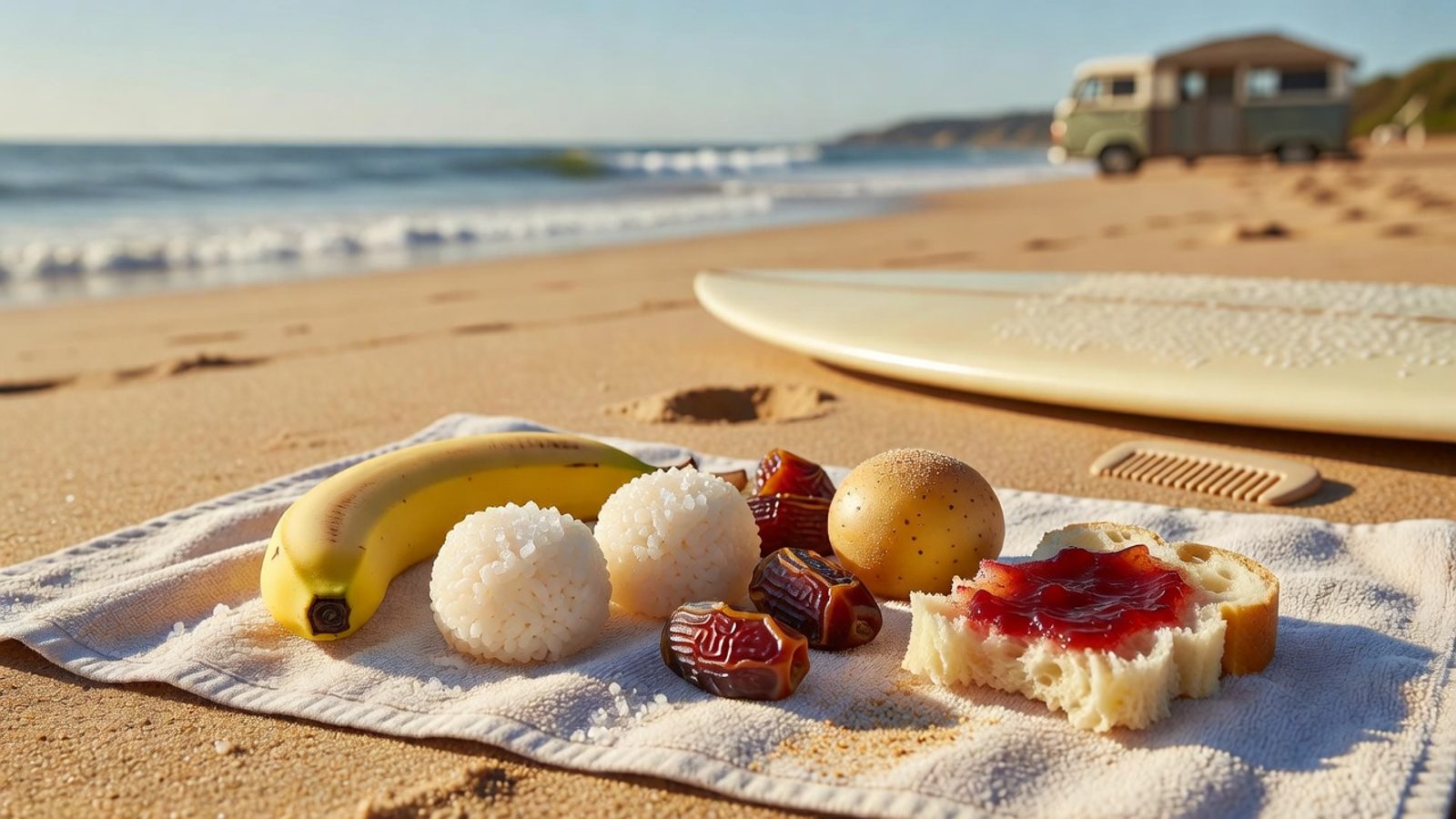
- Pack foods you can name: banana, white rice, boiled potato, dates, pretzels, or jam on white bread.
- Practice on a mellow long surf. Do not debut a new snack on a big day.
Long Sessions
Why eat during the session at all?
Because after a couple of hours, muscle and liver carbohydrate are no longer a full tank, and a snack on the beach can keep the next hour from feeling flat.
Carbohydrate taken in during exercise longer than about two hours helps prevent low blood glucose, keeps carbohydrate oxidation higher, and increases endurance capacity compared with taking in none (Jeukendrup, 2014). A three-hour paddle in current is that kind of effort. The session fueling guide matches food to how hard the day is. This page is the food you can hold in a wet hand.
Skip the feed on a 45-minute beach break. Eat during the session when you know it will run long.
How much carbohydrate are you aiming for?
For events around 1 to 2.5 hours, a common recommendation is 30 to 60 grams of carbohydrate per hour. Past about 2.5 hours, the higher range is about 60 to 70 grams per hour, and up to about 90 if you tolerate it (Vitale and Getzin, 2019).
A table for well-trained athletes puts about 30 grams per hour on efforts of 1 to 2 hours, about 60 grams on efforts of 2 to 3 hours, and about 90 grams from mixed carbohydrate sources past 2.5 hours (Beck and colleagues, 2015). The 90 gram figure means more than one kind of carbohydrate, such as glucose plus fructose. It does not mean forcing one sweet food until you feel sick.
Start at the low end. Check a label once at home so a handful is not a guess.
Spread the food through the session. A few bites every 20 to 30 minutes beat one huge sandwich after you are already empty. Drink water with solid food. The hydration guide still matters on days you are eating real food.
Which real foods work in a wetsuit?
The foods that work are soft, not too fatty, not too fibrous, and already familiar.
The hourly carbohydrate can come from drinks, gels, or solid foods that are low in fat, protein, and fiber. Pick what you prefer (Jeukendrup, 2014). Rice can replace a gel. A cheese sandwich is still a poor mid-session plan.
Foods that fit a surf cooler:
- A ripe banana. Easy to chew and easy to share. Nut butter belongs before the surf, not in the middle of it. Save banana almond toast for the way home if you still want it.
- White rice pressed into small salted balls, with an optional dab of jam. Wrap them so sand stays out.
- Small boiled potatoes, cooled and salted. Bulkier than a gel, and worth it when you have a beach stash.
- Dates or raisins in a small box.
- Soft white bread with jam, cut into squares.
- Pretzels when you want salt, if you have water. They fail when your mouth is already dry.
Leave these for before or after, not for the long middle: big nut handfuls, protein bars, fiber-heavy granola, fried food, and anything you have never eaten. Nuts are a slow bite when you want carbohydrate in quickly.
Gels and drinks still have a job. They are lighter when you will not leave the water, and they make the gram target easier to count. Compare options in the energy gels guide, or mix a batch from the homemade energy gel recipe. Many surfers do best with real food on the beach and a gel only if they are stuck outside for another hour.
How do you pack it so you will actually eat it?
Put the food where you can reach it without ending the session, and make the portions small enough to finish.
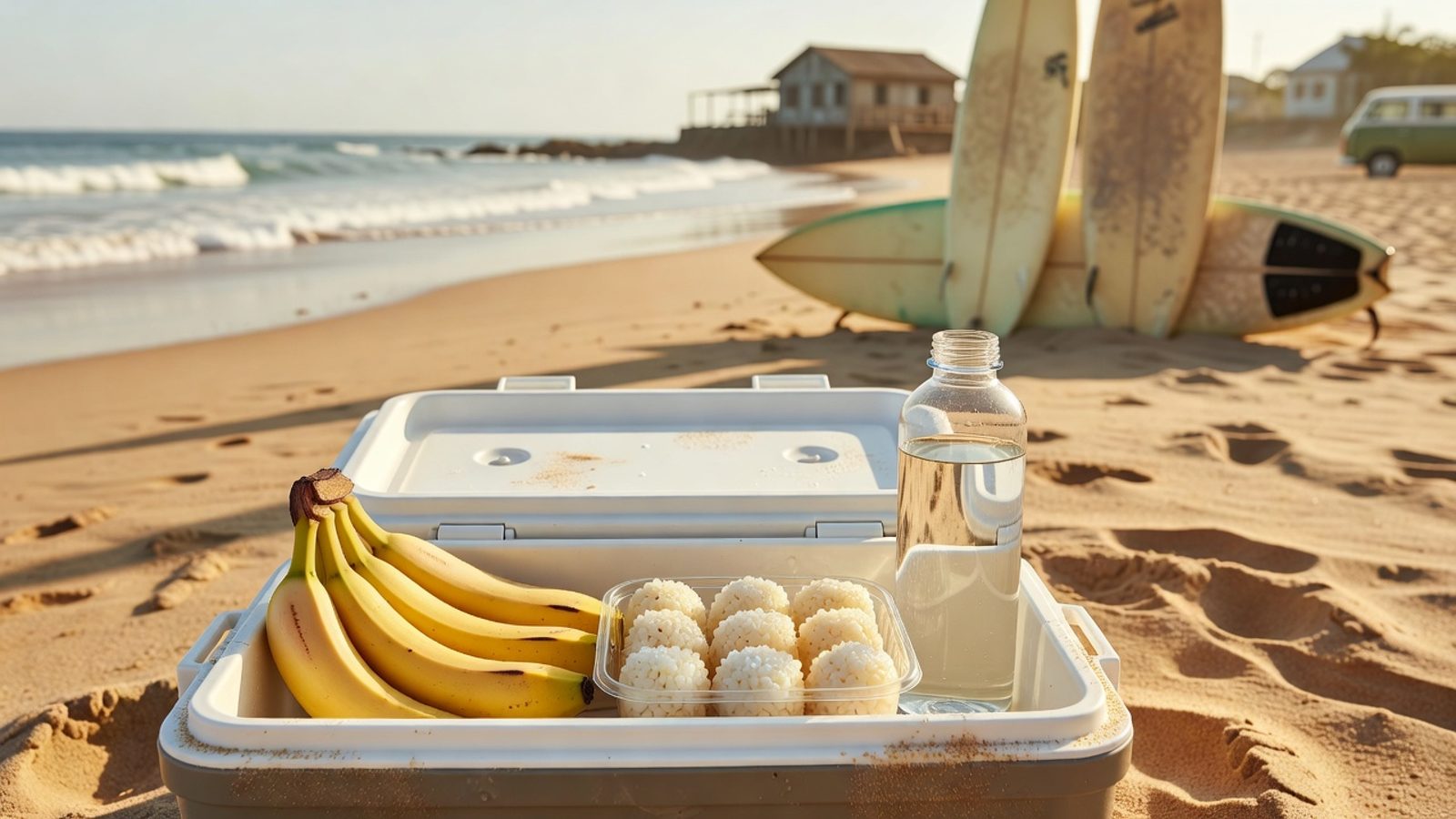
Use a hard box inside a soft cooler. Bananas bruise under a leash. Rice balls hold up if they are cold. Salt the potatoes in the morning. Dates survive heat better than a soft sandwich.
Eat on the sand when there is a lull and a safe exit. Do not dig in a bag in the impact zone. If the only safe window is every 40 minutes on the beach, pack for that rhythm.
Hot days call for more water beside the food. Cold days call for food you can open with cold hands. Cut things at home.
A sample rhythm for a three-hour surf, once you know your stomach: a normal meal before you paddle, half a banana or a small rice ball with water near the one-hour mark if you can exit, another small carb portion or a gel near two hours, then a real meal with protein after you are out. The beach snack does not replace that meal.
Missing one snack is normal. Going three hours with food sitting unused on the beach is the pattern that leaves the last stretch sloppy.
What should you practice before you need it?
Practice the food, the amount, and the moment you will eat it.
Pick one food. Eat a known amount on a two-hour easy surf. Change one thing the next week, such as a second snack or a switch from banana to rice.
If solid food always sloshes, use a drink or a gel for the in-water hour and keep real food for the beach. The goal is carbohydrate you absorb.
This article is educational and is not medical advice. It is not a treatment plan. If you have a medical condition or take medicines that change fluid, salt, or food needs, talk with a qualified clinician.
Frequently asked questions
Do I need to eat during every surf?
No. Short sessions are covered by the meal you ate beforehand. Bring mid-session food when the surf will run past about two hours, or when a second session comes before you can get a meal.
Is a banana enough by itself?
One banana is a useful serving, not an all-day plan. Add rice, potato, dates, or a drink so the hour does not depend on a single piece of fruit.
Can I just use a sports drink?
Yes, if you tolerate it and the label matches the hour you are in. Real food helps when you want to chew something or sweet drinks upset your stomach. Many people use both.
Why not a protein bar in the lineup?
Protein and fat slow digestion. Mid-session food should be mostly carbohydrate and easy to finish. Save the heavier bar for after you are out.
What if I feel sick when I eat in the water?
Stop, drink water, and use a smaller portion on the beach next time. Pick a lower-fat food and a smaller bite. Change the plan instead of forcing the same snack.
Pack one familiar carb food for your next long surf and eat it before you are empty. Use the session fueling guide to decide whether that day even needs a mid-session snack.
The night-before plate that fills the tank is in Carb-Loading the Night Before a Surf Trip.
Sources
- Jeukendrup A. A step towards personalized sports nutrition: carbohydrate intake during exercise. Sports Medicine. 2014. https://pmc.ncbi.nlm.nih.gov/articles/PMC4008807/
- Vitale K, Getzin A. Nutrition and supplement update for the endurance athlete: review and recommendations. Nutrients. 2019. https://pmc.ncbi.nlm.nih.gov/articles/PMC6628334/
- Beck KL, Thomson JS, Swift RJ, von Hurst PR. Role of nutrition in performance enhancement and postexercise recovery. Open Access Journal of Sports Medicine. 2015. https://pmc.ncbi.nlm.nih.gov/articles/PMC4540168/
Next Step
Match Food to the Session
Pack one familiar carb food for your next long surf and eat it before you are empty. Use the session fueling guide to decide whether that day even needs a mid-session snack.