Published: September 28, 2026 | By the SurferFood Editorial Team
The right surf meal depends on how long you will paddle and how hard the water will be. A 45-minute local is a snack. A three-hour paddle on an outer reef is a plate. A contest day is the plate you already trust, eaten earlier.
Match size and timing to the session, then leave the extra pills in the bag. Food covers most of what a surfer needs. Supplements fill small gaps after the meals are already solid. For the product-by-product view, read the supplements guide after you set the meal plan.
Key takeaways
- Short local sessions need a small, familiar meal or a snack, not a feast.
- Long paddles need more carbohydrate, earlier timing, and a plan for the gap between sessions.
- Contest days reward the food you already digest. Do not experiment at the beach.
- Real meals beat powders for energy and recovery in almost every case.
- Use supplements only when food cannot reach the water, or when a known gap says so.
Session Fuel
Why does session type change the meal?
Paddling time, wave size, and how many times you go back out decide how much fuel you burn.
A short surf at a mellow beach break is closer to a hard walk plus some sprints. You can do it on last night's dinner plus a banana. A long paddle, a crowded contest heat, or a double session is endurance work. You need stored carbohydrate, a calm stomach, and a way to eat again after you rinse.
Intensity is not only wave height. Duck diving all morning in onshore mush can drain you more than three clean waves at a point. Count minutes in the water and how much you paddle.
What should you eat for a short local session?
Eat a small, familiar meal one to two hours before you paddle, or a snack 30 to 60 minutes before if you already ate.
A short local is often under an hour, close to home, with a kitchen after. You do not need a loading protocol. You need enough carbohydrate to paddle without a slosh in your gut.
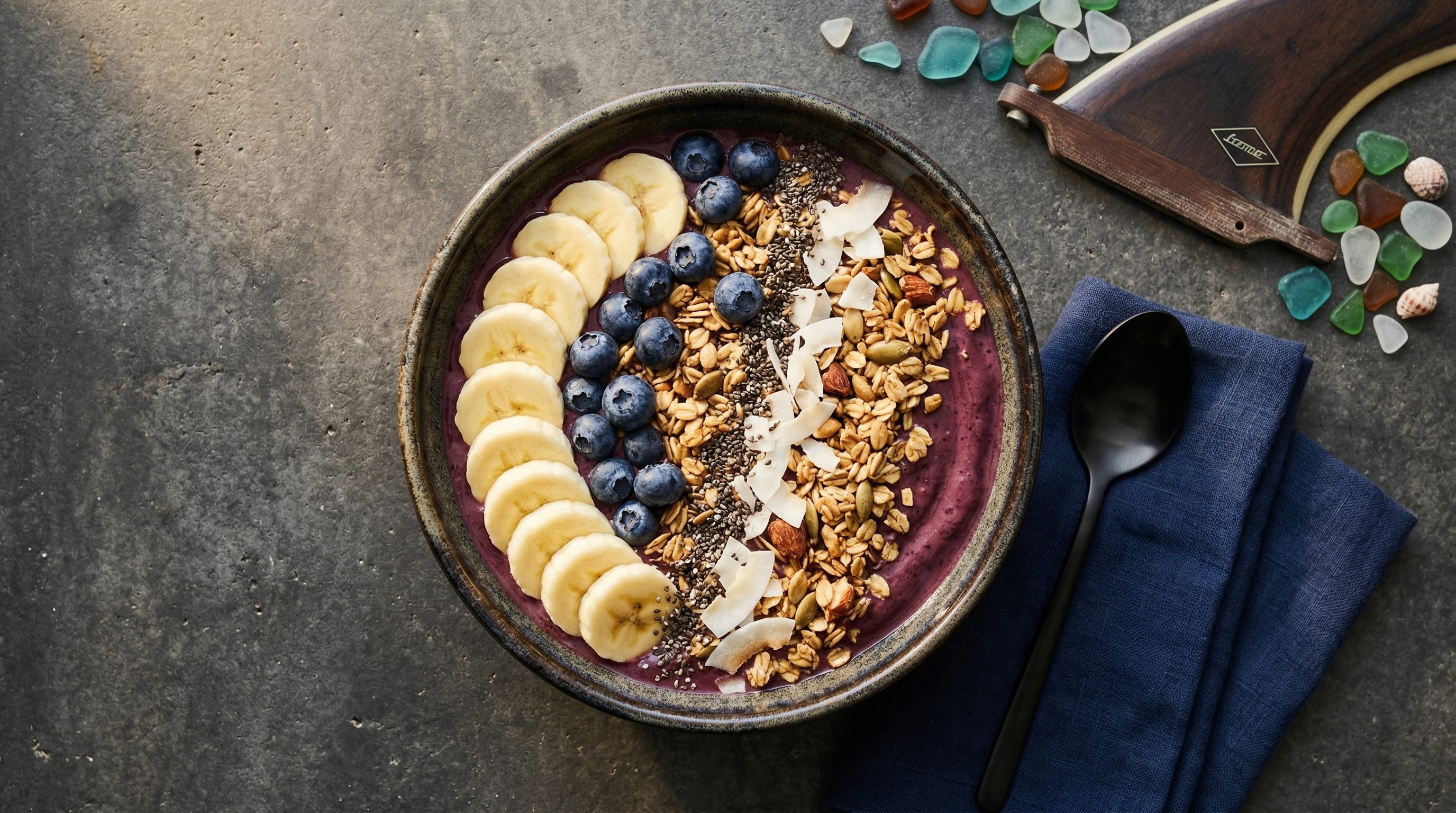
Good short-session meals: oats with banana, toast with egg, leftover rice and a piece of fish, yogurt with fruit. Keep fat modest. Keep fiber modest if you are eating close to paddle-out. Coffee is fine if you already drink it. A new energy drink is not.
If you surf at first light and cannot face food, eat a real dinner the night before and take a banana to the car. After a short session, a normal breakfast or lunch is enough. You do not need a recovery shake for a 40-minute surf unless food is hours away.
How do you fuel a long paddle or an all-day tide?
Eat a full meal two to three hours before you paddle, pack a carb you can eat at the car, and plan a real meal when you get out.
Long sessions empty the tank. Carbohydrate should lead the plate: potato, rice, oats, bread you digest, fruit. Add a moderate protein (eggs, fish, yogurt, leftover chicken). Keep fat lower than a weekend brunch. Fat slows the stomach. That is useful at dinner. It is a problem when you still have a two-hour paddle after lunch.
Between tides, eat something you have practiced. Banana, a rice ball, leftover cold potato. Chew in the lot, not in the impact zone. If the gap is only 20 minutes, a few sips of a carb drink may sit better than a sandwich. For a counted carbohydrate packet on a long paddle, compare energy gels.
The beach foods that hold up for a session past two hours are in Real Food to Eat During Long Surf Sessions.
After a long day, eat a proper plate. Protein for the shoulders and back. Carbohydrate to refill. A can of fish, eggs, or leftover rice is still food. Use a supplement only if that plate is genuinely not happening. The supplements guide covers those backup cases.
What does a contest day require?
Eat the same meal you used on practice days, earlier than you think, in a smaller portion if nerves are high.
Contest day is a stress test of whatever you already digest. The heat schedule will slip. You may surf twice. You may sit in a tent with no appetite. The food has to be boring and proven.
Night before: a normal dinner with carbohydrate and protein. Nothing fried. Morning of: the same breakfast you ate before your last good free surf. If your heat is late, add a small snack 60 to 90 minutes before you paddle. Banana, a few bites of oats, white rice.
During a wait, sip water. Eat only if you know it sits. After your last heat, eat a real meal. Do not stack pre-workout, caffeine gum, and a new gel because a heat is called. Food first. Caffeine only if it is already part of your morning.
When does food beat supplements?
Food beats supplements whenever you can chew, digest, and time a meal.
Meals give you carbohydrate, protein, fat, and fluid together. A banana plus oats plus an egg will cover a dawn patrol. A sweet potato and a piece of fish will cover a long afternoon.
Supplements win only in narrow cases. You are in the water too long to chew, you cannot keep solid food down, you are traveling with no kitchen, or you have a diagnosed gap that food is not covering.
If you are choosing between a real plate and a "surf performance" powder, choose the plate. Then, if you still have a specific gap, read the supplements guide and pick one thing, not five. Protein powder is optional convenience. Eggs, fish, dairy, or leftovers do the same job. Electrolyte packets can help in heat if you already drank water and ate. They do not replace lunch.
How should you time the meal relative to paddle-out?
Give bigger meals more time. Give smaller snacks less time.
A full plate needs two to three hours for most people. A medium breakfast can work in 90 minutes if it is not greasy. A banana or a few sips of a carb drink can work in 20 to 40 minutes.
Test this on local days. Heavy on the first paddle means you ate too much, too late, or too much fat. Empty after 30 minutes means you ate too little carbohydrate.
Dawn patrols compress the clock. Eat more the night before. Keep a fallback snack in the car. Evening surfs after work are the danger zone. People skip lunch, slam a bar, and wonder why the first 20 minutes feel awful. Eat a proper afternoon meal if you can. If the session got longer than you planned, add a snack at the car rather than stacking extra food on a meal you have not digested.
This article is educational and is not medical advice. It is not a treatment plan. If you have a medical condition or take medicines that change fluid, salt, or food needs, talk with a qualified clinician.
Frequently asked questions
Can I surf a short session fasted?
Some people can. Many fade. Keep it to easy water close to home, and eat right after. Do not fast a long paddle or a contest.
How early should I eat before a contest heat?
Use the same timing as a hard free surf, then add a little margin. Nerves slow the stomach.
Do I need extra salt for a long session?
Drink water with your meals. If it is hot and you know you cramp, a little extra salt in food or an electrolyte drink can help. Start with food.
Is a protein shake enough after a two-hour paddle?
It is better than nothing and worse than a meal. Add carbohydrate if the shake is all you have, then eat a real plate at home.
Should I eat in the water?
Almost never. Chew at the car or on the beach. Liquid carbs are the exception for very long days, and only if you have practiced them.
Where do supplements fit if my meals are already good?
Travel, no appetite, a lab-confirmed deficiency, or a long session where you cannot chew. Details live in the supplements guide.
Match the plate to the session and most of the fueling problem goes away. For when a powder or capsule actually earns a place, read the supplements guide, then keep food in the center of the day with the recipes and guides on SurferFood.
Next Step
Read the Supplements Guide
Match the plate to the session and most of the fueling problem goes away. For when a powder or capsule actually earns a place, read the supplements guide, then keep food in the center of the day with the recipes and guides on SurferFood.